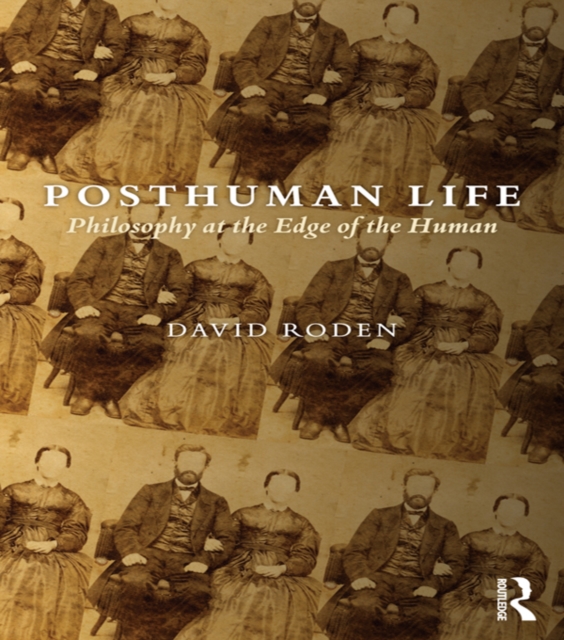
We imagine posthumans as humans made superhumanly intelligent or resilient by future advances in nanotechnology, biotechnology, information technology and cognitive science.
This fifth edition of Philosophy through Film uses recently released, well-received movies to explore answers to classic questions in philosophy in an approachable yet philosophically rigorous manner.
In this volume, Geoffrey Madell develops a revised account of the self, making a compelling case for why the "e;simple"e; or "e;anti-criterial"e; view of personal identity warrants a robust defense.
In this volume, Geoffrey Madell develops a revised account of the self, making a compelling case for why the "e;simple"e; or "e;anti-criterial"e; view of personal identity warrants a robust defense.
Philosophical Perspectives on Play builds on the disciplinary and paradigmatic bridges constructed between the study of philosophy and play in The Philosophy of Play (Routledge, 2013) to develop a richer understanding of the concept and nature of play and its relation to human life and value.
Philosophical Perspectives on Play builds on the disciplinary and paradigmatic bridges constructed between the study of philosophy and play in The Philosophy of Play (Routledge, 2013) to develop a richer understanding of the concept and nature of play and its relation to human life and value.
Badiou's Deleuze presents the first thorough analysis of one of the most significant encounters in contemporary thought: Alain Badiou's summary interpretation and rejection of the philosophy of Gilles Deleuze.
Badiou's Deleuze presents the first thorough analysis of one of the most significant encounters in contemporary thought: Alain Badiou's summary interpretation and rejection of the philosophy of Gilles Deleuze.
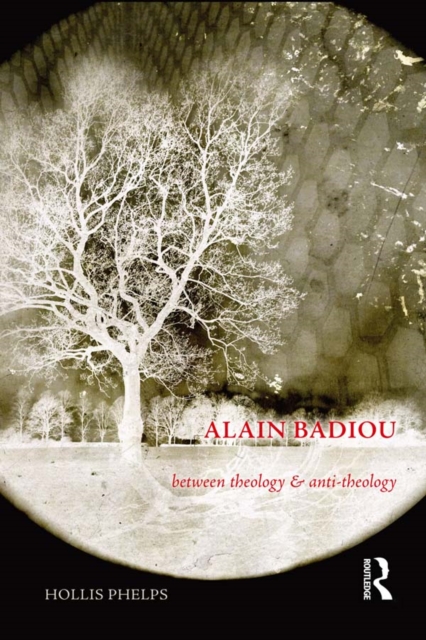
'Alain Badiou: Between Theology and Anti-theology' provides one of the first comprehensive analyses of the relationship between Badiou's philosophy and theology.
This fifth edition of Philosophy through Film uses recently released, well-received movies to explore answers to classic questions in philosophy in an approachable yet philosophically rigorous manner.
'Alain Badiou: Between Theology and Anti-theology' provides one of the first comprehensive analyses of the relationship between Badiou's philosophy and theology.
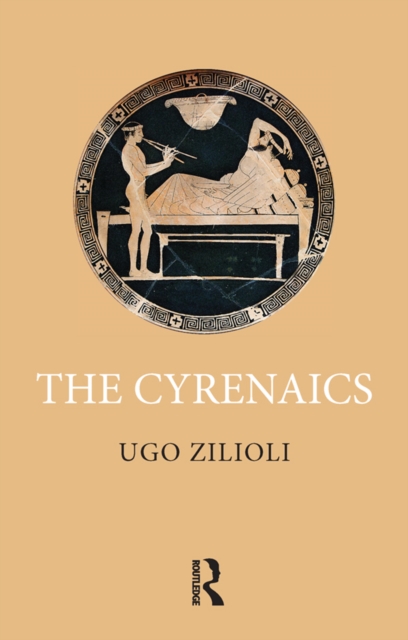
The Cyrenaic school of philosophy (named after its founder Aristippus' native city of Cyrene in North Africa) flourished in the fifth and fourth centuries BCE and whose importance was much recognized in ancient times.
The Cyrenaic school of philosophy (named after its founder Aristippus' native city of Cyrene in North Africa) flourished in the fifth and fourth centuries BCE and whose importance was much recognized in ancient times.
The ongoing publication of Heidegger's complete works has called into question the interpretive and translative practices that have historicized Heidegger's thinking through the adaptation of categories and mind-sets inherited from metaphysics.
The ongoing publication of Heidegger's complete works has called into question the interpretive and translative practices that have historicized Heidegger's thinking through the adaptation of categories and mind-sets inherited from metaphysics.
The Routledge Guidebook to Aquinas' Summa Theologiae introduces readers to a work which represents the pinnacle of medieval Western scholarship and which has inspired numerous commentaries, imitators, and opposing views.
The Routledge Guidebook to Aquinas' Summa Theologiae introduces readers to a work which represents the pinnacle of medieval Western scholarship and which has inspired numerous commentaries, imitators, and opposing views.
Indigenous Education and the Metaphysics of Presence: A worlded philosophy explores a notion of education called 'worldedness' that sits at the core of indigenous philosophy.
Indigenous Education and the Metaphysics of Presence: A worlded philosophy explores a notion of education called 'worldedness' that sits at the core of indigenous philosophy.
Panpsychism is the view that consciousness - the most puzzling and strangest phenomenon in the entire universe - is a fundamental and ubiquitous feature of the world, though in a form very remote from human consciousness.
Panpsychism is the view that consciousness - the most puzzling and strangest phenomenon in the entire universe - is a fundamental and ubiquitous feature of the world, though in a form very remote from human consciousness.
Essays on Freedom of Action, first published in 1973, brings together original papers by contemporary British and American philosophers on questions which have long concerned philosophers and others: the question of whether persons are wholly a part of the natural world and their actions the necessary effects of causal processes, and the question of whether our actions are free, and such that we can be held responsible for them, even if they are the necessary effects of casual processes.
Essays on Freedom of Action, first published in 1973, brings together original papers by contemporary British and American philosophers on questions which have long concerned philosophers and others: the question of whether persons are wholly a part of the natural world and their actions the necessary effects of causal processes, and the question of whether our actions are free, and such that we can be held responsible for them, even if they are the necessary effects of casual processes.
Philosophy of religion has experienced a renaissance in recent times, paralleling the resurgence in public debate about the place and value of religion in contemporary Western societies.
Philosophy of religion has experienced a renaissance in recent times, paralleling the resurgence in public debate about the place and value of religion in contemporary Western societies.
In the two golden centuries that followed the death of Socrates, ancient philosophy underwent a tremendous transformation that culminated in the philosophical systematizations of Plato, Aristotle and the Hellenistic schools.
In the two golden centuries that followed the death of Socrates, ancient philosophy underwent a tremendous transformation that culminated in the philosophical systematizations of Plato, Aristotle and the Hellenistic schools.
These are exciting times for philosophical theorizing about propositions, with the last 15 years seeing the development of new approaches and the emergence of new theorists.