In A Social Ontology of Psychosis, Diego Enrique Londono-Paredes explores how to interpret and apply the concept of the signifier of the Name-of-the-Father in Lacanian theory, particularly in the context of working with psychosis.
This book reconstructs Heidegger's philosophy of time by reading his work with and against a series of key interlocutors that he nominates as being central to his own critical history of time.
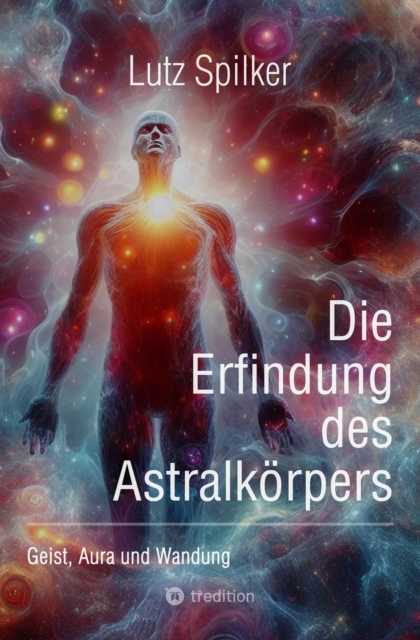
In ›Die Erfindung des Astralkörpers‹ begibt sich der Leser auf eine faszinierende Reise durch die schillernde Welt des metaphysischen Phänomens, das seit Jahrhunderten die menschliche Vorstellungskraft beflügelt – den Astralkörper.
This book reconstructs Heidegger's philosophy of time by reading his work with and against a series of key interlocutors that he nominates as being central to his own critical history of time.
This book offers an in-depth and updated examination of the nature of haecceity-that primitive entity which explains why something is distinct from other things.
"A través de este libro, el autor busca generar conciencia de dos de los más terribles peligros que acechan a la humanidad; la agresividad y la guerra.
Time's mysteries seem to resist comprehension and what remains, once the familiar metaphors are stripped away, can stretch even the most profound philosopher.
This book offers an in-depth and updated examination of the nature of haecceity-that primitive entity which explains why something is distinct from other things.
This volume is about the most mind-boggling sacrament of the Christian faith, also referred to as the Sacrament of the Altar, the Eucharist: in its Roman Catholic interpretation, the conversion of the substance of the bread and wine into the body and blood of Christ for Holy Communion.
This volume is about the most mind-boggling sacrament of the Christian faith, also referred to as the Sacrament of the Altar, the Eucharist: in its Roman Catholic interpretation, the conversion of the substance of the bread and wine into the body and blood of Christ for Holy Communion.
In this third part of the trilogy "e;Dimensions of Reality"e; the author gives insight into the worldview underlying Nagual Shamanism and explains a multi-dimensional model of human beings and their subtle-energetic anatomy.
This book analyses anthropological debates on "e;relationism"e; (referring to methodological and theoretical issues) and sets out to reconsider these discussions with regards to the notion of "e;substance"e; (generally associated with the body).
This book analyses anthropological debates on "e;relationism"e; (referring to methodological and theoretical issues) and sets out to reconsider these discussions with regards to the notion of "e;substance"e; (generally associated with the body).
Es ist eine Sache theoretisch zu verstehen, wie wir unsere Wirklichkeit zusammensetzen (Teil 1 der Trilogie), aber es ist eine völlig andere Sache, aus der "Konsens-Realität" auszusteigen, die Welt anzuhalten und eine ganz andere zu betreten.
It is one thing to understand theoretically how we build our reality (Part 1 of the trilogy), but something very different to step out of "e;consensus reality,"e; stop the world and enter a completely different one.