This is a story of awakening to the realities of Spirit and what might happen while racing down the rabbit hole of weirdness called modern metaphysics (physics of love).
Written in the form of a technical manual, the book shares the authors thoughts and personal experience in a relaxed and conversational manner, easily understood by young people today.
Rather than see love as a natural form of affection, Love As Human Freedom sees love as a practice that changes over time through which new social realities are brought into being.
In The Redwoods of Gaia, author Kathleen Chan, defines the broad scope of metaphysics to include the study of spirituality as well as other dimensions of reality postulated by astrophysicists in their most recent findings.
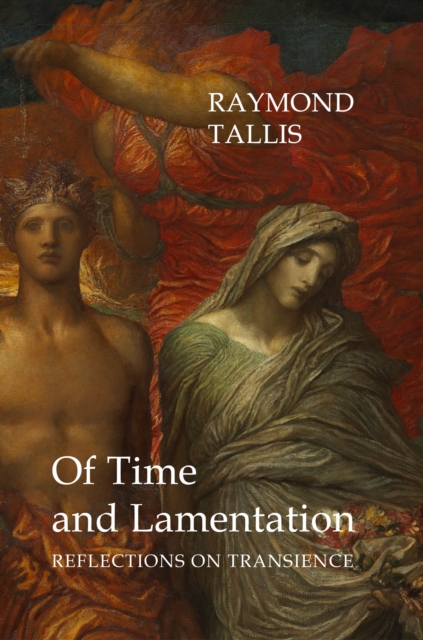
Time's mysteries seem to resist comprehension and what remains, once the familiar metaphors are stripped away, can stretch even the most profound philosopher.
The development of science, logic, mathematics, and psychology in the 19th century made it necessary to introduce a growing number of new entities, of which classical empiricism and strong extensionalism were unable to give a wholly satisfying account.
The development of science, logic, mathematics, and psychology in the 19th century made it necessary to introduce a growing number of new entities, of which classical empiricism and strong extensionalism were unable to give a wholly satisfying account.
Immediacy and Meaning seeks to approach the odd uneasiness at root in all metaphysical meaning; that the human knower attempts to mediate what cannot be mediated; that there is a pre-cognitive immemorial immediacy to Being that renders its participants irreducible, incommunicable and personal.
Immediacy and Meaning seeks to approach the odd uneasiness at root in all metaphysical meaning; that the human knower attempts to mediate what cannot be mediated; that there is a pre-cognitive immemorial immediacy to Being that renders its participants irreducible, incommunicable and personal.
Heidegger has often been considered as the proponent of the end of metaphysics in the post-Hegelian philosophy, due to his persistent attempts to overcome the onto-theological framework of traditional metaphysics.
Heidegger has often been considered as the proponent of the end of metaphysics in the post-Hegelian philosophy, due to his persistent attempts to overcome the onto-theological framework of traditional metaphysics.
Throughout this book, Louis Roy illustrates his conviction that Christianity consists in the most profound experience to which human beings are invited by God.
The culmination of a lifetime's preoccupation with crucial human concerns too often curiously marginalized by the history of philosophy, The Expansion of Metaphysics sheds new light on freedom and the will by making the phenomenon of novelty philosophically intelligible.
While life can be a montage of confusion, the concept of the Golden Dialetik can provide a unifying theory of the universe out of this disorder, and it is a concept that clarifies a hazy world vision.
For nineteenth-century thinkers, the central problem of religious consciousness in the modern West was the tension between prevailing concepts of individual autonomy and the traditional Judaeo-Christian claim for divine revelation.
Wilhelm Dilthey (1833-1911), a philosopher who has influenced twentieth-century intellectual history via such thinkers as Heidegger, Jaspers, Ortega y Gasset, and Max Scheler, is subjected to careful analysis in this book.
Pythagoras and the Pythagoreans of the fifth century are cast by historians of philosophy in four important roles: they are reputed to have originated the mathematical disciplines, harmonics, and, in a large measure, astronomy; they are said to have propounded theories of the nature of our universe to which, in differing ways, Parmenides, Empedocles, Anaxagoras, and Democritus reacted; they are reputed to have made the alliance between religion and philosophy that made philosophy in the ancient world a way of life; and their thought is alleged to have exerted a major influence on Plato, and particularly on the metamathematical theories of his later years.
We have seen remarkable progress in our detailed understanding of the physical world, from the smallest constituents of atoms to the remotest distances seen by telescopes.