Drawing on a particular emphasis within the phenomenological tradition as exemplified by Maurice Merleau-Ponty and Eugene Gendlin, this book considers the role of the lived body as a way of knowing and being within three practical contexts that illustrate some of the nuances of embodied enquiry: qualitative research, psychotherapy, spirituality.
This volume aims to inspire a return to the energetics of Nietzsche's prose and the critical intensity of his approach to nihilism and to give back to the future its rightful futurity.
This book is about the development of psychoanalysis and modern subjectivity in Japan, and addresses three key questions: 'Why is there psychoanalysis in Japan?
This study provides new insights into the link between masculinity and jealousy through a study of representations of male jealousy in modern Hollywood cinema.
This book pushes nihilism to its ultimate conclusion by linking revisionary naturalism in Anglo-American philosophy with anti-phenomenological realism in French philosophy.
Shows that Husserl's Phenomenology and its key concept, subjectivity, is based on a concrete anthropological structure, such as self-affection and the bodily experience of the other.
This unique collection of articles on emotion by Wittgensteinian philosophers provides a fresh perspective on the questions framing the current philosophical and scientific debates about emotions and offers significant insights into the role of emotions for understanding interpersonal relations and the relation between emotion and ethics.
The author offers a new assessment of the influence of the Vienna Circle on language study, and considers its relevance to the debate in present-day linguistics about the relative merits of 'intuitive' and 'real life' sources of data.
These previously unpublished essays present the newest developments in the thought of philosophers working on action and its explanation, focusing on a wide range of interlocking issues relating to agency, deliberation, motivation, mental causation, teleology, interpretive explanation and the ontology of actions and their reasons.
How do we understand what we are told, resolve ambiguities, appreciate metaphor and irony, and grasp both explicit and implicit content in verbal communication?
Sue Savage-Rumbaugh's work on the language capabilities of the bonobo Kanzi has intrigued the world because of its far-reaching implications for understanding the evolution of the human language.
Norris presents a series of closely linked chapters on recent developments in epistemology, philosophy of language, cognitive science, literary theory, musicology and other related fields.
Engendering Emotions examines the production and promotion of the idea of sex/gender difference in emotional experience and expression in the contemporary West.
There have been many voices in disciplines as various as philosophy, history, psychology, hermeneutics, literary theory, and theology that have claimed that narrative is fundamental to all that is human.
Offering a uniquely broad-based overview of the role of language choice in the construction of national, ethnic and religious identity, this textbook examines a wide range of specific cases from various parts of the world in order to arrive at some general principles concerning the links between language and identity.
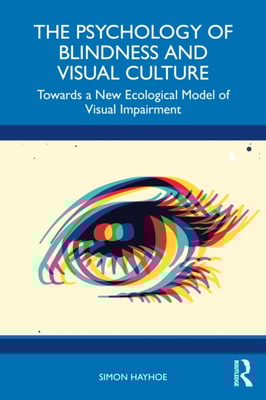
The Psychology of Blindness and Visual Culture: Towards a New Ecological Model of Visual Impairment advances the debate regarding the inclusion and wellbeing of people with visual impairment (PVI) through looking at the psychological nature of visual culture and its effects on the lived experience.
Laplace (1849-1827) was the famous French astronomer and mathematician who outspokenly proposed that every occurrence is in every respect determined by laws of nature - that all that exists is determinate.
Simone de Beauvoir made her own distinctive contribution to existentialism in the form of an ethics which diverged sharply from that of Jean-Paul Sartre.
Perceptive, passionate and often controversial, Raymond Tallis's latest debunking of Kulturkritik delves into a host of ethical and philosophical issues central to contemporary thought, raising questions we cannot afford to ignore.
This reconstruction of the work of 'dialectical memory' in Hegel raises the fundamental question of the principle that presides on the articulation of history and indicates in Hegel's philosophy two alternative models of conceiving history: one that grounds history on 'ethical memory,' the other that sees justice as the moving principle of history.
Otto Bohlmann's fascinating study offers detailed and exhaustive evidence that the major philosophical aspects of Conrad's novels exhibit a powerful existential strain, foreshadowing many central concerns of twentieth-century modernism.
Going beyond the hype of recent fMRI 'findings', thisinterdisciplinary collection examines such questions as: Do women and men have significantly different brains?
A volume devoted explicitly to the subtle and multidimensional phenomenon of background knowing that has to be recognized as an important element of the triad mind-body-world.
Presenting cutting-edge science in a playful manner, this exploration of a topic that has been veiled by taboo, the psychology of excretion, surveys an assortment of embarrassing processes, shameful disorders and disgusting habits taking the reader on a tour of the history and literature of elimination.
Although current debates in epistemology and philosophy of mind show a renewed interest in perceptual illusions, there is no systematic work in the philosophy of perception and in the psychology of perception with respect to the concept of illusion and the relation between illusion and error.
An examination of the philosophical issues surrounding prudential value: what it is for something to be good for a person; and well-being: what it is for someone's life to go well.