This volume brings together an international team of authors to investigate a wide range of issues concerning the fundamental role of media technologies in shaping contemporary emotional life.
In this in-depth and unique collaboration between a patient and his psychoanalyst, Psychoanalysis, Intersubjective Writing, and a Postmaterialist Model of Mind: I Woke Up Dead examines the unconscious mind by analysing the patient's novel written during his treatment as the focus.
A Map of Selves defines a concept of selfhood, radically different from the Cartesian, neo-Humean, materialist and animalist concepts which now dominate analytical philosophy of mind.
A Map of Selves defines a concept of selfhood, radically different from the Cartesian, neo-Humean, materialist and animalist concepts which now dominate analytical philosophy of mind.
Winner of the 2022 NAAP Gradiva Award for Best Edited BookIn this volume, internationally acclaimed psychoanalysts, philosophers, and scholars of humanities examine the mind-body problem and provide differing analyses on the nature of mind, unconscious structure, mental properties, qualia, and the contours of consciousness.
Winner of the 2022 NAAP Gradiva Award for Best Edited BookIn this volume, internationally acclaimed psychoanalysts, philosophers, and scholars of humanities examine the mind-body problem and provide differing analyses on the nature of mind, unconscious structure, mental properties, qualia, and the contours of consciousness.
In this in-depth and unique collaboration between a patient and his psychoanalyst, Psychoanalysis, Intersubjective Writing, and a Postmaterialist Model of Mind: I Woke Up Dead examines the unconscious mind by analysing the patient's novel written during his treatment as the focus.
This Handbook provides a comprehensive overview and analysis of the state of the field of the philosophy of meditation and engages primarily in the philosophical assessment of the merits of meditation practices.
This Handbook provides a comprehensive overview and analysis of the state of the field of the philosophy of meditation and engages primarily in the philosophical assessment of the merits of meditation practices.
I would like to thank Judy Gammelgaard and Andrew Moskowitz for their encouragement, critique, and confidence in me, without which I could not have undertaken the present study.
I would like to thank Judy Gammelgaard and Andrew Moskowitz for their encouragement, critique, and confidence in me, without which I could not have undertaken the present study.
Dual-Aspect Monism and the Deep Structure of Meaning investigates the metaphysical position of dual-aspect monism, with particular emphasis on the concept of meaning as a fundamental feature of the fabric of reality.
Dual-Aspect Monism and the Deep Structure of Meaning investigates the metaphysical position of dual-aspect monism, with particular emphasis on the concept of meaning as a fundamental feature of the fabric of reality.
This volume advances discussion between critics and defenders of the force-content distinction and opens up new ways of thinking about force and speech acts in relation to the unity problem.
This volume advances discussion between critics and defenders of the force-content distinction and opens up new ways of thinking about force and speech acts in relation to the unity problem.
Originally published in 1957 and written by one of the 20th Century's leading botanists and a fierce advocate of organicism, this book explores concepts about man and his relation to life and the universe, and about the great creative and spiritual powers within and around him.
Originally published in 1957 and written by one of the 20th Century's leading botanists and a fierce advocate of organicism, this book explores concepts about man and his relation to life and the universe, and about the great creative and spiritual powers within and around him.
Ogden sets out a movement in contemporary psychoanalysis toward a new sensibility, reflecting a shift in emphasis from what he calls "e;epistemological psychoanalysis"e; (having to do with knowing and understanding) to "e;ontological psychoanalysis"e; (having to do with being and becoming).
Ogden sets out a movement in contemporary psychoanalysis toward a new sensibility, reflecting a shift in emphasis from what he calls "e;epistemological psychoanalysis"e; (having to do with knowing and understanding) to "e;ontological psychoanalysis"e; (having to do with being and becoming).
This volume explores illusionism as a much larger phenomenon than optical illusion, magic shows, or special effects, as a vital part of how we perceive, process, and shape the world in which we live.
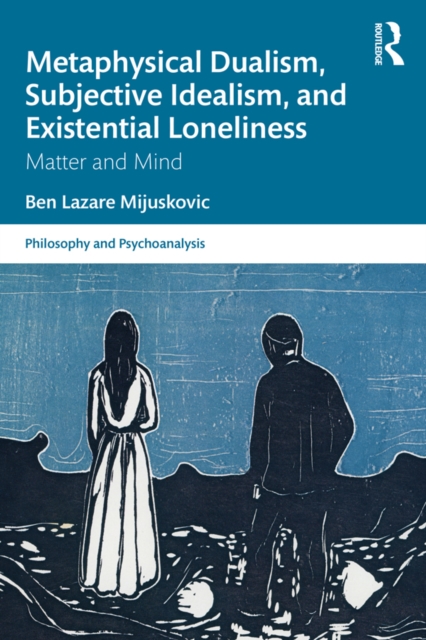
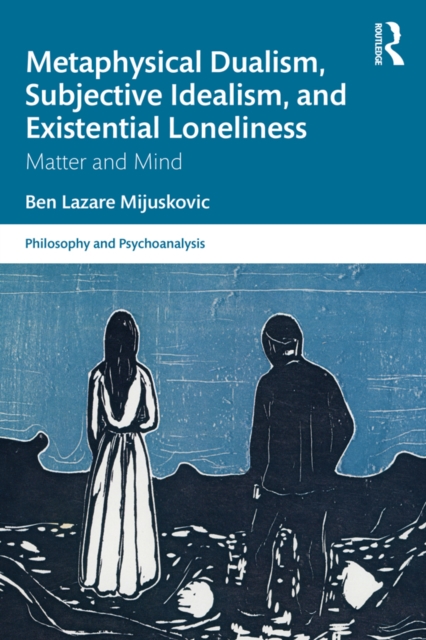
Since the ages of the Old Testament, the Homeric myths, the tragedies of Sophocles and the ensuing theological speculations of the Christian millennium, the theme of loneliness has dominated and haunted the Western world.
Since the ages of the Old Testament, the Homeric myths, the tragedies of Sophocles and the ensuing theological speculations of the Christian millennium, the theme of loneliness has dominated and haunted the Western world.
This volume explores illusionism as a much larger phenomenon than optical illusion, magic shows, or special effects, as a vital part of how we perceive, process, and shape the world in which we live.