Während Nietzsches und Foucaults Denken zum festen Bestandteil philosophischer, soziologischer und kulturwissenschaftlicher Auseinandersetzungen zählt, werden die beiden Autoren in der Medizinethik und Medizintheorie nur zögerlich rezipiert.
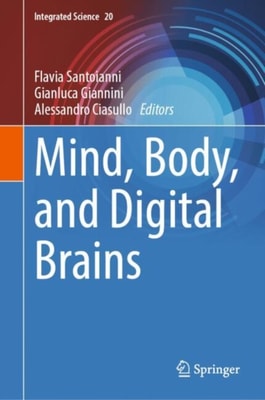
This book-Mind, Body, and Digital Brains-focuses on both theoretical and empirical issues and joins contributions from different disciplines, concepts, and sensibilities, bringing together scholars from fields that at first glance may appear different-Neuroscience and Cognitive Neuroscience; Robotics, Computer Science, Deep Learning, and Information Processing Systems; Education, Philosophy, Law, and Psychology.
Der wissenschaftspolitische Druck nach quantitativ messbaren und ökonomisch verwertbaren Erkenntnissen drängt auch sozial- und geisteswissenschaftliche Denkbewegungen zunehmend zur Revision ihrer zentralen Konzepte.
Aus dem Inhalt: Hegels Moral- und Handlungsphilosophie Armando Manchisi: Die Idee des Guten bei Hegel: Eine metaethische Untersuchung Giulia Battistoni/Thomas Meyer: Handlung, Vorsatz, Schuld: Karl Ludwig Michelet als Interpret der hegelschen Handlungstheorie Stephan Zimmermann: Die "allgemeine Handlungsweise": Zu Hegels Begriff der Sitte.
Das Problem, das in dieser Arbeit behandelt wird, ist kein geringeres als die Frage nach dem spekulativen Übergang der (spekulativ gedachten) Logik in die Natur, wie sie von Hegel in den letzten beiden Absätzen seiner "Wissenschaft der Logik" aufgeworfen wird.
Die »Schriften zur Syllogistik« schließen eine große, entscheidende Lücke in den Ausgaben der (bis 1903 verschollenen) logischen Manuskripte von Leibniz, denn auch der Bearbeitungsstand der sog.
Die »Heroischen Leidenschaften« (De gli heroici furori) – sind der letzte der insgesamt sechs italienischen Dialoge Giordano Brunos, die sämtlich zwischen 1583 und 1585 in England verfasst wurden.
Ziel dieser Studie, ursprünglich als 1927 Vortrag gehalten, ist es, auf breiter empirischer Basis und in kritischer Auseinandersetzung mit einseitigen anthropologischen Ideen der abendländischen Tradition eine unverkürzte, einheitliche und geschichtlich offene Auffassung des Wesens des Menschen zu entwerfen.
Die »Heroischen Leidenschaften« (De gli heroici furori) – sind der letzte der insgesamt sechs italienischen Dialoge Giordano Brunos, die sämtlich zwischen 1583 und 1585 in England verfasst wurden.
Die vielfach anzutreffenden Vorurteile und Missverständnisse über Sinn und Zweck der Philosophie lassen sich vermutlich auf dem kürzesten Weg durch Fragen entkräften, die sich wissenschaftlichen Forschungen entziehen und sich dennoch nicht vermeiden lassen.
Nach seinem dialogischen Kommentar zu Hegels »Phänomenologie des Geistes« rekonstruiert Pirmin Stekeler jetzt die »Wissenschaft der Logik« als Überbietung von Kants »Kritik der reinen Vernunft«.
Nach seinem dialogischen Kommentar zu Hegels »Phänomenologie des Geistes« rekonstruiert Pirmin Stekeler jetzt die »Wissenschaft der Logik« als Überbietung von Kants »Kritik der reinen Vernunft«.
In Cassirers Werk ist an einer Vielzahl von Stellen vom »Ichgefühl« die Rede ebenso wie vom »Weltgefühl«, »Selbstgefühl«, »Formgefühl «, »Sprachgefühl« oder gar »Staatsgefühl«.
Kaum ein Vorhaben hat die Hegel'sche Philosophie stärker und mit größerer Selbstverständlichkeit geprägt als eine therapeutische Auflösung starrer begrifflicher Dualismen.
Drei Themenbereiche, die nicht unterschiedlicher sein können, werdenin diesem Buch auf ein gemeinsames physikalisches Gerüst gestelltund miteinander verknüpft.
Seit der Sesshaftigkeit des anatomisch modernen Menschen im Zusammenhang mit der Neolithischen Evolution in der Jungsteinzeit hat sich sein Verhalten gegenüber der Umwelt und im Zusammenleben mit anderen Menschen ganz entscheidend verändert.
Die Umsetzbarkeit von den Prinzipien des Ayurveda in der Medizin, der Arbeitswelt, bei der schulischen Erziehung und in der eigenen Gesundheitsvorsorge oder für eine stressfreiere Freizeitgestaltung wird anschaulich erklärt und mit praktischen Beispielen aufgezeigt.
This book explores the profound impact of artificial intelligence psychology (AIPsy) on human psychology, identity, theology, and agency, addressing the urgent need to define the future of humanity amidst evolving technological landscapes.
+ Wichtiges Thema: mentale Gesundheit bei Kindern + Sachbuch ab 9 Jahren + Mit vielen Tipps und Übungen + Mit Serviceteil für Lehrer und Eltern + Unterstützung in schwierigen Situationen + Resilienz + Modern illustriert +So geht's dir besser!
Dieses Heft widmet sich dem VERBALISIEREN als jenem elementaren Prozess, der jeglicher INTERAKTION IM UNTERRICHT zu eigen ist und der im Fach Deutsch besonderer Aufmerksamkeit bedarf: um den Prozess der VER- UND BEARBEITUNG VON GEDANKEN, Ideen, Inhalten und Gelesenem in und mit der Sprache.
"Diese Ausgabe meines Buches über Mitleid sollte möglichst gebrauchsfreundlich gestaltet werden: Durch die Gliederung in vier Teile und die Hinzufügung von Kapitelüberschriften wird die Orientierung erleichtert; die Literaturhinweise am Schluß nennen die wichtigsten Quellen der verwendeten Zitate; der neue Titel verdeutlicht die Absichten des Autors.
Dieser Buchtitel ist Teil des Digitalisierungsprojekts Springer Book Archives mit Publikationen, die seit den Anfängen des Verlags von 1842 erschienen sind.
Dieser Buchtitel ist Teil des Digitalisierungsprojekts Springer Book Archives mit Publikationen, die seit den Anfängen des Verlags von 1842 erschienen sind.
Dieser Buchtitel ist Teil des Digitalisierungsprojekts Springer Book Archives mit Publikationen, die seit den Anfängen des Verlags von 1842 erschienen sind.