Integrating queer theory into visual international relations scholarship, The International Politics of Sex examines the ways in which sex, sexual shame, and stigma play into international power games.
American democracy faces severe challenges today, as everyday life gathers pace, national borders become increasingly porous, and commodity culture becomes more dominant.
This volume brings together for the first time all the writings of John Stuart Mill and Harriet Taylor Mill on equality between the sexes, including John Stuart Mill's The Subjection of Women, a classic in the history of the women's rights movement since its publication one hundred years ago.
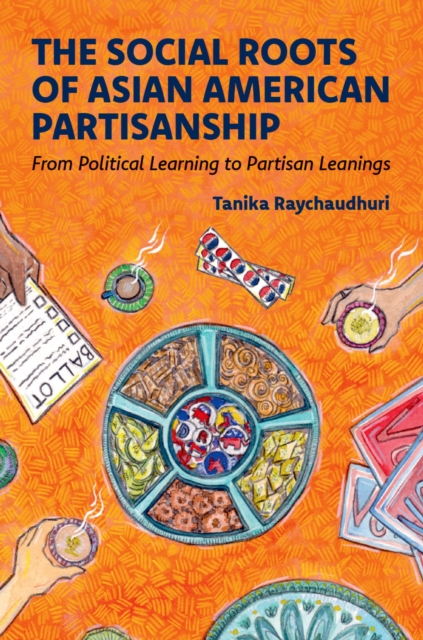
Asian Americans make up the fastest growing racial group in the United States, and, as such, their votes are of intense interest to both major political parties.
Tracing the development of French political thought in the seventeenth century, Nannerl Keohane explores a quite different emphasis on the indivisibility of sovereignty and the expression of interests rather than rights.
Offering the first comprehensive, interdisciplinary account of what Christian nationalism in America is and isn't, and how it became the political religion of Donald Trump's MAGA movement, the chapters in this book describe the way Christian nationalism has embedded itself in American politics.
This book is intended as an equivalent to or substitute for that "e;more reflective reading"e; which Rousseau considered essential to an understanding of his ideas.
In America today, the problem of achieving racial justice--whether through "e;color-blind"e; policies or through affirmative action--provokes more noisy name-calling than fruitful deliberation.
This book develops a pluralistic political theory that reinterprets John Rawls’s proviso as a framework of justification capable of sustaining legitimacy amid deep reasonable pluralism and the rise of artificial intelligence.
Most previous studies of Adam Smith's methodology, with a few exceptions, have placed considerable emphasis on the undeniable influence of Newtonian physics and Humean empiricism.
This volume brings together for the first time all the writings of John Stuart Mill and Harriet Taylor Mill on equality between the sexes, including John Stuart Mill's The Subjection of Women, a classic in the history of the women's rights movement since its publication one hundred years ago.
Asian Americans make up the fastest growing racial group in the United States, and, as such, their votes are of intense interest to both major political parties.
Most previous studies of Adam Smith's methodology, with a few exceptions, have placed considerable emphasis on the undeniable influence of Newtonian physics and Humean empiricism.
Combining new insights from cognitive science and speech act theory, Unnsteinsson develops a compelling theory of singular reference which avoids well-known puzzles and objections.
Combining new insights from cognitive science and speech act theory, Unnsteinsson develops a compelling theory of singular reference which avoids well-known puzzles and objections.
In the eyes of many, "e;spirituality,"e; particularly in its non-religious form, is nothing but a secularized, individualized, or even commodified version of traditional religion.
The year 2020 marked the centennial of the death of Max Weber, the German sociologist, scholar of world religions, economic historian, social philosopher, and theoretician of modern political life.