This book discusses scholars who have all engaged in comparative philosophy projects, many of whom first rose to fame because of their penetrating insights into the similarities and differences in "e;Western"e; and "e;Chinese"e; thought.
This book aims to give an account of the origin and the historical evolution of the philosophical tradition of the "e;Way of Zhong,"e; or "e;zhongdaology,"e; which represents not only the basic characteristic of Confucian philosophical thinking but also the core spirit of Chinese culture in general.
This book provides a unique formal foundation for the development of statistical tools useful in the exploration of observational and experimental data related to embodied cognition.
The book aims to challenge and redefine the traditional Enlightenment approach to education by advocating for a Post-Enlightenment model that emphasizes self-education rooted in individual autonomy, dignity, and diverse experiences.
This monograph works at the intersection of two of the most popular and growing fields in epistemology: epistemic normativity or value and virtue epistemology.
In this book, Lou Agosta explains, using literary examples, that readers require radical empathy to relate to, process, and overcome bad things happening to good people (for example: moral and physical trauma, double binds, soul murder, and behavior in extreme situations.
This book analyses EU and Member State decision-making through a constructivist perspective and claims that a kind of latent, intellectual “phantom war” is going on in Western societies.
In this book, Lou Agosta explains, using literary examples, that readers require radical empathy to relate to, process, and overcome bad things happening to good people (for example: moral and physical trauma, double binds, soul murder, and behavior in extreme situations.
This monograph works at the intersection of two of the most popular and growing fields in epistemology: epistemic normativity or value and virtue epistemology.
This book analyses EU and Member State decision-making through a constructivist perspective and claims that a kind of latent, intellectual “phantom war” is going on in Western societies.
The book aims to challenge and redefine the traditional Enlightenment approach to education by advocating for a Post-Enlightenment model that emphasizes self-education rooted in individual autonomy, dignity, and diverse experiences.
The Handbook of Suicide Prevention covers a broad range of topics related to suicidal behaviour, including its underlying causes, risk factors, prevention strategies, and therapeutic approaches.
This book offers a philosophical reconstruction of Gandhi’s political thought as a form of devotional democracy in which the sovereign people speak the voice of truth as God’s voice.
This book, based on a systematic analysis of leaders' speeches, examines how regimes in Turkey, India, Russia, and China strategically weaponize the concept of 'civilization' along with emotional appeals, such as pride, fear, and nostalgia, to challenge global liberal democratic norms.
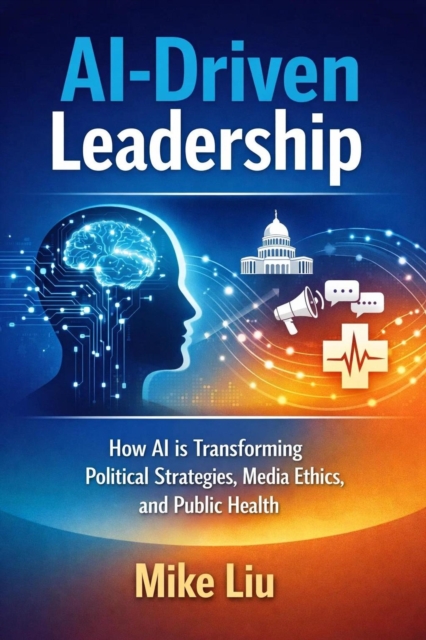
This book analyzes the potential benefits of using artificial intelligence to surpass traditional social and economic problems in Latin America, but it also looks to understand the perils and barriers derived from the adoption of this technology.
This book offers critical commentary and passionate analysis on the implications of Hindutva, capitalism, and imperialism for the everyday lives of working people and the planet.
This book, based on a systematic analysis of leaders' speeches, examines how regimes in Turkey, India, Russia, and China strategically weaponize the concept of 'civilization' along with emotional appeals, such as pride, fear, and nostalgia, to challenge global liberal democratic norms.
This book analyzes the potential benefits of using artificial intelligence to surpass traditional social and economic problems in Latin America, but it also looks to understand the perils and barriers derived from the adoption of this technology.
This book offers critical commentary and passionate analysis on the implications of Hindutva, capitalism, and imperialism for the everyday lives of working people and the planet.
This book interprets axial cultural symbols, specific cultural symbolic organizations, and symbolic constellations in the context of Critical Theory and its negative dialectic.