Traditional Witchcraft and the Pagan Revival takes us on a journey into the past, along the highways and byways of our pagan heritage to discover when the different aspects of magical influence entered traditional witchcraft.
Pagan Portals – Hoodoo is an introduction to the magical art, detailing what Hoodoo is and how to work with it as well as offering recipes and other ideas.
**** THE SUNDAY TIMES BESTSELLER ****'Fascinating and illuminating, this book tempers the justifiable rage with sharp and funny pinpricks to the pompous.
This comprehensive resource explores the intersection of religion, politics, and the supernatural that spawned the notorious witch hunts in Europe and the New World.
In 1966, Anton LaVey introduced to the world the Church of Satan, an atheistic religion devoted to the philosophy of individualism and pitilessness often associated with Satan.
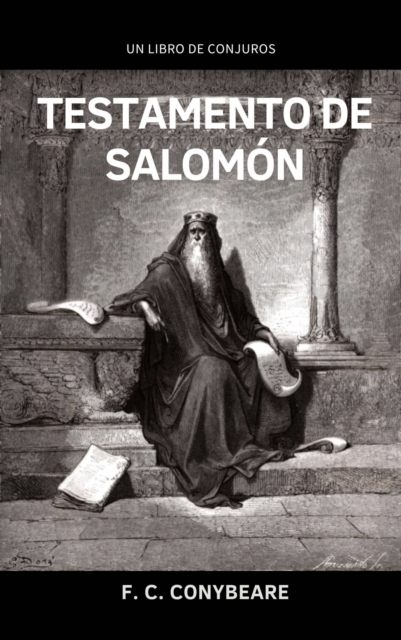
El Testamento de Salomón, muy valorado por los practicantes y estudiosos del ocultismo, es un texto compuesto pseudoepigráfico atribuido al rey Salomón, pero no considerado como escritura canónica por los judíos o los grupos cristianos.
A manual of demonology and witchcraft from medieval Europe, the Malleus Maleficarum is an infamous treatise defining methods for identifying, interrogating, and executing supposed witches.
In a magical collection of ancient Italian folklore, tradition, and belief, Aradia, Queen of Witchcraft is a profound gospel, foundational in modern Wicca and neopaganism.
*; Three hardcover volumes in slipcase *; Corrects the many mistranslations, copyist mistakes, and errors introduced from other editions, drawing on new research and access to Agrippa's source texts *; Restores all of Agrippa's original illustrations *; Presents a nearly complete bibliography of Agrippa's primary sources One of the most important texts in the Western magical tradition for nearly 500 years, Heinrich Cornelius Agrippa's 1533 work Three Books of Occult Philosophy collates a multitude of sources from the Classical, Medieval, and Renaissance periods and organizes them into a coherent explanation of the magical world.
Explores the unified science-religion of early humanity and the impact of Hermetic philosophy on religion and spirituality Investigates the Jewish and Egyptian origins of Josephuss famous story that Seths descendants inscribed knowledge on two pillars to save it from global catastrophe Reveals how this original knowledge has influenced civilization through Hermetic, Gnostic, Kabbalistic, Masonic, Hindu, and Islamic mystical knowledge Examines how Enochs Pillars relate to the origins of Hermeticism, Freemasonry, Newtonian science, William Blake, and Theosophy Esoteric tradition has long maintained that at the dawn of human civilization there existed a unified science-religion, a spiritual grasp of the universe and our place in it.
Examines the foundational texts and principles of Hermeticism and alchemy, showing how they offer a foundation for a psycho-spiritual creative practice Takes the reader on a Hermetic journey through each of the seven traditional planets, offering meditative discourses that speak directly to the intuitive soul Provides examples from traditional alchemical art and the authors own intricate esoteric paintings Drawing on ancient Egyptian and Greek cosmogonies and essential Hermetic texts, such as the Corpus Hermeticum, the Emerald Tablet (Tabula Smaragdina), and the Nag Hammadi codices, Marlene Seven Bremner offers a detailed understanding of Hermetic philosophy and the art of alchemy as a foundation for a psycho-spiritual creative practice.
Explores Kremmerzs life, his teachings, his work as a hermetic physician, and the metaphysical and hermetic principles that guided his activities Offers a detailed account of the distance healing practices, diagnostic methods, and rituals of the Fraternity of Myriam Includes texts written by Kremmerz on the inner workings and magical operations of the fraternity, intended for its practicing members Giuliano Kremmerz (1861-1930), born Ciro Formisano, was one of the most influential Italian occultists, alchemists, and Hermetic masters of the late nineteenth and early twentieth centuries, though he remains almost unknown to English readers.