Throughout his narrative of Julio-Claudian Rome in the Annals, Tacitus includes numerous references to the gods, fate, fortune, astrology, omens, temples, priests, the emperor cult, and other religious material.
Throughout his narrative of Julio-Claudian Rome in the Annals, Tacitus includes numerous references to the gods, fate, fortune, astrology, omens, temples, priests, the emperor cult, and other religious material.
A recurring and significant theme in ancient Greek literature is that of returns and returning, chiefly - but by no means only - of mythical Greek heroes from Troy.
A recurring and significant theme in ancient Greek literature is that of returns and returning, chiefly - but by no means only - of mythical Greek heroes from Troy.
Readers coming to the Odyssey for the first time are often dazzled and bewildered by the wealth of material it contains which is seemingly unrelated to the central story: the main plot of Odysseus' return to Ithaca is complicated by myriad secondary narratives related by the poet and his characters, including Odysseus' own fantastic tales of Lotus Eaters, Sirens, and cannibal giants.
Readers coming to the Odyssey for the first time are often dazzled and bewildered by the wealth of material it contains which is seemingly unrelated to the central story: the main plot of Odysseus' return to Ithaca is complicated by myriad secondary narratives related by the poet and his characters, including Odysseus' own fantastic tales of Lotus Eaters, Sirens, and cannibal giants.
Almost every great figure in nineteenth-century Britain, from Thomas Carlyle to William Gladstone to Charles Darwin, read histories of ancient Egypt and argued about their content.
This work brings together eleven of Richard Buxton's studies of Greek mythology and Greek tragedy, focusing especially on the interrelationship between the two, and their importance to the Greeks themselves.
Ancient religions are usually treated as collective and political phenomena and, apart from a few towering figures, the individual religious agent has fallen out of view.
God, Space, and City in the Roman Imagination is a unique exploration of the relationship between the ancient Romans' visual and literary cultures and their imagination.
Antiquity has often been perceived as the source of Greece's modern achievements, as well as its frustrations, with the continuity between ancient and modern Greek culture and the legacy of classical Greece in Europe dominating and shaping current perceptions of the classical past.
In the winter of 1922-23 archaeologist Howard Carter and his wealthy patron George Herbert, the Fifth Earl of Carnarvon, sensationally opened the tomb of Tutenkhamen.
In the winter of 1922-23 archaeologist Howard Carter and his wealthy patron George Herbert, the Fifth Earl of Carnarvon, sensationally opened the tomb of Tutenkhamen.
Since Freud published the Interpretation of Dreams in 1900 and utilized Sophocles' Oedipus Rex to work through his developing ideas about the psycho-sexual development of children, it has been virtually impossible to think about psychoanalysis without reference to classical myth.
Contact and interaction between Greek and Egyptian culture can be traced in different forms over more than a millennium: from the sixth century BC, when Greeks visited Egypt for the sake of tourism or trade, through to the Hellenistic period, when Egypt was ruled by the Macedonian-Greek Ptolemaic dynasty who encouraged a mixed Greek and Egyptian culture, and even more intensely in the Roman Empire, when Egypt came to be increasingly seen as a place of wonder and a source of magic and mystery.
How was it possible that Greeks often wrote their laws on the walls of their temples, but - in contrast to other ancient societies - never transformed these written civic laws into a religious law?
This book focuses primarily on the end of the pagan religious tradition and the dismantling of its material form in North Africa (modern Algeria, Tunisia, and Libya) from the 4th to the 6th centuries AD.
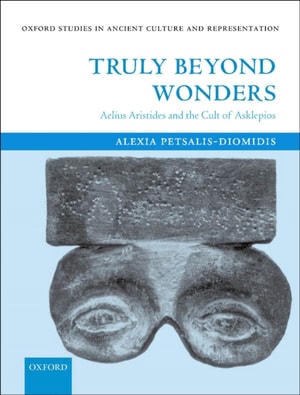
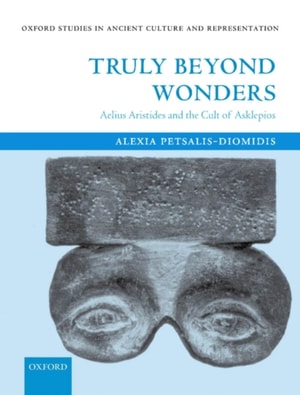
In Truly Beyond Wonders Alexia Petsalis-Diomidis investigates texts and material evidence associated with healing pilgrimage in the Roman empire during the second century AD.
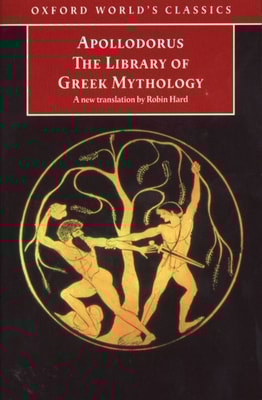
The only work of its kind to survive from classical antiquity, the Library of Apollodorus is a unique guide to Greek mythology, from the origins of the universe to the Trojan War.
In Truly Beyond Wonders Alexia Petsalis-Diomidis investigates texts and material evidence associated with healing pilgrimage in the Roman empire during the second century AD.
Polybius boldly declared that 'now that all places have become accessible by land or sea, it is no longer appropriate to use poets and writers of myth as witnesses of the unknown' (4.