This collection of essays is drawn from a series of previous collections to which the author has contributed that were designed to honor senior scholars in the discipline of Old Testament study.
Rather than representing the book of Revelation as a single "e;apocalyptic"e; genre, Kendra Haloviak Valentine demonstrates that the work in fact reflects several genres--apocalyptic, prophetic and liturgical--within the overall framework of an epistle.
Theologians are constantly accused of only speaking in theories, positing arguments to be considered by the mind with little bearing on the practicalities of life.
The papers in this volume focus on some of the ways in which God's people have been rejected and exiled throughout history so as to become a diasporic people.
An international array of twenty-six scholars contributes twenty-one essays to honor Ziony Zevit (American Jewish University), one of the foremost biblical scholars of his generation.
Biblical narrative learning is a non-critical educational approach for Christian communities with diverse learning backgrounds, involving three sets of movement: inquire and invent, interpret and imagine-inspire, and imitate and impart.
James through the Eyes of Paul is a Bible study that guides readers in examining the book of James in light of Paul's teachings on faith, perseverance, and submission.
It has become standard in modern interpretation to say that Jesus performed miracles, and even mainline scholarly interpreters classify Jesus's healings and exorcisms as miracles.
This cycle of poems travels the path of the Gospel of Mark, rereading and retelling the story, flashing back and anticipating, reading from unusual vantage points, flowing with the author's perspective and rowing against it.
Following Rabbi Jesus is a surprising exposure of who the Jesus we find in the Gospels really is, what he teaches those who dare to follow him, and how he models what it means to live God's radical-kingdom way.
As with archaeology, traditio-historical research of Old Testament literature proceeds backwards from the received text, travelling through the earlier stages of compositions to the probable origins.
The Three Pillars: How Family Politics Shaped the Earliest Church and the Gospel of Mark, examines how family relationships played a key role in the earliest Christian church.
The acclaimed author of Jews, God, and History considers the historical Jesus "e;in the spirited, witty, fascinating manner in which his scholarship excels"e; (Bookviews).
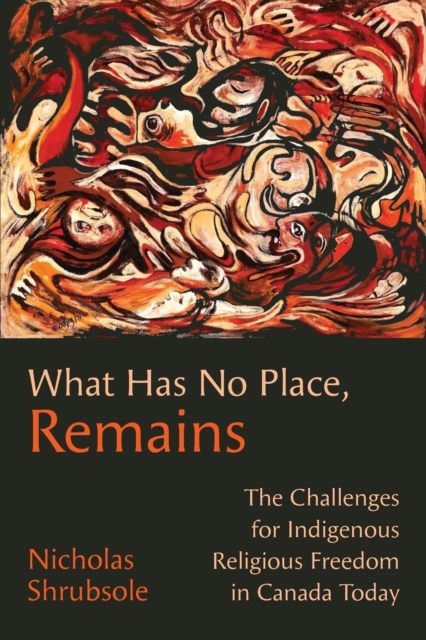
The desire to erase the religions of Indigenous Peoples is an ideological fixture of the colonial project that marked the first century of Canada's nationhood.
The desire to erase the religions of Indigenous Peoples is an ideological fixture of the colonial project that marked the first century of Canada's nationhood.
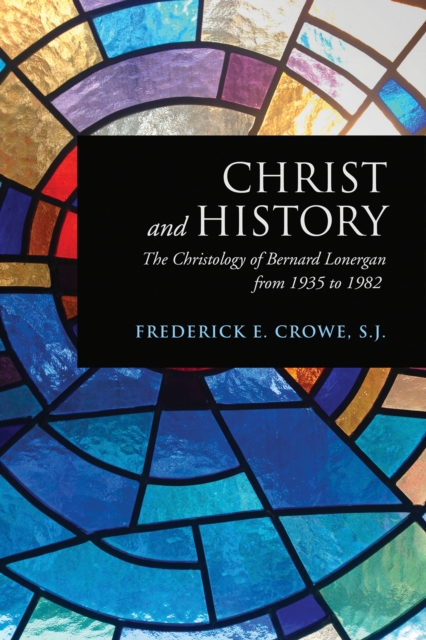
Because of illness and age the Jesuit theologian and philosopher Bernard Lonergan never completed the systematic study on Christology, the doctrine concerning the person of Christ, that he had planned to write.
Because of illness and age the Jesuit theologian and philosopher Bernard Lonergan never completed the systematic study on Christology, the doctrine concerning the person of Christ, that he had planned to write.
From the social philosopher and New York Times-bestselling author of The Sane Society: An analysis of the Old Testament as a revolutionary humanist work.
In Queering Black Atlantic Religions Roberto Strongman examines Haitian Vodou, Cuban Lucumi/Santeria, and Brazilian Candomble to demonstrate how religious rituals of trance possession allow humans to understand themselves as embodiments of the divine.
In Jezebel Unhinged Tamura Lomax traces the use of the jezebel trope in the black church and in black popular culture, showing how it is pivotal to reinforcing men's cultural and institutional power to discipline and define black girlhood and womanhood.
The Camino de Santiago, the Route of Saint James, the Way--all describe a pilgrimage with multiple routes that pass through Spain and end at the Cathedral of Saint James in Santiago de Compostela.
At Eastertime, the most important holiday in the Christian world, religious processions in many Latin American countries pass over ornate street "e;carpets"e; fashioned from colored sawdust, flowers and fruit.