In this work, Karl Shuve provides a new account of how the Song of Songs became one of the most popular biblical texts in medieval Western Christianity, through a close and detailed study of its interpretation by late antique Latin theologians.
In the wake of the Babylonian destruction of Jerusalem and the displacement of exile, there is a unique story that is told about the remnant left behind after the invasion.
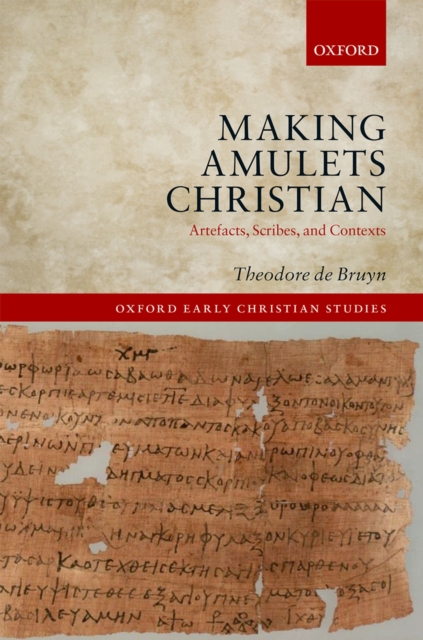
Making Amulets Christian: Artefacts, Scribes, and Contexts examines Greek amulets with Christian elements from late antique Egypt in order to discern the processes whereby a customary practice--the writing of incantations on amulets--changed in an increasingly Christian context.
This study contextualizes the achievement of a strategically crucial figure in Byzantium's turbulent seventh century, the monk and theologian Maximus the Confessor (580-662).
This study contextualizes the achievement of a strategically crucial figure in Byzantium's turbulent seventh century, the monk and theologian Maximus the Confessor (580-662).
An independent teacher, based in Alexandria throughout the second half of the fourth century, Didymus appealed to many within the broadly Origenist currents of Egyptian asceticism, including Jerome, Rufinus, and Evagrius.
In Jesus and the Chaos of History, James Crossley looks at the way the earliest traditions about Jesus interacted with a context of social upheaval and the ways in which this historical chaos of the early first century led to a range of ideas which were taken up, modified, ignored, and reinterpreted in the movement that followed.
Reimagining Hagar illustrates that while interpretations of Hagar as Black are not frequent within the entire history of her interpretation, such interpretations are part of strategies to emphasize elements of Hagar's story in order to associate or disassociate her from particular groups.
Reimagining Hagar illustrates that while interpretations of Hagar as Black are not frequent within the entire history of her interpretation, such interpretations are part of strategies to emphasize elements of Hagar's story in order to associate or disassociate her from particular groups.
Reading the Poetry of First Isaiah provides a literary and historical study of the prophetic poetry of First Isaiah, an underappreciated but highly sophisticated collection of poems in the Hebrew Bible.
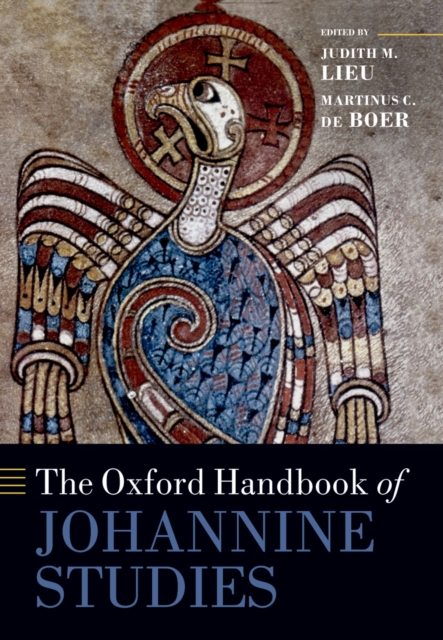
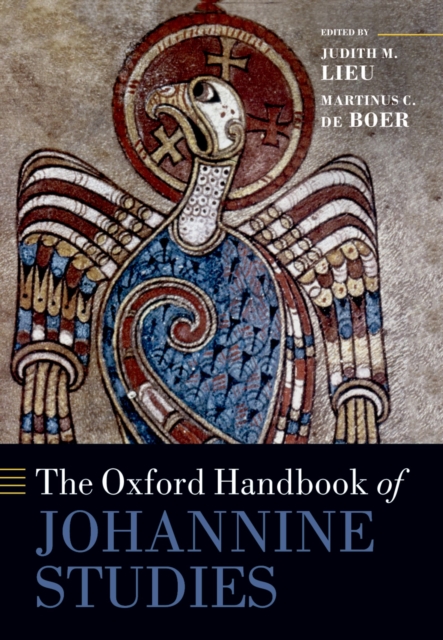
The contribution of the Johannine literature to the development of Christian theology, and particularly to Christology, is uncontested, although careful distinction between the implications of its language, especially that of sonship, in a first century 'Jewish' context and in the subsequent theological controversies of the early Church has been particularly important if not always easily sustained.
The contribution of the Johannine literature to the development of Christian theology, and particularly to Christology, is uncontested, although careful distinction between the implications of its language, especially that of sonship, in a first century 'Jewish' context and in the subsequent theological controversies of the early Church has been particularly important if not always easily sustained.
In the wake of the Babylonian destruction of Jerusalem and the displacement of exile, there is a unique story that is told about the remnant left behind after the invasion.
Featuring contributions from internationally-recognized scholars in the study of the Pentateuch, this volume provides a comprehensive survey of key topics and issues in contemporary pentateuchal scholarship.
Featuring contributions from internationally-recognized scholars in the study of the Pentateuch, this volume provides a comprehensive survey of key topics and issues in contemporary pentateuchal scholarship.
At the center of this book lies a fundamental yet unanswered question: under which historical and sociological conditions and in what manner the Hebrew Bible became an authoritative tradition, that is, holy scripture and the canon of Judaism as well as Christianity.
At the center of this book lies a fundamental yet unanswered question: under which historical and sociological conditions and in what manner the Hebrew Bible became an authoritative tradition, that is, holy scripture and the canon of Judaism as well as Christianity.
In Debates over the Resurrection of the Dead, Outi Lehtipuu highlights the striking observation that in many early texts the way that belief in resurrection is formulated is used as a sign of inclusion and exclusion, not only in relation to non-Christians but vis-a-vis other Christians.
How the Light Gets In: Ethical Life I presents a systematic account of the teachings of the Christian faith to offer a vision, from a human, created, and limited perspective, of the ways all things might be understood from the divine perspective.
Among the most challenging biblical figures to understand is Jeroboam son of Nebat, the first monarch of northern Israel whose story is told in 1 Kings 11-14.
The Oxford Bible Commentary is a Bible study and reference work for 21st century students and readers that can be read with any modern translation of the Bible.
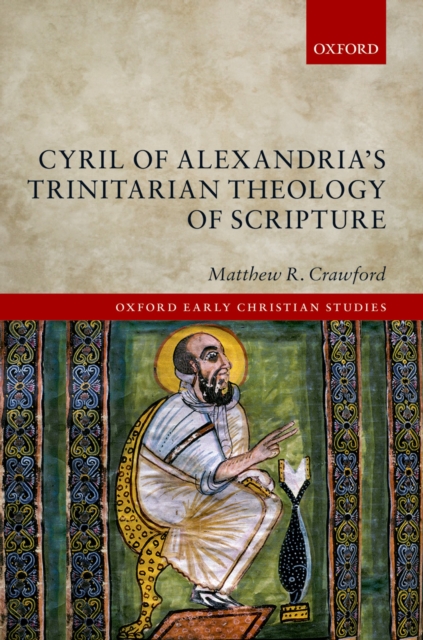
More exegetical literature survives from the hand of Cyril of Alexandria than nearly any other Greek patristic author, yet this sizable body of work has scarcely received the degree of attention it deserves.
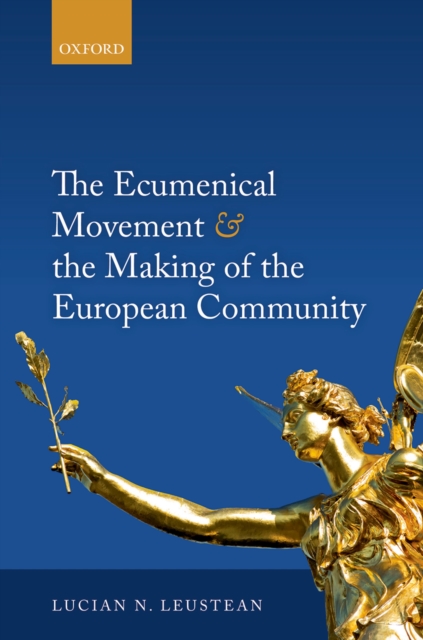
The European Community has largely been considered a predominantly secular project, bringing together the economic and political realms, while failing to mobilise the public voice and imagination of churchmen and the faithful.
The period between the late Renaissance and the early Enlightenment has long been regarded as the zenith of the 'republic of letters', a pan-European community of like-minded scholars and intellectuals who fostered critical approaches to the study of the Bible and other ancient texts, while renouncing the brutal religio-political disputes that were tearing their continent apart at the same time.
The doctrine of God is central to theology for it determines the way in which other regions of Christian doctrine are articulated, yet work on this topic in its own right has been occluded recently by treatments of the Trinity or divine passibility.
Aquinas and Calvin on Romans is a comparative study of John Calvin's and Thomas Aquinas's commentaries on the first eight chapters of Paul's letter to the Romans.
The notion that rituals, like natural languages, are governed by implicit, rigorous rules led scholars in the last century, harking back to the early Indian grammarian Patanjali, to speak of a "e;grammar"e;, or "e;syntax"e;, of ritual, particularly sacrificial ritual.
In Deuteronomy and the Judaean Diaspora Ernest Nicholson challenges the widely accepted view that Deuteronomy was the 'book of the law' described in 2 Kings 22-3 as the basis of king Josiah's cultic reformation in 621 BCE.
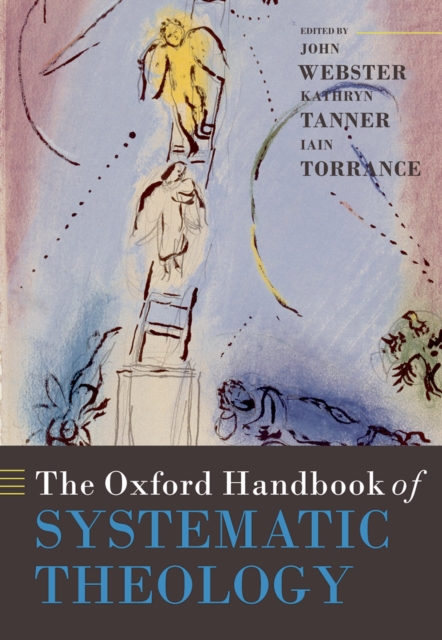
The Oxford Handbook of Systematic Theology brings together a set of original and authoritative accounts of all the major areas of current research in Christian systematic theology, offering a thorough survey of the state of the discipline and of its prospects for those undertaking research and teaching in the field.