With Frassati's famous motto Verso l'alto (To the Heights), this book challenges you to rise to the occasion and live your faith with courageous action.
An essential volume spanning the theology, tradition, and practical considerations of altar guild ministryThis necessary and practical guide is designed to function as a theological, formational, and spiritual resource for any altar guild member.
Drawing on two years of ethnographic field research among the Navajos, this book explores a controversial Native American ritual and healthcare practice: ceremonial consumption of the psychedelic Peyote cactus in the context of an indigenous postcolonial healing movement called the Native American Church (NAC).
Temples for a Modern God is one of the first major studies of American religious architecture in the postwar period, and it reveals the diverse and complicated set of issues that emerged just as one of the nation's biggest building booms unfolded.
The authors argue that resorting to rules and categories cannot adequately address the pervasive problems of ambiguity, difference, and boundaries - that is to say, the challenge of pluralism in our world.
In this book, Frederique Apffel-Marglin draws on a lifetime of work with the indigenous peoples of Peru and India to support her argument that the beliefs, values, and practices of such traditional peoples are 'eco-metaphysically true.
Winner of the Award for Excellence in Religion: Analytical-Descriptive Studies from the American Academy of ReligionAnna Fedele offers a sensitive ethnography of alternative pilgrimages to French Catholic shrines dedicated to Saint Mary Magdalene.
The explosive growth of the immigrant population since the 1960s has raised concerns about its impact on public life, but only recently have scholars begun to ask how religion affects the immigrant experience in our society.
The book of Genesis tells us that God made a covenant with Abraham, promising him a glorious posterity on the condition that he and all his male descendents must be circumcised.
Recent years have seen unprecedented attention to faith-based institutions as agents of social change, spurred in part by cuts in public funding for social services and accompanied by controversy about the separation of church and state.
In Sacred High City, Sacred Low City, Steven Heine argues that lived religion in Japan functions as an integral part of daily life; any apparent lack of interest masks a fundamental commitment to participating regularly in diverse, though diffused, religious practices.
The first comprehensive empirical account of how religion affects the interpretation, prevention, and mitigation of AIDS in Africa, the world's most religious continent.
Winner of the 2016 Grawemeyer Award in ReligionGlobal health efforts today are usually shaped by two very different ideological approaches: a human rights-based approach to health and equity-often associated with public health, medicine, or economic development activities; or a religious or humanitarian "e;aid"e; approach motivated by personal beliefs about charity, philanthropy, missional dynamics, and humanitarian "e;mercy.
Ritual has been long viewed as an undisputed and indisputable part of (especially religious) tradition, performed over and over in the same ways: stable in form, meaningless, preconcieved, and with the aim of creating harmony and enabling a tradition's survival.
In this book, Frederique Apffel-Marglin draws on a lifetime of work with the indigenous peoples of Peru and India to support her argument that the beliefs, values, and practices of such traditional peoples are 'eco-metaphysically true.
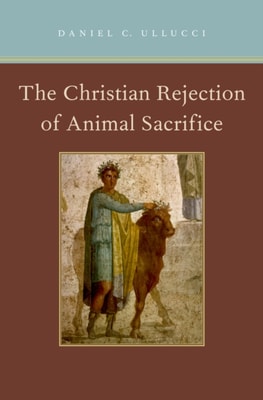
Sacrifice dominated the religious landscape of the ancient Mediterranean world for millennia, but its role and meaning changed dramatically in the fourth and fifth centuries with the rise of Christianity.
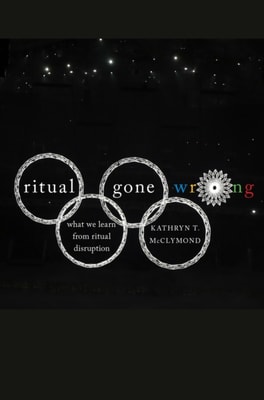
The discipline of religious studies has historically tended to focus on discrete ritual mistakes occurring in the context of individual performances as outlined in ethnographic or sociological studies; scholars have largely overlooked the extensive discussions of ritual mistakes that exist in the religious literature of indigenous traditions.
The first comprehensive empirical account of how religion affects the interpretation, prevention, and mitigation of AIDS in Africa, the world's most religious continent.
Throughout the past millennium, certain Tibetan Buddhist yogins have taken on profoundly norm-overturning modes of dress and behavior, including draping themselves in human remains, consuming filth, provoking others to violence, and even performing sacrilege.
David Tittensor offers a groundbreaking new perspective on the Gulen movement, a Turkish Muslim educational activist network that emerged in the 1960s and has grown into a global empire with an estimated worth of $25 billion.
There is a great deal of interest in bringing a better appreciation of ritual into religious studies classes, but many teachers are uncertain how to go about doing this.
The book of Genesis tells us that God made a covenant with Abraham, promising him a glorious posterity on the condition that he and all his male descendents must be circumcised.
The explosive growth of the immigrant population since the 1960s has raised concerns about its impact on public life, but only recently have scholars begun to ask how religion affects the immigrant experience in our society.
Recent years have seen unprecedented attention to faith-based institutions as agents of social change, spurred in part by cuts in public funding for social services and accompanied by controversy about the separation of church and state.
While Western Jain scholarship has focused on those texts and practices favoring male participation, the Jain community itself relies heavily on lay women's participation for religious education, the performance of key rituals, and the locus of religious knowledge.
The common view of the nineteenth-century pastoral relationship--found in both contemporary popular accounts and 20th-century scholarship--was that women and clergymen formed a natural alliance and enjoyed a particular influence over each other.
The Tibetan district of Tsari with its sacred snow-covered peak of Pure Crystal Mountain has long been a place of symbolic and ritual significance for Tibetan peoples.
This book examines the ways in which two distinct biblical conceptions of impurity-"e;ritual"e; and "e;moral"e;-were interpreted in the Hebrew Bible, the Dead Sea Scrolls, rabbinic literature, and the New Testament.
Although most historical and contemporary religions are governed by men, there are, scattered throughout the world, a handful of well-documented religions led by women.
This well-researched and inspiring collection of ten essays by leading American and European scholars challenges the tendency among scholars of Greek religion to ignore what have traditionally been called "e;magical"e; practices in ancient Greece.