Progress which has been made in our knowledge of Northern Buddhism during the last few years is due very considerably to the discovery of the Buddhist literature of China.
Progress which has been made in our knowledge of Northern Buddhism during the last few years is due very considerably to the discovery of the Buddhist literature of China.
Originally published in 1979, The Dynamic Psychology of Early Buddhism was a psychologist's attempt to understand what the Buddha meant by "e;dependent origination"e; (paticcasumappada, sometimes translated as "e;causality"e;).
The "e;Lotus of the Wonderful (or Mystic) Law"e; is the most important religious book of the Far East, and has been described as "e;The Gospel of Half Asia"e;.
The "e;Lotus of the Wonderful (or Mystic) Law"e; is the most important religious book of the Far East, and has been described as "e;The Gospel of Half Asia"e;.
Since the Buddha did not fully explain the theory of persons that underlies his teaching, in later centuries a number of different interpretations were developed.
Since the Buddha did not fully explain the theory of persons that underlies his teaching, in later centuries a number of different interpretations were developed.
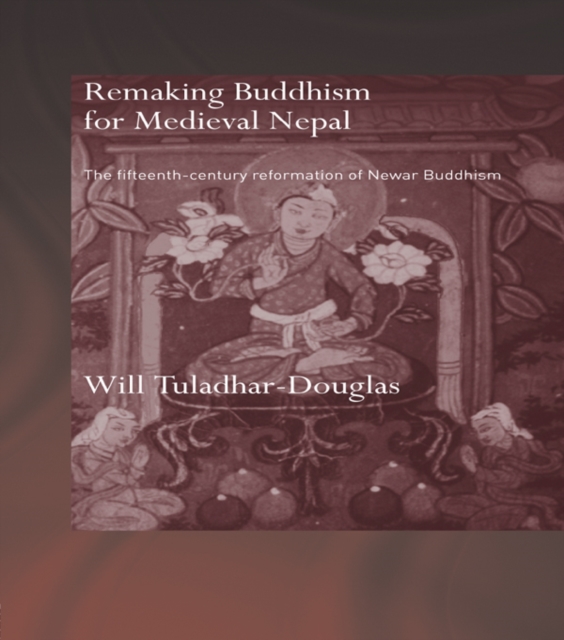
Will Tuladhar-Douglas sheds new light on an important branch of Mahayana Buddhism and establishes the existence, character and causes of a renaissance of Buddhism in the fifteenth century in the Kathmandu Valley of Nepal.
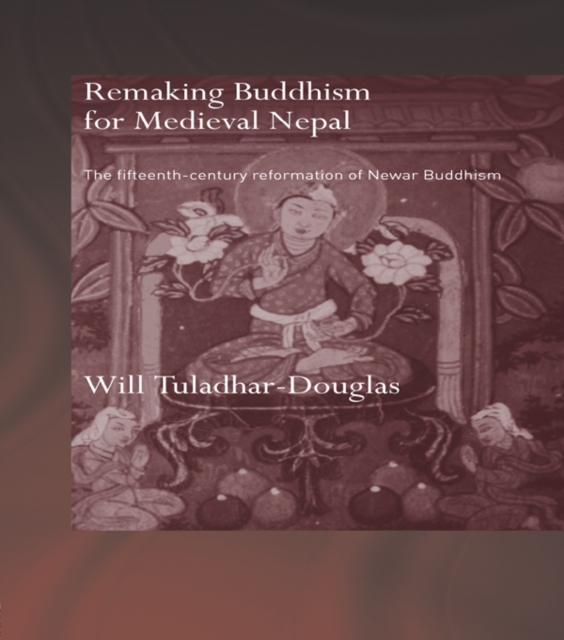
Will Tuladhar-Douglas sheds new light on an important branch of Mahayana Buddhism and establishes the existence, character and causes of a renaissance of Buddhism in the fifteenth century in the Kathmandu Valley of Nepal.
Written by one of the world's top scholars in the field of Pali Buddhism, this new and updated edition of How Buddhism Began, discusses various important doctrines and themes in early Buddhism.
Written by one of the world's top scholars in the field of Pali Buddhism, this new and updated edition of How Buddhism Began, discusses various important doctrines and themes in early Buddhism.
This book identifies what is meant by sati (smrti), usually translated as 'mindfulness', in early Buddhism, and examines its soteriological functions and its central role in the early Buddhist practice and philosophy.
This book identifies what is meant by sati (smrti), usually translated as 'mindfulness', in early Buddhism, and examines its soteriological functions and its central role in the early Buddhist practice and philosophy.