Bodhidharma, its first patriarch, reputedly said that Zen Buddhism represents "e;a special transmission outside the teaching/Without reliance on words and letters.
In Sacred High City, Sacred Low City, Steven Heine argues that lived religion in Japan functions as an integral part of daily life; any apparent lack of interest masks a fundamental commitment to participating regularly in diverse, though diffused, religious practices.
Although raised Roman Catholic, Susan Stabile was ordained as a Tibetan Buddhist nun and devoted 20 years of her life to practicing Buddhism before returning to Catholicism in 2001.
While academic and popular studies of Buddhism have often neglected race as a factor of analysis, the issues concerning race and racialization have remained not far below the surface of the wider discussion among ethnic Buddhists, converts, and sympathizers regarding representations of American Buddhism and adaptations of Buddhist practices to the American context.
Yongming Yanshou ranks among the great thinkers of the Chinese and East Asian Buddhist traditions, one whose legacy has endured for more than a thousand years.
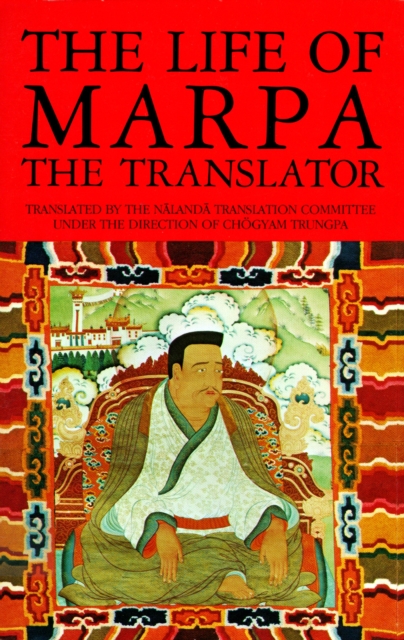
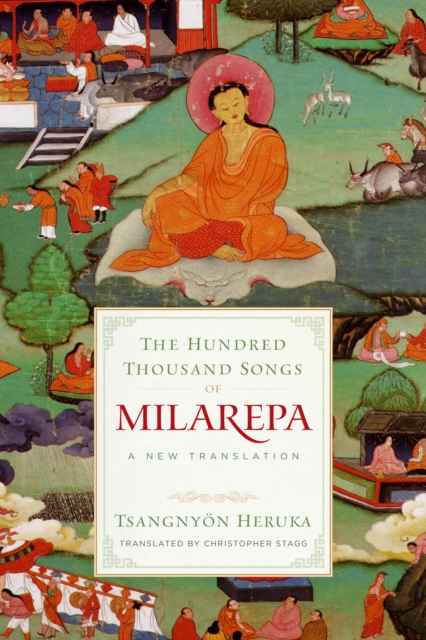
This life story of Milarepa--the important Tibetan religious leader who lived over 800 years ago--is part of a remarkable four-volume series on Tibetan Buddhism produced by the late W.
The Tibetan Book of the Great Liberation, which was unknown to the Western world until its first publication in 1954, speaks to the quintessence of the Supreme Path, or Mahayana, and fully reveals the yogic method of attaining Enlightenment.
Books, audiotapes, and classes about yoga are today as familiar as they are widespread, but we in the West have only recently become engaged in the meditative doctrines of the East--only in the last 70 or 80 years, in fact.
Koans are dialogues that stand at the center of Zen Buddhist literature and are often used to provoke the "e;great doubt"e; in testing a trainee's progress.
Extending their successful series of collections on Zen Buddhism, Heine and Wright present a fifth volume, on what may be the most important topic of all - Zen Masters.
The Buddhist monk Tanxu surmounted extraordinary obstacles--poverty, wars, famine, and foreign occupation--to become one of the most prominent monks in China, founding numerous temples and schools and attracting crowds of students and disciples wherever he went.
This life story of Milarepa--the important Tibetan religious leader who lived over 800 years ago--is part of a remarkable four-volume series on Tibetan Buddhism produced by the late W.
Books, audiotapes, and classes about yoga are today as familiar as they are widespread, but we in the West have only recently become engaged in the meditative doctrines of the East--only in the last 70 or 80 years, in fact.
The Tibetan Book of the Great Liberation, which was unknown to the Western world until its first publication in 1954, speaks to the quintessence of the Supreme Path, or Mahayana, and fully reveals the yogic method of attaining Enlightenment.
As a religion concerned with universal liberation, Zen grew out of a Buddhist worldview very different from the currently prevalent scientific materialism.
A great deal of Buddhist literature and scholarly writing about Buddhism of the past 150 years reflects, and indeed constructs, a historically unique modern Buddhism, even while purporting to represent ancient tradition, timeless teaching, or the "e;essentials"e; of Buddhism.
Western esotericism has now emerged as an academic study in its own right, combining spirituality with an empirical observation of the natural world while also relating the humanity to the universe through a harmonious celestial order.
Although Buddhism is often depicted as a religion of meditators and philosophers, some of the earliest writings extant in India offer a very different portrait of the Buddhist practitioner.
Extending their successful series of collections on Zen Buddhism, Heine and Wright present a fifth volume, on what may be the most important topic of all - Zen Masters.
This rendering of the Sugata Saurabha, in a long line of accounts of the Buddha's life dating back almost 2,000 years, may be the last ever to be produced that conforms to the traditions of Indic classic poetry.
Many Western visitors to Japan have been struck by the numerous cemeteries for aborted fetuses, which are characterized by throngs of images of the Bodhisattva Jizo, usually dressed in red baby aprons or other baby garments, and each dedicated to an individual fetus.