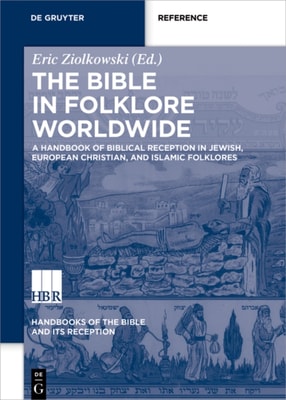
This first volume of a two-volume Handbook treats a challenging, largely neglected subject at the crossroads of several academic fields: biblical studies, reception history of the Bible, and folklore studies or folkloristics.
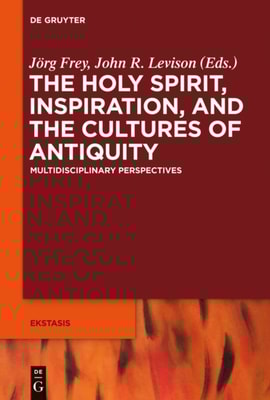
Early Christian claims to the Holy Spirit arose in a vibrant cultural matrix that included Stoicism, Jewish mysticism, the Dead Sea Scrolls, Greco-Roman medicine, and the perspectives of Plutarch.
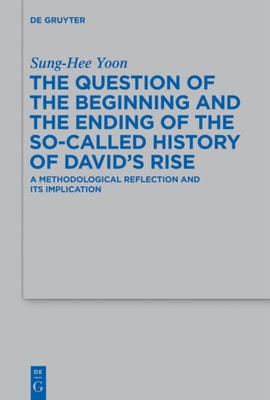
The extent of the so-called History of David's Rise has been indecisive, and as a result, various issues around the document have been left extremely flexible.
Beginning in 2004, De Gruyter publishes the Deuterocanonical and Cognate Literature * Yearbook (DCLY) in cooperation with the International Society for the Study of Deuterocanonical and Cognate Literature.
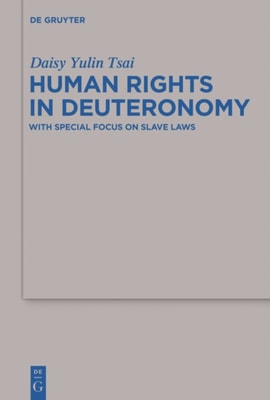
The humanitarian concerns of the biblical slave laws and their rhetorical techniques rarely receive scholarly attention, especially the two slave laws in Deuteronomy.
Scholars of early Christian and Jewish literature have for many years focused on interpreting texts in their hypothetical original forms and contexts, while largely overlooking important aspects of the surviving manuscript evidence and the culture that produced it.
The Shepherd of Hermas is a Greek visionary text written in Rome during the 2nd century CE with the aim to exhort men to change life and repent for their sins, taking advantage of the last chance given by the Lord before world's end.
Jewish anthropological beliefs during the Hellenistic-Roman period are an important but previously neglected area of biblical exegesis and Jewish studies.
The discovery of the Dead Sea Scrolls more than sixty years ago has revealed a wealth of literary compositions which rework the Hebrew Bible in various ways.
Beginning in 2004, De Gruyter publishes the Deuterocanonical and Cognate Literature * Yearbook (DCLY) in cooperation with the International Society for the Study of Deuterocanonical and Cognate Literature.
This book employs cognitive linguistics to determine the foundational elements of the ancient Israelites' concept of teaching as reflected in the text of the Hebrew Bible and Ben Sira.
Professor Maurice Gilbert SJ is widely acknowledged as one of the leading authorities on biblical wisdom literature, in particular the Book of Ben Sira and the Wisdom of Solomon, on which he has produced many publications.
This volume brings together an international group of scholars on Mark and Paul, respectively, who reopen the question whether Paul was a direct influence on Mark.
The humanitarian concerns of the biblical slave laws and their rhetorical techniques rarely receive scholarly attention, especially the two slave laws in Deuteronomy.
The extent of the so-called History of David's Rise has been indecisive, and as a result, various issues around the document have been left extremely flexible.