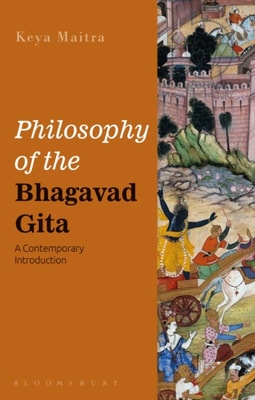
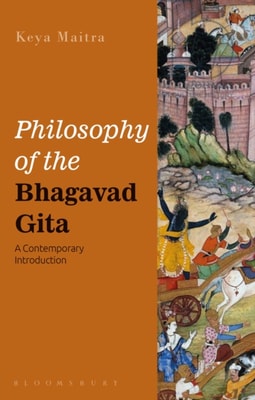
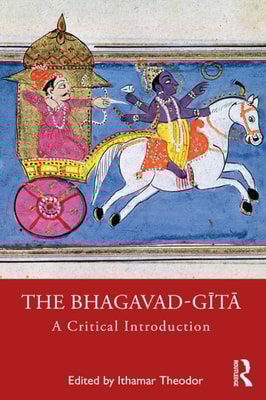
Philosophy of The Bhagavad Gita: A Contemporary Introduction presents a complete philosophical guide and new translation of the most celebrated text of Hinduism.
Philosophy of The Bhagavad Gita: A Contemporary Introduction presents a complete philosophical guide and new translation of the most celebrated text of Hinduism.
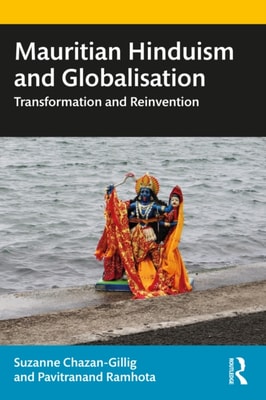
The historical shift from Vedic traditions to post-Vedic bhakti (devotional) traditions is accompanied by a shift from abstract, translocal notions of divinity to particularized, localized notions of divinity and a corresponding shift from aniconic to iconic traditions and from temporary sacrificial arenas to established temple sites.
The historical shift from Vedic traditions to post-Vedic bhakti (devotional) traditions is accompanied by a shift from abstract, translocal notions of divinity to particularized, localized notions of divinity and a corresponding shift from aniconic to iconic traditions and from temporary sacrificial arenas to established temple sites.
Theistic Vedanta originated with Ramanuja (1077-1157), who was one of the foremost theologians of Visistadvaita Vedanta and also an initiate of the Srivaisnava sectarian tradition in South India.
Theistic Vedanta originated with Ramanuja (1077-1157), who was one of the foremost theologians of Visistadvaita Vedanta and also an initiate of the Srivaisnava sectarian tradition in South India.
The Sanskrit Mahabharata is one of the greatest works of world literature and pivotal for the understanding of both Hindu traditions and wider society in ancient, medieval and modern South Asia.
The Sanskrit Mahabharata is one of the greatest works of world literature and pivotal for the understanding of both Hindu traditions and wider society in ancient, medieval and modern South Asia.
The Ramayana, an ancient epic of India, with audiences across vast stretches of time and geography, continues to influence numberless readers socially and morally through its many re-tellings.
The Ramayana, an ancient epic of India, with audiences across vast stretches of time and geography, continues to influence numberless readers socially and morally through its many re-tellings.
This book offers a comprehensive description of the 'doctrine of salvation' (nihsreyasa/ moksa) and Vaisesika, one of the oldest philosophical systems of Indian philosophy and provides an overview of theories in other related Indian philosophical systems and classical doctrines of salvation.
This book offers a comprehensive description of the 'doctrine of salvation' (nihsreyasa/ moksa) and Vaisesika, one of the oldest philosophical systems of Indian philosophy and provides an overview of theories in other related Indian philosophical systems and classical doctrines of salvation.
Awakening: An Introduction to the History of Eastern Thought provides the reader with a thorough and valuable overview of the historical development of the major Eastern religious and philosophical traditions, primarily in India, China, and Japan.
Awakening: An Introduction to the History of Eastern Thought provides the reader with a thorough and valuable overview of the historical development of the major Eastern religious and philosophical traditions, primarily in India, China, and Japan.
This book introduces readers to Indian philosophy by presenting the first integral English translation of Vaisesikasutra as preserved by the earliest canonical commentary of Candrananda (7th century AD) on the old aphorisms of the Vaisesika school of Indian philosophy.
This book introduces readers to Indian philosophy by presenting the first integral English translation of Vaisesikasutra as preserved by the earliest canonical commentary of Candrananda (7th century AD) on the old aphorisms of the Vaisesika school of Indian philosophy.
The Mahabharata has been explored extensively as a work of mythology, epic poetry, and religious literature, but the text's philosophical dimensions have largely been under-appreciated by Western scholars.
The Mahabharata has been explored extensively as a work of mythology, epic poetry, and religious literature, but the text's philosophical dimensions have largely been under-appreciated by Western scholars.
In analyzing the parallels between myths glorifying the Indian Great Goddess, Durga, and those glorifying the Sun, Surya, found in the Markandeya Purana, this book argues for an ideological ecosystem at work in the Markandeya Purana privileging worldly values, of which Indian kings, the Goddess (Devi), the Sun (Surya), Manu and Markandeya himself are paragons.
In analyzing the parallels between myths glorifying the Indian Great Goddess, Durga, and those glorifying the Sun, Surya, found in the Markandeya Purana, this book argues for an ideological ecosystem at work in the Markandeya Purana privileging worldly values, of which Indian kings, the Goddess (Devi), the Sun (Surya), Manu and Markandeya himself are paragons.
In the late 18th century Bhagavad-gita became the first Sanskrit work to be rendered in a European tongue, and since that time it has generated countless translations and secondary analyses.