
Islam
Sorting
Bestseller Sorting collapsed
Bestseller
Name: A-Z
Name: Z-A
Price ascending
Price descending
Publication Date ascending
Publication Date descending
E-book

Price
0
8.49 £




E-book
0
0
Price
8.49 £
Al -Mustadrak on the two Sahihs, one of the books of the hadith of the Prophet's hadith among the Sunnis and the community.
Read more
E-book
Price
0
8.49 £
E-book
0
0
Price
8.49 £
Al -Sunan and Al -Muntaid Mosque is a book written by Al -Hafiz Abu Al -Fida Ismail bin Omar bin Katheer Al -Qurashi Al -Basri and then the Damascene, it is narrated that he went his eyesight while writing this book and did not complete it, so he used to say: " Whoever completes it, even though it is easy, the Great Dictionary of Tabarani was not in it from the Musnad of Abu Hurairah.
Read more
E-book
Price
0
8.49 £
E-book
0
0
Price
8.49 £
It is the most prominent books of the hadith of the Prophet among the Muslims from the Sunnis and the community, which was classified by Imam Muhammad bin Ismail Al -Bukhari and it took sixteen years in its liberation, and his hadiths were selected from six hundred thousand hadiths that were collected, and the book occupies an advanced position among the Sunnis as it is one of the six books that are considered to be the mothers of sources The hadith they have, and it is the first book classified in the authentic, authentic hadith, as they are considered the most correct book after the Noble Qur'an.
Read more
E-book
Price
0
8.49 £
E-book
0
0
Price
8.49 £
This encyclopedia is one of the vast Arab sources that deal with multiple topics since the first periods of Islam on the systems of government, administration, politics, economics, libraries, states, covenants, customs, traditions and clothes in the Arab East.
Read more
E-book
Price
0
8.49 £
E-book
0
0
Price
8.49 £
It is the most prominent books of the hadith of the Prophet among the Muslims from the Sunnis and the community, which was classified by Imam Muhammad bin Ismail Al -Bukhari and it took sixteen years in its liberation, and his hadiths were selected from six hundred thousand hadiths that were collected, and the book occupies an advanced position among the Sunnis as it is one of the six books that are considered to be the mothers of sources The hadith they have, and it is the first book classified in the authentic, authentic hadith, as they are considered the most correct book after the Noble Qur'an.
Read more
E-book
Price
0
8.49 £
E-book
0
0
Price
8.49 £
The author took great care of the sayings of Abu Dawud and his words on the narrators, and I mean to correct the copies of the different Sunnahs spread, and graduated the comments, and reached them from other sources, and he states in his book the occasion of the hadith for translation, and the benefit is mentioned from the repetition of the hadith if it is repeated, and he continues in deduction and mentioning the doctrines, as it means By explaining the words of the hadiths on the path of mixing, and shows their origins and derivation.
Read more
E-book
Price
0
8.49 £
E-book
0
0
Price
8.49 £
It is the most prominent books of the hadith of the Prophet among the Muslims from the Sunnis and the community, which was classified by Imam Muhammad bin Ismail Al -Bukhari and it took sixteen years in its liberation, and his hadiths were selected from six hundred thousand hadiths that were collected, and the book occupies an advanced position among the Sunnis as it is one of the six books that are considered to be the mothers of sources The hadith they have, and it is the first book classified in the authentic, authentic hadith, as they are considered the most correct book after the Noble Qur'an.
Read more
E-book
Price
0
8.49 £
E-book
0
0
Price
8.49 £
This book is considered one of the most important books of Shafi'i, as it has collected the modern evidence of the doctrine as a way out of the Sahih and the Sunnah, indicating its methods, and the reason for what was exalted from it, and the reason for the inference of Al -Shafi'i if it was an inclination, and he responds to others such as Al -Tahwi from the Hanafi.
Read more
E-book
Price
0
8.49 £
E-book
0
0
Price
8.49 £
Sahih Ibn Hibban is a book from the famous hadith books written by Al -Hafiz Muhammad bin Hibban bin Ahmed bin Hibban bin Moaz bin Muaba, Al -Tamimi, Abu Hatim, Al -Darmi, Al -Basti.
Read more
E-book
Price
0
8.49 £
E-book
0
0
Price
8.49 £
The book of inks to clarify the meanings of facilitation is one of the valuable books for researchers and professors in the branches of the Hadith of Hadith; Where the book of inks is included to clarify the meanings of facilitation within the scope of the sciences of hadith and the branches close to jurisprudence, biography and other branches of the Prophet's guidance
Read more
E-book
Price
0
8.49 £
E-book
0
0
Price
8.49 £
This book is considered one of the most important books of Shafi'i, as it has collected the modern evidence of the doctrine as a way out of the Sahih and the Sunnah, indicating its methods, and the reason for what was exalted from it, and the reason for the inference of Al -Shafi'i if it was an inclination, and he responds to others such as Al -Tahwi from the Hanafi.
Read more
E-book
Price
0
8.49 £
E-book
0
0
Price
8.49 £
The said saying in the melting of the Musnad of Imam Ahmad is a book by Al -Hafiz Ibn Hajar Al -Asqalani.
Read more
E-book
Price
0
8.49 £
E-book
0
0
Price
8.49 £
It is the most prominent books of the hadith of the Prophet among the Muslims from the Sunnis and the community, which was classified by Imam Muhammad bin Ismail Al -Bukhari and it took sixteen years in its liberation, and his hadiths were selected from six hundred thousand hadiths that were collected, and the book occupies an advanced position among the Sunnis as it is one of the six books that are considered to be the mothers of sources The hadith they have, and it is the first book classified in the authentic, authentic hadith, as they are considered the most correct book after the Noble Qur'an.
Read more
E-book
Price
0
8.49 £
E-book
0
0
Price
8.49 £
Imam Al -Hafiz Al -Kabir Abu Al -Hassan Ali bin Abdullah bin Jaafar Al -Saadi, famous for "Ibn al -Madini", is a special attention and uniqueness in the chapter on knowing the ills of the hadiths.
Read more
E-book
Price
0
8.49 £
E-book
0
0
Price
8.49 £
The collection of mosques known as the Great Mosque is a book written by Jalal al -Din al -Suyuti (who died in the year 911 AH).
Read more
E-book
Price
0
8.49 £
E-book
0
0
Price
8.49 £
This book examines a science from the science of the hadith, which is a strange science of the hadith, as there are in some hadiths mysterious and strange phrases, so many scholars explained it and removed its ambiguity, and among them was Imam Ibn Al -Jawzi, who was distinguished
Read more
E-book
Price
0
8.49 £
E-book
0
0
Price
8.49 £
Sahih Muslim is one of the most important books of the Prophet's hadith among Muslims from the Sunnis and the community, and they consider it the third most authentic books ever after the Noble Qur'an, then Sahih Al -Bukhari.
Read more
E-book
Price
0
8.49 £
E-book
0
0
Price
8.49 £
Sunan Al -Nasa'i's book is considered one of the valuable references for researchers in the specialty of hadith sciences in particular and most of the jurisprudential and Islamic writings in general as it falls within the framework of the field of modernization of modern science and has a link to other fields, especially jurisprudence sciences and interpretation, studies of the Prophet's biography, and Islamic culture.
Read more
E-book
Price
0
8.49 £
E-book
0
0
Price
8.49 £
A book in the hadith of the Golden Imam, in which the Book of the Great Sunan of Imam Al -Bayhaqi summarized in a clear and concept manner, which makes it closer to understanding, so he was deleted a lot from what was mentioned in the book from lengthening and sending
Read more
E-book
Price
0
8.49 £
E-book
0
0
Price
8.49 £
The book "Al -Fath Al -Rabbani to arrange the Musnad of Imam Ahmad bin Hanbal Al -Shaibani" by Sheikh Ahmed Abdul Rahman Al -Banna Al -Saati, in which the Musnad of Imam Ahmad arranged an accurate jurisprudence, so he started with the section of monotheism, then jurisprudence, then the interpretation, then the desire, then intimidation, then the date and the resurrection and the conditions of the hereafter and said in the introduction to the book: I don't know anyone who preceded me.
Read more
E-book
Price
0
8.49 £
E-book
0
0
Price
8.49 £
Musnad Ahmad, known as Al -Misnad, is one of the most famous and broader books of the hadith, which occupies an advanced position among the Sunnis; Where it is considered one of the mothers of the sources of the hadith they have, and it is the most famous of the chain of narrators, which made it the speakers in the third degree after the two Sahihs and the four years.
Read more
E-book
Price
0
8.49 £
E-book
0
0
Price
8.49 £
The book of supplementing in wound, modification, knowledge of trustworthy, weak and ignorant books is a valuable books for researchers and professors in the branches of the Hadith of Hadith; Where it falls within the scope of the science of hadith and the branches close to the science of jurisprudence, biography and other branches of the Prophet's guidance.
Read more
E-book
Price
0
8.49 £
E-book
0
0
Price
8.49 £
The high demands of the eight al -Masanid is a book from the books of the hadith written by Al -Hafiz Ibn Hajar Al -Asqalani, in which the author was divided into forty -four books, then a branch of the content of each book is on chapters that fit the hadiths it contain In each chapter, the raised from the hadith, then the arrested, then the cut
Read more
E-book
Price
0
8.49 £
E-book
0
0
Price
8.49 £
The book of revision of the book of the dinar is considered one of the important references for the great references for researchers and specialists in the field of Hadith Studies; Where it is located within the scope of the science of hadith and the branches closely related to jurisprudence sciences, biography and other branches of the Prophet's guidance
Read more
E-book
Price
0
8.49 £
E-book
0
0
Price
8.49 £
The prelude to what is in the meanings and the meanings is an explanation of the hadiths raised in al -Muwatta, composed by Al -Hafiz Ibn Abd al -Barr, and the introduction is considered a unique book in its chapter, and a comprehensive encyclopedia in jurisprudence and hadith, and it is a book in which Ibn Abd al -Barr explained the book of al -Muwatta by Imam Malik bin Anas, but it arranged an arrangement Another differs from the arrangement of Imam Malik, as he arranged in a chain of transmission on the names of the elders of Imam Malik, whom he narrated from the hadiths in the hadiths, he collected the hadiths of each narrator in a chain of transmission on a limit dependent in their arrangement on the letters of the dictionary and translated into the narrators and the hadiths came out and explained them linguistically and jurisprudence, He mentioned the opinions of the scholars and jurisprudence, and it was limited to what was reported from the Messenger from the hadith, connected, discontinued, arrested, or sent, without the opinions and effects in al -Muwatta, and he has eliminated in the composition of the Book of Evidence for more than thirty years.
Read more
E-book
Price
0
8.49 £
E-book
0
0
Price
8.49 £
The Al -Sunan Al -Sagheer Book of Al -Bayhaqi is considered one of the important references for researchers and specialists in the field of Hadith Studies; Where the book of a mistake is made by the one who made a mistake on Al -Shafi'i within the scope of the science of hadith and the branches closely related to jurisprudence sciences, biography and other branches of the Prophet's guidance.
Read more
E-book
Price
0
8.49 £
E-book
0
0
Price
8.49 £
Sahih Ibn Hibban is a book from the famous hadith books written by Al -Hafiz Muhammad bin Hibban bin Ahmed bin Hibban bin Moaz bin Muaba, Al -Tamimi, Abu Hatim, Al -Darmi, Al -Basti.
Read more
E-book
Price
0
8.49 £
E-book
0
0
Price
8.49 £
Musnad Ahmad, known as Al -Misnad, is one of the most famous and broader books of the hadith, which occupies an advanced position among the Sunnis; Where it is considered one of the mothers of the sources of the hadith they have, and it is the most famous of the chain of narrators, which made it the speakers in the third degree after the two Sahihs and the four years.
Read more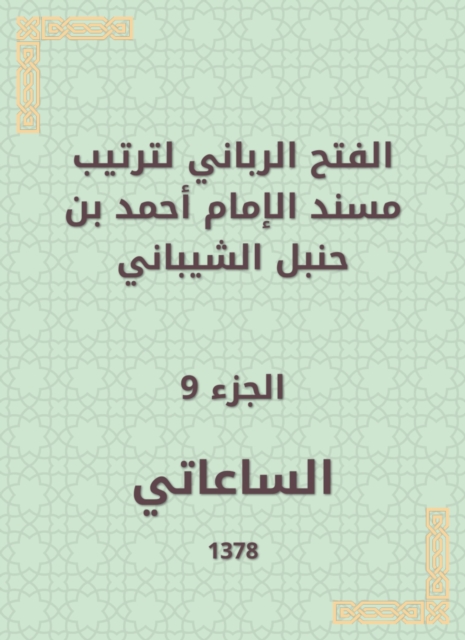
E-book
Price
0
8.49 £
E-book
0
0
Price
8.49 £
The book "Al -Fath Al -Rabbani to arrange the Musnad of Imam Ahmad bin Hanbal Al -Shaibani" by Sheikh Ahmed Abdul Rahman Al -Banna Al -Saati, in which the Musnad of Imam Ahmad arranged an accurate jurisprudence, so he started with the section of monotheism, then jurisprudence, then the interpretation, then the desire, then intimidation, then the date and the resurrection and the conditions of the hereafter and said in the introduction to the book: I don't know anyone who preceded me.
Read more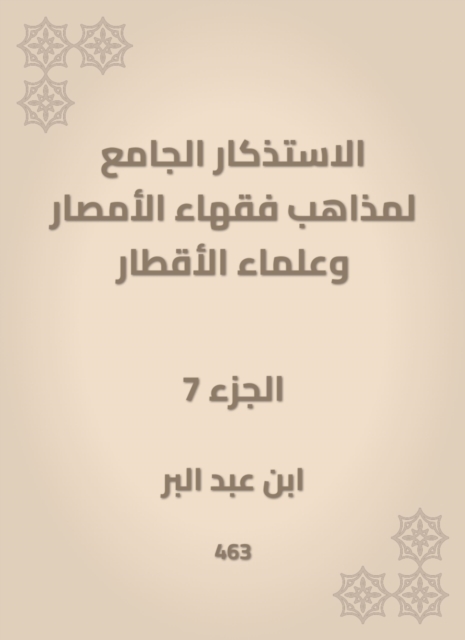
E-book
Price
0
8.49 £
E-book
0
0
Price
8.49 £
The inclusive reciter of the doctrines of the scholars of Al -Amsar and the scholars of the countries is a book from the books of the explanations of the books of the hadith, composed by Al -Hafiz Ibn Abd al -Barr, Explanation of the Book of Al -Muwatta on what was placed on what was put on the book of preparation for the meanings and chain of transmission, and it was added in it to the explanation of the Musnad and the sent, and explained the sayings of the Companions and the followers And arrange the doors of al -Muwatta and delete it from the repetition of evidence and the roads
Read more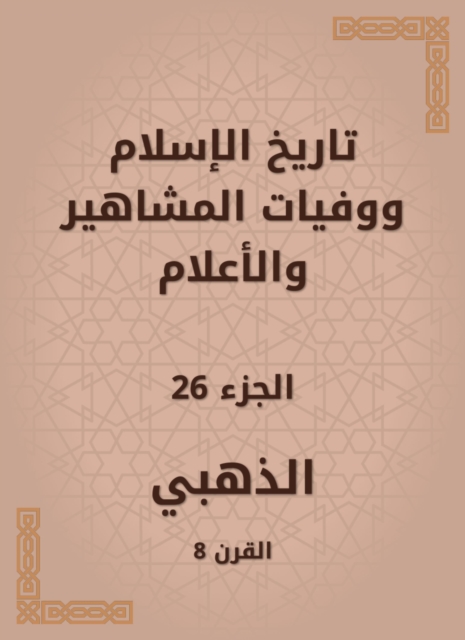
E-book
Price
0
8.49 £
E-book
0
0
Price
8.49 £
"The history of Islam and the deaths of celebrities and flags is the most famous and largest thing that Imam Al -Dhahabi is considered one of the most important encyclopedic books that Muslim historians classified, and it is a book of history and translations together, different from the other huge encyclopedia of the work known as" the functioning of the nobles' flags.
Read more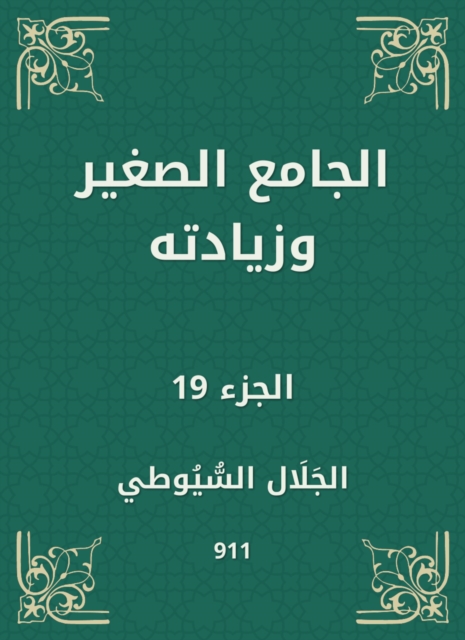
E-book
Price
0
8.49 £
E-book
0
0
Price
8.49 £
(The small mosque from the hadith of al -Bashir al -Nazir, may God's prayers and peace be upon him) is a valuable book, Al -Suyuti chose his hadiths from his huge book of encyclopedic (collection of mosques) or (The Great Mosque).
Read more
E-book
Price
0
8.49 £
E-book
0
0
Price
8.49 £
Musnad Ahmad, known as Al -Misnad, is one of the most famous and broader books of the hadith, which occupies an advanced position among the Sunnis; Where it is considered one of the mothers of the sources of the hadith they have, and it is the most famous of the chain of narrators, which made it the speakers in the third degree after the two Sahihs and the four years.
Read more
E-book
Price
0
8.49 £
E-book
0
0
Price
8.49 £
Imam al -Nawawi explained the text first by showing the languages, then explaining the hadiths mentioned with a statement of their degree in terms of health and weakness, then followed it by mentioning the jurisprudence issues, and the most correct mention of them with the Shafi'is from the faces and sayings, then translated for the companions and scholars mentioned in the words of Al -Shirazi
Read more
E-book
Price
0
8.49 £
E-book
0
0
Price
8.49 £
The book "Al -Fath Al -Rabbani to arrange the Musnad of Imam Ahmad bin Hanbal Al -Shaibani" by Sheikh Ahmed Abdul Rahman Al -Banna Al -Saati, in which the Musnad of Imam Ahmad arranged an accurate jurisprudence, so he started with the section of monotheism, then jurisprudence, then the interpretation, then the desire, then intimidation, then the date and the resurrection and the conditions of the hereafter and said in the introduction to the book: I don't know anyone who preceded me.
Read more
E-book
Price
0
8.49 £
E-book
0
0
Price
8.49 £
"The history of Islam and the deaths of celebrities and flags is the most famous and largest thing that Imam Al -Dhahabi is considered one of the most important encyclopedic books that Muslim historians classified, and it is a book of history and translations together, different from the other huge encyclopedia of the work known as" the functioning of the nobles' flags.
Read more
E-book
Price
0
2.49 £
E-book
0
0
Price
2.49 £
Abu Muhammad Dahlaj bin Ahmed bin Daelj bin Abdul Rahman Al -Sijistani died 351Abu Muhammad Dahlaj bin Ahmed bin Daelj bin Abdul Rahman Al -Sijistani died 351Abu Muhammad Dahlaj bin Ahmed bin Daelj bin Abdul Rahman Al -Sijistani died 351Abu Muhammad Dahlaj bin Ahmed bin Daelj bin Abdul Rahman Al -Sijistani died 351Abu Muhammad Dahlaj bin Ahmed bin Daelj bin Abdul Rahman Al -Sijistani died 351
Read more
E-book
Price
0
2.49 £
E-book
0
0
Price
2.49 £
Malik bin Anas Al -Asbahi Al -Madani died 179Malik bin Anas Al -Asbahi Al -Madani died 179Malik bin Anas Al -Asbahi Al -Madani died 179Malik bin Anas Al -Asbahi Al -Madani died 179
Read more
E-book
Price
0
2.49 £
E-book
0
0
Price
2.49 £
Malik bin Anas Al -Asbahi Al -Madani died 179Malik bin Anas Al -Asbahi Al -Madani died 179Malik bin Anas Al -Asbahi Al -Madani died 179Malik bin Anas Al -Asbahi Al -Madani died 179Malik bin Anas Al -Asbahi Al -Madani died 179Malik bin Anas Al -Asbahi Al -Madani died 179
Read more
E-book
Price
0
8.49 £
E-book
0
0
Price
8.49 £
The collection of mosques known as the Great Mosque is a book written by Jalal al -Din al -Suyuti (who died in the year 911 AH).
Read more
E-book
Price
0
2.49 £
E-book
0
0
Price
2.49 £
Malik bin Anas Al -Asbahi Al -Madani died 179Malik bin Anas Al -Asbahi Al -Madani died 179Malik bin Anas Al -Asbahi Al -Madani died 179Malik bin Anas Al -Asbahi Al -Madani died 179Malik bin Anas Al -Asbahi Al -Madani died 179Malik bin Anas Al -Asbahi Al -Madani died 179
Read more
E-book
Price
0
2.49 £
E-book
0
0
Price
2.49 £
Malik bin Anas Al -Asbahi Al -Madani died 179Malik bin Anas Al -Asbahi Al -Madani died 179Malik bin Anas Al -Asbahi Al -Madani died 179Malik bin Anas Al -Asbahi Al -Madani died 179Malik bin Anas Al -Asbahi Al -Madani died 179Malik bin Anas Al -Asbahi Al -Madani died 179
Read more
E-book
Price
0
2.49 £
E-book
0
0
Price
2.49 £
Malik bin Anas Al -Asbahi Al -Madani died 179Malik bin Anas Al -Asbahi Al -Madani died 179Malik bin Anas Al -Asbahi Al -Madani died 179Malik bin Anas Al -Asbahi Al -Madani died 179
Read more
E-book
Price
0
8.49 £
E-book
0
0
Price
8.49 £
The rest of the Iraqi millennium explained to Sheikh Al -Islam Zakaria Al -Ansari Al -Shafi'i is one of the most famous explanations placed on the Iraqi millennium in the science of hadith, and its importance lies in the fact that the author is more in it than the transmission of his Sheikh Al -Hafiz Ibn Hajar Al -Asqalani, and he also seized the millennium linguistically and performers, and alerting that a lot.
Read more
E-book
Price
0
2.49 £
E-book
0
0
Price
2.49 £
Malik bin Anas Al -Asbahi Al -Madani died 179Malik bin Anas Al -Asbahi Al -Madani died 179Malik bin Anas Al -Asbahi Al -Madani died 179Malik bin Anas Al -Asbahi Al -Madani died 179
Read more
E-book
Price
0
8.49 £
E-book
0
0
Price
8.49 £
Al -Bari's masterpiece or Al -Bari grant with a Sahih Al -Bukhari explanation of Sheikh Al -Islam Abi Yahya Zakaria Al -Ansari Al -Shafi'i, is an explanation of Sahih Al -Bukhari with many benefits, uniquely with things that his predecessors did not bring, even though it is a summary of ten explanations on the correct, as Al -Ghazi said, reveals the meanings of the correct, and arises from the buildings Expression
Read more
E-book
Price
0
2.49 £
E-book
0
0
Price
2.49 £
Muhammad bin Ali bin Ubayd Allah bin Ahmed bin Saleh bin Suleiman bin Wadan Al -Mawsali, Abu Nasr died 494Muhammad bin Ali bin Ubayd Allah bin Ahmed bin Saleh bin Suleiman bin Wadan Al -Mawsali, Abu Nasr died 494Muhammad bin Ali bin Ubayd Allah bin Ahmed bin Saleh bin Suleiman bin Wadan Al -Mawsali, Abu Nasr died 494Muhammad bin Ali bin Ubayd Allah bin Ahmed bin Saleh bin Suleiman bin Wadan Al -Mawsali, Abu Nasr died 494Muhammad bin Ali bin Ubayd Allah bin Ahmed bin Saleh bin Suleiman bin Wadan Al -Mawsali, Abu Nasr died 494
Read more
E-book
Price
0
2.49 £
E-book
0
0
Price
2.49 £
Abdul Rahman bin Abdullah bin Abdul Hakam, Abu Al -Qasim Al -Masry died 257Abdul Rahman bin Abdullah bin Abdul Hakam, Abu Al -Qasim Al -Masry died 257Abdul Rahman bin Abdullah bin Abdul Hakam, Abu Al -Qasim Al -Masry died 257Abdul Rahman bin Abdullah bin Abdul Hakam, Abu Al -Qasim Al -Masry died 257Abdul Rahman bin Abdullah bin Abdul Hakam, Abu Al -Qasim Al -Masry died 257Abdul Rahman bin Abdullah bin Abdul Hakam, Abu Al -Qasim Al -Masry died 257
Read more
E-book
Price
0
2.49 £
E-book
0
0
Price
2.49 £
Malik bin Anas Al -Asbahi Al -Madani died 179Malik bin Anas Al -Asbahi Al -Madani died 179Malik bin Anas Al -Asbahi Al -Madani died 179Malik bin Anas Al -Asbahi Al -Madani died 179Malik bin Anas Al -Asbahi Al -Madani died 179
Read more
E-book
Price
0
2.49 £
E-book
0
0
Price
2.49 £
Malik bin Anas Al -Asbahi Al -Madani died 179 Malik bin Anas Al -Asbahi Al -Madani died 179 Malik bin Anas Al -Asbahi Al -Madani died 179 Malik bin Anas Al -Asbahi Al -Madani died 179 Malik bin Anas Al -Asbahi Al -Madani died 179
Read more