The Fear of Islam investigates the context of Western views of Islam and offers an introduction to the historical roots and contemporary anxiety regarding Islam within the Western world.
Donald Trump, a thrice-married, no-need-of-forgiveness, blustery billionaire who rarely goes to church, won more Evangelical Christian votes than any candidate in history on his way to winning the 2016 US presidential election.
In this handbook, author Gordon Lathrop guides preachers as they think about the central matters and purposes of preaching and engage in preparation for this important task.
Through its strength in numbers and remarkable presence in politics, Pentecostalism has become a force to reckon with in twenty-first-century Zambian society.
Tribe explores the issues of reciprocity in cross-race and cross-class relationships using stories, narrative, and sociological insights and perspectives derived from urban fieldwork and the author's own life.
Culture, Religion, and Home-making in and Beyond South Asia explores how the idea of the home is repurposed or re-envisioned in relation to experiences of modernity, urbanization, conflict, migration and displacement.
Bringing the wisdom of generations of black Catholics into conversation with contemporary scholarly accounts of racism, Christ Divided diagnoses "e;antiblackness supremacy"e; as a corporate vice that inhabits the body of Christ.
The Gospel and Epistles of John are often overlooked in discussions of New Testament ethics; indeed, it has been asserted that the Fourth Gospel is of only limited value to such discussions--even that John is practically devoid of ethical material.
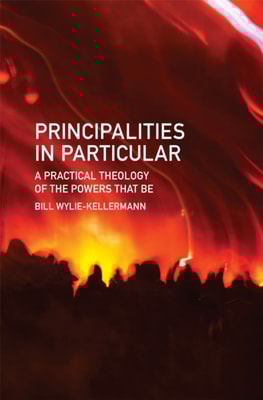
If the 1960s were a watershed in American politics, they were no less formative a period in political theology, as figures like Jacques Ellul, Karl Barth, Walter Wink, Daniel and Philip Berrigan, and William Stringfellow shed new light on the biblical language of "e;the powers.
Trends and skills for those who offer pastoral careChristian pastoral care has changed a great deal in the past few decades in response to many factors in our rapidly changing world.
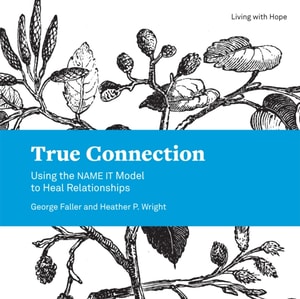
How growing in self-awareness deepens relationshipsFrom their years of counseling individuals, couples, and families, George Faller and Heather Wright show how to repair conflict, move from disconnection to reconnection, and discover God's movement in our life and relationships.
Companionship and strategies for job seekersMillions of people become unemployed every year, yet when job loss happens to us, we typically feel completely alone and often lost, ashamed, and afraid.
In a context of globalization, socioeconomic disparity, environmental concerns, mass migration, and multiplying political and social upheavals, Christians from different parts of the world are forced to ask complex questions about poverty, migration, race, gender, sexuality, and land-related conflicts.
Shaking the Gates of Hell: Faith-Led Resistance to Corporate Globalization breaks new ground by describing the global economy and its effects from the perspective of an integrated theology of "e;the earth as primary revelation"e; and the institutional powers of this world.
The Preached God speaks directly to preachers, calling them to deliver the truths of forgiveness, life, and salvation through both word and sacrament to all who listen.
Galvanized by Erasmus' teaching on free will, Martin Luther wrote De servo arbitrio, or The Bondage of the Will, insisting that the sinful human will could not turn itself to God.
This book combines a rich description of the (Lutheran) Formula of Concord (1577) with experiences in today's Lutheran parishes to demonstrate how confessional texts may still come to life in modern Christian congregations.
Wealth and Poverty in Early Christianity is part of Ad Fontes: Early Christian Sources, a series designed to present ancient Christian texts essential to an understanding of Christian theology, ecclesiology, and practice.
Wholly Citizens addresses the relation between the church and the world in light of the Reformation teaching of the two realmsespecially as presented by Luther.
All of us should condemn terrorism--whether the perpetrators are Muslim extremists, white supremacists, Marxist revolutionaries, or our own government.