
Religious issues and debates
Sorting
Bestseller Sorting collapsed
Bestseller
Name: A-Z
Name: Z-A
Price ascending
Price descending
Publication Date ascending
Publication Date descending
E-book

Price
0
8.49 £




E-book
0
0
Price
8.49 £
Bada'a Al -Fayeda Book by Sheikh Ibn Qayyim Al -Jawziya, the book is dominated by linguistic investigations and it has accurate knowledge in the interpretation of the book of God to explain the method of the Qur'anic style in the statement, and within the scope of the doctrine and the resolution of the situation in many problems, and in jurisprudence it is presented to many of the lengthy precise judgments such as the statement of the Hajj hypothesis And resolve speech in multiple fundamental issues
Read more
E-book
Price
0
8.49 £
E-book
0
0
Price
8.49 £
The simple -one -one book is one of the valuable literature among researchers in the field of Qur'an sciences and interpretation in particular, and the sciences of advocacy and Islamic sciences in general where the book of simple -one interpretation enters within the scope of Quranic sciences and interpretation sciences and the documentation of other specializations such as the principles of jurisprudence, and advocacy, And belief
Read more
E-book
Price
0
8.49 £
E-book
0
0
Price
8.49 £
The book of the masterpieces of interpretation was considered the interpretation of Ibn Rajab al -Hanbali is one of the valuable literature among researchers in the field of the sciences of the Qur'an and interpretation in a way, and the sciences of advocacy and Islamic sciences in general, where the book of masterpieces of interpretation enters the interpretation of Ibn Rajab al -Hanbali within the scope of the specialization of Quranic sciences, interpretation sciences and the documentation of other specializations such as origins Jurisprudence, advocacy, and belief
Read more
E-book
Price
0
8.49 £
E-book
0
0
Price
8.49 £
God willing, to write down from Imam Ahmad a lot of issues through a large number of his students, with his hatred to write issues about him and others, and so on, only evidence of his sincerity and piety, so many of his companions wrote about him issues that were varying between them in the few and abundance, arrangement and tabs, and good In revenue and discussion.
Read more
E-book
Price
0
8.49 £
E-book
0
0
Price
8.49 £
The thunderbolts sent a book written by Ibn Qayyim al -Jawziya, in a statement of what was stated in the book and the Sunnah of the beliefs of the righteous predecessors from the Companions and the followers and their followers and refuted the beliefs of this from the beliefs of the people The philosophers and the virtues in which they responded with the texts of the Qur'an and the Sunnah were replaced and elaborated in a statement of the invalidity The book of others
Read more
E-book
Price
0
8.49 £
E-book
0
0
Price
8.49 £
Al -Bayan Mosque in the interpretation of the Qur'an or the Al -Bayan Mosque on the interpretation of the Qur'an or the Al -Bayan Mosque in the interpretation of the Qur'an known as "Tafseer Al -Tabari" by Imam Muhammad bin Jarir bin Yazid bin Katheer bin Ghaleb, who is famous for Imam Abu Jaafar Al -Tabari, he is one of the most famous Islamic books concerned with the science of interpretation of the Holy Qur'an For the Sunnis and the community, and some prepare it for the first reference to the interpretation
Read more
E-book
Price
0
8.49 £
E-book
0
0
Price
8.49 £
Al -Kafi in the jurisprudence of the people of Medina is a book in the brief Maliki jurisprudence, composed by Al -Hafiz Yusuf bin Abdullah bin Muhammad bin Abdul Bar Al -Nimri Al -Qurtubi Abu Omar, one of the most prominent jurisprudential books, and therefore it is widely circulated among students of science, as it is an important source in the jurisprudence of the people of Medina.
Read more
E-book
Price
0
8.49 £
E-book
0
0
Price
8.49 £
Informing the signatories about the Lord of the Worlds, a book written by Ibn Qayyim al -Jawziyyah, in which his work was collected between jurisprudence, its origins, the purposes of Sharia, the history of legislation and legal policy, using the first thing that was taken and received from the Messenger of God, may God bless him and grant him peace, and whoever spread jurisprudence and religion, then he spoke about diligence and measurement in a lengthy research.
Read more
E-book
Price
0
8.49 £
E-book
0
0
Price
8.49 £
The book of the fundamentals of the Sunnah by Ibn Abi time is considered one of the important literature for researchers in the field of belief in particular and other jurisprudential and legal sciences in general, where the book of the origins of the Sunnah is entered by Ibn Abi Qumin within the scope of the science of belief sciences and the documentation of other specializations such as the origins of jurisprudence and interpretation, the noble hadith, and the prophetic biography, And Islamic culture.
Read more
E-book
Price
0
8.49 £
E-book
0
0
Price
8.49 £
A book on the branches of Shafi'i jurisprudence, is an abbreviation of the book (Sharh Al -Wajeez) by Al -Rafii.
Read more
E-book
Price
0
8.49 £
E-book
0
0
Price
8.49 £
A book by Imam Ahmad, is considered one of the most important books in the report of the doctrine of the Sunnis and the community, in which: a report of the general controls and basic rules that control the doctrine of the predecessors that contradict the people of heresies, and the liberation of the origins of the doctrine of the surviving division of the Sunnis and the community that the Prophet Muhammad and his companions were, Judge Abu Ali said: "If he had passed to China at her request, it would have been a little.
Read more
E-book
Price
0
8.49 £
E-book
0
0
Price
8.49 £
Al -Mabsut is a book on jurisprudence on the Hanafi school, written by Imam Shams Al -Imam Al -Sarkhasi.
Read more
E-book
Price
0
8.49 £
E-book
0
0
Price
8.49 £
God willing, to write down from Imam Ahmad a lot of issues through a large number of his students, with his hatred to write issues about him and others, and so on, only evidence of his sincerity and piety, so many of his companions wrote about him issues that were varying between them in the few and abundance, arrangement and tabs, and good In revenue and discussion.
Read more
E-book
Price
0
8.49 £
E-book
0
0
Price
8.49 £
The mother's book by Imam Muhammad bin Idris Al -Shafi'i, a book on jurisprudence on the doctrine of Imam Al -Shafi'i, the author of the book, was collected by Yusuf bin Yahya Al -Bawiti, the owner of Imam Al -Shafi'i, and his name was not mentioned, and he was attributed to Al -Rabi` bin Suleiman al -Muradi, as he tab He did not mention himself in it, nor attributed it to himself, as Imam Al -Ghazali said in the revival.
Read more
E-book
Price
0
8.49 £
E-book
0
0
Price
8.49 £
Al -Mabsut is a book on jurisprudence on the Hanafi school, written by Imam Shams Al -Imam Al -Sarkhasi.
Read more
E-book
Price
0
8.49 £
E-book
0
0
Price
8.49 £
The method of the Sunnah of the Prophet in the veto of the words of the Shiites and destiny is a huge book written by the Sunni jurist Ibn Taymiyyah.
Read more
E-book
Price
0
8.49 £
E-book
0
0
Price
8.49 £
Al -Bayan Mosque in the interpretation of the Qur'an or the Al -Bayan Mosque on the interpretation of the Qur'an or the Al -Bayan Mosque in the interpretation of the Qur'an known as "Tafseer Al -Tabari" by Imam Muhammad bin Jarir bin Yazid bin Katheer bin Ghaleb, who is famous for Imam Abu Jaafar Al -Tabari, he is one of the most famous Islamic books concerned with the science of interpretation of the Holy Qur'an For the Sunnis and the community, and some prepare it for the first reference to the interpretation
Read more
E-book
Price
0
8.49 £
E-book
0
0
Price
8.49 £
The book of the ten optional hadiths is one of the valuable books for researchers and professors in the branches of the Hadith of Hadith; Where it falls within the scope of the science of hadith and the branches close to the science of jurisprudence, biography and other branches of the Prophet's guidance.
Read more
E-book
Price
0
8.49 £
E-book
0
0
Price
8.49 £
The local in the explanation of the Majlis with arguments and antiquities by his author, Imam Ali bin Hazm Al -Andalusi, the publisher of the apparent doctrine, and the book of the local is considered one of the most important books of Ibn Hazm Al -Andalus And verbal measurement is considered the significance of the word or the significance of the meaning from the word, but rather the dispute between the people of the principles of jurisprudence in the words, and the cause is not considered and is not judged except by the book and the Sunnah and the consensus of the Companions, and the book is a jurisprudential wealth and encyclopedia in the comparative jurisprudence of the whale equivalent to 2312 issues that the author started with beliefs And it ended it with the issues of condolence, and Ibn Hazm reviewed the opinions of the jurists and all of the jurists before they invalidated them, expressing his opinion.
Read more
E-book
Price
0
8.49 £
E-book
0
0
Price
8.49 £
"For the sake of science is destined, and the highest is proud, and he informed it of a virtue, and the most successful means, the knowledge of the honorable Sharia and the knowledge of its rulings, and the knowledge of the secret of its permissible and forbidden, so it was appointed to support his intention and facilitate his resources to his pioneer, and his help to remember his word and meanings, and to understand his phrases and buildings.
Read more
E-book
Price
0
8.49 £
E-book
0
0
Price
8.49 £
Bada'a Al -Fayeda Book by Sheikh Ibn Qayyim Al -Jawziya, the book is dominated by linguistic investigations and it has accurate knowledge in the interpretation of the book of God to explain the method of the Qur'anic style in the statement, and within the scope of the doctrine and the resolution of the situation in many problems, and in jurisprudence it is presented to many of the lengthy precise judgments such as the statement of the Hajj hypothesis And resolve speech in multiple fundamental issues
Read more
E-book
Price
0
8.49 £
E-book
Price
0
8.49 £
E-book
0
0
Price
8.49 £
(Sheikh Al -Imam Al -Aqla Al -Zahid said the sun of the imams and the pride of Islam Abu Bakr Muhammad bin Abi Sahl Al -Sarkhasi, may God have mercy on him) Know that Abu Yusuf, may God have mercy on him, was different to Ibn Abi Laila, may God have mercy on him, so he learned in his hands nine years and then turned into the council of Abu Hanifa and he was nine years Also, it was said that the reason for his conversion to Abu Hanifa imitated Ibn Abi Laila the judiciary, because Abu Yusuf hated him to imitate the judiciary, and he carried it to the transition to the council of Abu Hanifa, may God Almighty have mercy on him, so God Almighty called him until the judiciary imitated and that became an attribute to him he is known from among the companions of Abu Hanifa, so he said Abu Yusuf al -Qadi, and this is not said to anyone else who imitated the judiciary and who did not imitate and it was said that he was caused by that he was followed by Ibn Abi Laila.
Read more
E-book
Price
0
19.79 £
E-book
0
0
Price
19.79 £
An indispensable resource for understanding religion's place in American schools and in matters concerning the separation of church and state in the United States.
Read more
E-book
Price
0
43.99 £
E-book
0
0
Price
43.99 £
Abortion and Reproductive Rights in Slovenia: A Case of Resistance provides a detailed and in-depth analysis of the situation of sexual and reproductive rights in Slovenia.
Read more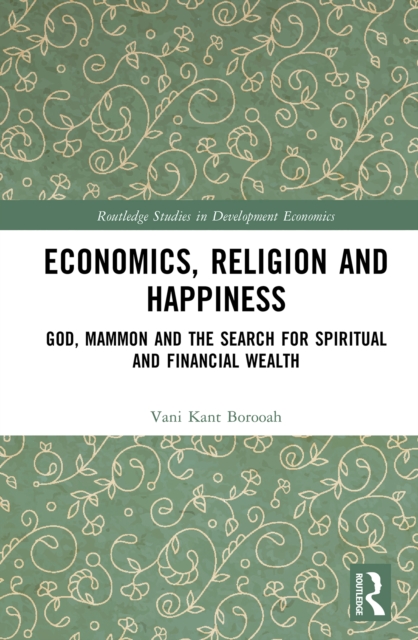
E-book
Price
0
47.99 £
E-book
0
0
Price
47.99 £
Most books on happiness are concerned with answering, in their diverse ways, a basic question: how should I live?
Read more
E-book
Price
9.99 £ * Old Price 18.19 £
E-book
0
0
Price
9.99 £ * Old Price 18.19 £
Former Second Lady Karen Pence encourages readers to accept Gods challenges through her spiritually uplifting story of how God called her, an elementary school teacher, to positions she did not expect.
Read more
E-book
Price
0
8.49 £
E-book
0
0
Price
8.49 £
Al -Bayan Mosque in the interpretation of the Qur'an or the Al -Bayan Mosque on the interpretation of the Qur'an or the Al -Bayan Mosque in the interpretation of the Qur'an known as "Tafseer Al -Tabari" by Imam Muhammad bin Jarir bin Yazid bin Katheer bin Ghaleb, who is famous for Imam Abu Jaafar Al -Tabari, he is one of the most famous Islamic books concerned with the science of interpretation of the Holy Qur'an For the Sunnis and the community, and some prepare it for the first reference to the interpretation
Read more
E-book
Price
0
8.49 £
E-book
0
0
Price
8.49 £
"This is a book in which I remember, God willing, what I have mentioned in the difference of the sayings of Malik and his companions and followers of their doctrines in the problems of jurisprudence, rulings and suspicions of permissible and forbidden.
Read more
E-book
Price
0
8.49 £
E-book
0
0
Price
8.49 £
The book of Durrar in the interpretation of the verse and the fence is one of the valuable books for the researchers of Quranic sciences in particular and other specialists in Islamic science in general, and it is one of the publications of Al -Hikma magazine; This is because the book of Durrar in the interpretation of the verse and the fence falls within the scope of studies of the sciences of the Holy Qur'an and the related specializations related to the interpretation of the Great Qur'an.
Read more
E-book
Price
0
8.49 £
E-book
0
0
Price
8.49 £
The syntax of the Qur'an for copper is a book by Abu Jaafar Al -Nahhas, and it is one of the books that have tended to interpret a special direction, which is the interest in the linguistic and grammatical aspect of the words of the Qur'an and its phrases, and trying to understand the Qur'anic text through this.
Read more
E-book
Price
0
8.49 £
E-book
0
0
Price
8.49 £
The classes of interpreters are one of the books of the translations of the commentators, composed by Al -Hafiz Jalal Al -Din Al -Suyuti, the author arranged his book the translations of the commentators, a hybrid arrangement, then he began mentioning each interpreter and elaborate in it, and the number of translations in the book reached a hundred and thirty -six translations, and Al -Suyuti presented in the introduction to the book how he classified the interpreters.
Read more
E-book
Price
0
8.49 £
E-book
0
0
Price
8.49 £
"The runways of those who walk" is an explanation of the book of Sheikh Al -Islam Imam Abu Ismail Al -Harrawi, who is called the homes of those who walk to the Lord of the worlds.
Read more
E-book
Price
0
8.49 £
E-book
0
0
Price
8.49 £
Al -Bayan Mosque in the interpretation of the Qur'an or the Al -Bayan Mosque on the interpretation of the Qur'an or the Al -Bayan Mosque in the interpretation of the Qur'an known as "Tafseer Al -Tabari" by Imam Muhammad bin Jarir bin Yazid bin Katheer bin Ghaleb, who is famous for Imam Abu Jaafar Al -Tabari, he is one of the most famous Islamic books concerned with the science of interpretation of the Holy Qur'an For the Sunnis and the community, and some prepare it for the first reference to the interpretation
Read more
E-book
Price
0
8.49 £
E-book
0
0
Price
8.49 £
Interpretation of the Great Qur'an, which is famous for "The interpretation of Ibn Katheer", by Imam Imad Al -Din Abi Al -Fida Ismail bin Katheer Al -Qurashi Al -Dimashqi, known as Ibn Katheer.
Read more
E-book
Price
0
8.49 £
E-book
0
0
Price
8.49 £
This book is one of the daughters of the foundations of Arabic rhetoric.
Read more
E-book
Price
0
8.49 £
E-book
0
0
Price
8.49 £
The ways of peace explain the attainment of the goal from the evidence of rulings is a book written by Muhammad bin Ismail Al -Sanani, to explain the book of reaching the goal of the evidence of the rulings that Imam Ibn Hajar Al -Asqalani, and this book is characterized by several characteristics in its subject, including the collection of hadiths An evidence, and the length of the long shortcut, and I was interested in explaining the degree of every hadith of health, good and weakness, with reference to many ills, and this book deserved the title of the Sunnah Dictionary.
Read more
E-book
Price
0
8.49 £
E-book
0
0
Price
8.49 £
The book of the singer is one of the warehouses of Hanbali jurisprudence, and it can be considered one of the largest books of jurisprudence in Islam, which is an explanation of the abbreviation of Abu al -Qasim Omar bin Al -Hussein Al -Kharqi.
Read more
E-book
Price
0
8.49 £
E-book
0
0
Price
8.49 £
The interpretation of Fateh al -Qadir al -Koukani is originally from the origins of interpretation, and a reference from its references, because it combined the interpretation of the narration and the interpretation with know -how, where its author was found in the section of the novel, and expanded in the chapter on know -how
Read more
E-book
Price
0
8.49 £
E-book
0
0
Price
8.49 £
Conditions of prayer, its pillars and duties: a brief message written by the renewed Imam Sheikh al -Islam Muhammad ibn Abd al -Wahhab - may God have mercy on him - and it included the conditions of prayer, its duties and its pillars, and this pillar is the most important and greatest pillars after the two testimonies, which is the pillar that the Muslim performs in the day and night five times
Read more
E-book
Price
0
8.49 £
E-book
0
0
Price
8.49 £
The book of the singer is one of the warehouses of Hanbali jurisprudence, and it can be considered one of the largest books of jurisprudence in Islam, which is an explanation of the abbreviation of Abu al -Qasim Omar bin Al -Hussein Al -Kharqi.
Read more
E-book
Price
0
8.49 £
E-book
0
0
Price
8.49 £
The interpretation of Ibn Abi time is a book from the books of the interpretation of the Noble Qur'an, composed by Al-Hafiz Ibn Abi Qumin (324 AH-399 AH).
Read more
E-book
Price
0
8.49 £
E-book
0
0
Price
8.49 £
This is a message in the topic of ijtihad and the dispute of Sheikh Al -Islam Muhammad bin Abdul -Wahhab, which is transmitted in short from the book of the media of the signers of Ibn Al -Qayyim, and we found the last page and a quarter of the page searching in the doctrine and the related attributes of God, and there is no connection with him on the subject of the message, so we have left it.
Read more
E-book
Price
0
8.49 £
E-book
0
0
Price
8.49 £
The Shafiyat Grants Book is located, explaining the vocabulary of Imam Ahmad, at the Center for the Interest of Researchers and Students, who are busy studying jurisprudence specializations; Where the Book of Scholarships is located, explaining the vocabulary of Imam Ahmad within the scope of the science of science of jurisprudence and specializations, closely related to Islamic philosophy, belief, Quranic sciences, and other branches of Islamic disciplines.
Read more
E-book
Price
0
8.49 £
E-book
0
0
Price
8.49 £
The virtues of the Qur'an is a book on the virtues of the Noble Qur'an, written by Ahmed bin Ali bin Shuaib bin Ali bin Sinan bin Bahr Abu Abdul Rahman Al -Nasa'i, and its content is that in order to monitor the virtues of the Noble Qur'an, the author mentioned topics related to the Holy Qur'an, and we can consider his book two parts, the section The first is concerned with mentioning topics related to the sciences of the Qur'an, including: the descent of the Qur'an, and Gabriel's display
Read more
E-book
Price
0
8.49 £
E-book
0
0
Price
8.49 £
"The emergence of the difference in practical legal rulings is due to the emergence of ijtihad, which began easy during the era of prophethood .
Read more