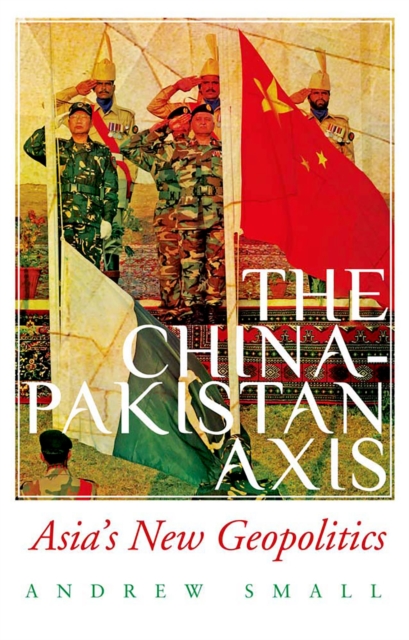
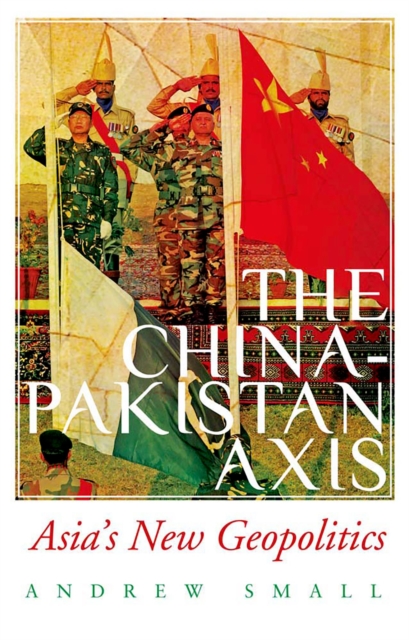
The Beijing-Islamabad axis plays a central role in Asia's geopolitics, from India's rise to the prospects for a post-American Afghanistan, from the threat of nuclear terrorism to the continent's new map of mines, ports and pipelines.
The Beijing-Islamabad axis plays a central role in Asia's geopolitics, from India's rise to the prospects for a post-American Afghanistan, from the threat of nuclear terrorism to the continent's new map of mines, ports and pipelines.
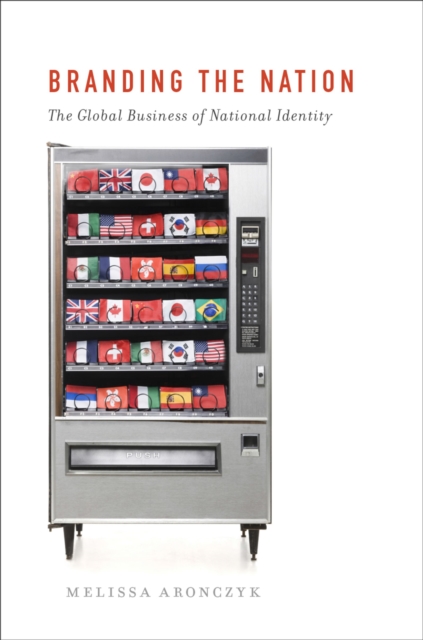
National governments around the world are turning to branding consultants, public relations advisers and strategic communications experts to help them "e;brand"e; their jurisdiction.
From the acclaimed historian of global empire, the dramatic story of how steam power reshaped our cities and our seas, and forged a new world orderSteam power transformed our world, initiating the complex, resource-devouring industrial system the consequences of which we live with today.
**Over 1 million copies sold worldwide**MAJOR NEW EDITIONFrom Nobel laureate Joseph Stiglitz, Globalization and its Discontents is the bestselling expos of the all-powerful organizations that control our lives.
Businesses today need employees who can operate on a global stage, whether as international managers, technical specialists, expatriates or 'parachutists' who make occasional troubleshooting trips abroad.
From Dubai to Amsterdam, Memphis to South Korea, a new phenomenon is reshaping the way we live and transforming the way we do business: the aerotropolis.
This book analyzes the use of the mobile Internet against the background of gender bias and Covid-19, currently two of the most important and pressing problems of the Global South.
This book explains why conflict between the institutional and human agencies is an unavoidable outcome of competing local, national and global agendas at a major research university.
In this book, the authors analyze big data on global interdependence caused by the flows of commodities, money, and people, using a network science approach to obtain differing views of globalization and to clarify the facts on isolation of communities.
Art and the Challenge of Markets Volumes 1 & 2 examine the politics of art and culture in light of the profound changes that have taken place in the world order since the 1980s and 1990s.
Langan reclaims neo-colonialism as an analytical force for making sense of the failure of 'development' strategies in many African states in an era of free market globalisation.
This book explores opportunities for diversifying modern Kazakhstan's economy, which is still heavily dependent on its natural resources, as well as looking at economic opportunities for the whole Central Asian region arising from the Chinese government's Belt and Road Initiative (BRI).
This book brings together a series of contributions by international legal scholars that explore a range of subjects and themes in the field of international economic law and global economic governance through a variety of methodological and theoretical lenses.
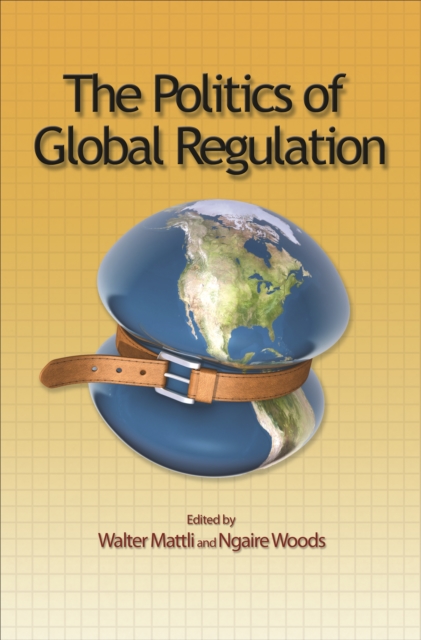
Regulation by public and private organizations can be hijacked by special interests or small groups of powerful firms, and nowhere is this easier than at the global level.
Gunumuzde, yeni nesiller, daha dogrusu esigi atlamis bir kesim, Kainati da kapsayacak sekilde artik genis ufuklu bir perspektife sahipler, teknoloji ve kitaplar sayesinde Oyle ki, bu yeni cagla birlikte dua ve ibadetin de belirli bir yeri ve zamani yok.
This book presents an evolutionary theory of the origin and step-by-step development of linguistic structures and cognitive abilities from the early stages of anthropogenesis to the Upper Paleolithic.