The surprising and sometimes scandalous story of twenty-first-century citizenshipThe buying and selling of citizenship has become a thriving business in just a few years.
As the economies of China, India, and other Asian nations continue to grow, these countries are seeking greater control over the rules that govern international trade.
A controversial look at the end of globalization and what it means for prosperity, peace, and the global economic order Globalization, long considered the best route to economic prosperity, is not inevitable.
Over many decades, "e;contagion"e; has been a metaphor of choice for everything from global terrorism, suicide bombings, poverty, immigration, global financial crises, human rights, fast food, obesity, divorce, and homosexuality.
TodayOs growing fascination with flows of people, commodities, technology, capital, images and ideas across national and other boundaries poses fresh theoretical and methodological challenges to anthropology.
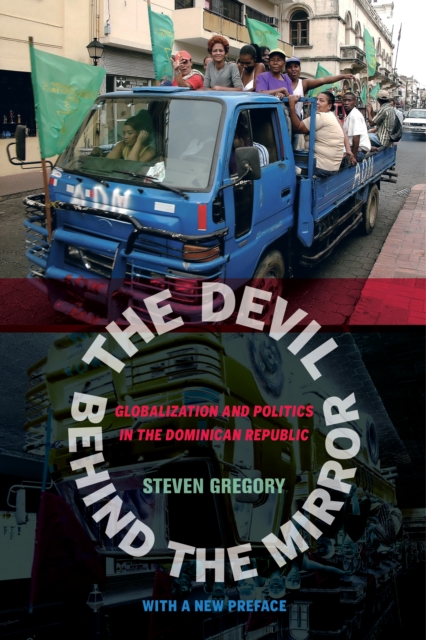
In The Devil behind the Mirror, Steven Gregory provides a compelling and intimate account of the impact that transnational processes associated with globalization are having on the lives and livelihoods of people in the Dominican Republic.
This edited book explores the impact of globalisation on the relationship between religion and politics, religion and nation, religion and nationalism, and the impact that transnationalism has on religious groups.
This book is a broad and detailed case study of how journalists in more than 20 countries worldwide covered the Intergovernmental Panel on Climate Change (IPCC) Fifth Assessment (AR5) reports on the state of scientific knowledge relevant to climate change.
The convergence of dramatic declines in birth rates worldwide, aside from sub-Saharan Africa, the rise of untrammelled global movement of capital, people and information, and the rapid-fire dissemination of a host of new medical technologies has led to the "e;globalization of motherhood"e;.
This book analyzes shifting international taxation strategies in pursuit of tax nomads, individuals and companies who minimize their tax obligations among multiple countries.
This book examines the agreements and discrepancies between public understanding and assumptions about refugees, and the actual beliefs and practices among the refugees themselves in a time of increasing mobility fuelled by what many call 'refugee crisis'.
The book gathers together a set of lively, provocative essays by leading voices in International Political Economy to debate the evolution of the field, its current state and its future directions.
This book shows that escalating climate destruction today is not the product of public indifference, but of the blocked democratic freedoms of peoples across the world to resist unwanted degrees of capitalist interference with their ecological fate or capacity to change the course of ecological disaster.
Globality, Democracy and Civil Society explores the relationship between the concepts of democracy and civil society through a comparison of their meaning and function in different historical and cultural contexts.
Considering the rise of global political instability and subsequent importance of new social movements, this cutting edge book examines the relationship between the alter-globalization movement and political power in Italy, Spain, and Greece.
By delving into the history of geopolitics and bringing us up to date with cutting-edge case studies looking at infrastructure, terrain, and maps, this book will dispel simplistic and misleading notions about the nature of how humans interact with the environment.
In this pioneering volume, leading scholars from a diversity of backgrounds in the humanities, social sciences, and different area studies argue for a more differentiated and self-reflected role of area-based science in global knowledge production.
Education cannot be understood today without recognizing that nearly all educational policies and practices are strongly influenced by an increasingly integrated international economy.
This book analyzes the effects of economic, social, and political disruptions that have come with integration into the global economy for countries in five different regions and the developing world as a whole.
This book suggests how the internationalisation of teaching and learning for sustainability can be a vehicle for a two-way flow of knowledge across national, cultural and theoretical boundaries.
This thematically structured text offers an ideal introduction to the positive and negative effects of globalization on human welfare in industrial and developing societies.
International migration and mobility whether from outside the EU or in the form of free movement by EU citizens are controversial and potentially divisive issues that are and will remain at the top of the EU's political agenda.
This book explores periodization in Big History against the background of complexity growth across the Universe, on our planet, and in biological, social, and cultural systems.
It's no secret that tens of thousands of Chinese children have been adopted by American parents and that Western aid organizations have invested in helping orphans in China-but why have Chinese authorities allowed this exchange, and what does it reveal about processes of globalization?
More than one million Indians travel annually to work in oil projects in the Gulf, one of the few international destinations where men without formal education can find lucrative employment.