If the vision for the future of digital information is order, ease of access, discoverable resources and sustainable business models, how might this be achieved?
How do archives and other cultural institutions such as museums determine the boundaries of a particular community, and of their own institutional reach, in constructing effective strategies and methodologies for selecting and maintaining appropriate material evidence?
Imagine a records management (RM) future where the user community collectively describes the value and properties of a record using the wisdom of the crowd; where records retention, description and purpose are determined by their users, within general boundaries defined by the records manager.
This book examines the changing roles of the librarian and how working within a rich digital environment has impacted on the ability of professionals to develop the appropriate 'know how', skills, knowledge and behaviours required in order to operate effectively.
Libraries seeking to grow or enhance community outreach will welcome Building Community Engagement and Outreach in Libraries to assist them in planning and executing engagement programs.
Libraries seeking to grow or enhance community outreach will welcome Building Community Engagement and Outreach in Libraries to assist them in planning and executing engagement programs.
Volume 2 of the two part collection Stories and Lessons from the World's Leading Opera, Orchestra Librarians, and Music Archivists, explores the current trends and practices in the field of music performance librarianship.
Volume 2 of the two part collection Stories and Lessons from the World's Leading Opera, Orchestra Librarians, and Music Archivists, explores the current trends and practices in the field of music performance librarianship.
This volume contains two Open Access Chapters Volume 1 of the two part collection Stories and Lessons from the World s Leading Opera, Orchestra Librarians, and Music Archivists, explores the current trends and practices in the field of music performance librarianship.
This volume contains two Open Access Chapters Volume 1 of the two part collection Stories and Lessons from the World s Leading Opera, Orchestra Librarians, and Music Archivists, explores the current trends and practices in the field of music performance librarianship.
Volume 33 of Advances in Library Administration and Organization will look at different challenges library administrators encounter, review emerging trends and bring critical analysis to this area.
Research Data Management (RDM) has become a professional topic of great importance internationally following changes in scholarship and government policies about the sharing of research data.
This book offers a comprehensive, entry-level guide for librarians and archivists who have found themselves managing or are planning to manage born-digital content.
Records Managers have tended to find themselves given the responsibility for managing requests under the Freedom of Information (FOI) and Data Protection Acts (DPA), without necessarily having training and/or an academic background in legal studies.
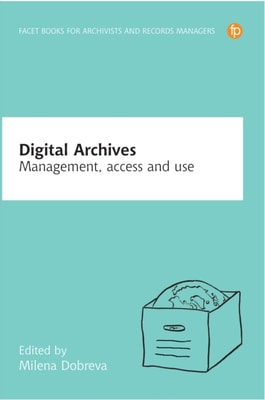
This landmark edited collection offers a wide-ranging overview of how rapid technological changes and the push for providing wide access to digitized cultural heritage holdings are changing the landscape of archives.
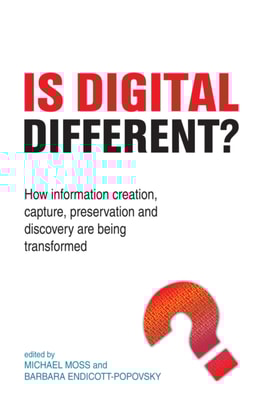
This edited collection brings together global experts to explore the role of information professionals in the transition from an analogue to a digital environment.
The Handbook of Art and Design Librarianship integrates theory and practice to offer guidelines for information professionals working in art and design environments who need to support and anticipate the information needs of artists, designers, architects and the historians who study those disciplines.
An insider's guide to data librarianship packed full of practical examples and advice for any library and information professional learning to deal with data.
This book traces the trajectory of the community archives movement, expanding the definition of community archives to include sites such as historical societies, social movement organisations and community centres.
This collection provides a multifaceted response to today's growing fascination with the idea of the archive and showcases the myriad ways in which archival ideas and practices are being engaged and developed by emerging and internationally renowned scholars.
Practical Ontologies for Information Professionals provides an accessible introduction and exploration of ontologies and demonstrates their value to information professionals.
This book explores the analysis and interpretation, discovery and retrieval of a variety of non-textual objects, including image, music and moving image.
The internet as a platform for facilitating human organization without the need for organizations has, through social media, created new challenges for cultural heritage institutions.
This practical how-to-do-it guide is ideal for professionals involved in the management of archives and records, especially if they are just starting out or without formal training.
In recent years big data initiatives, not to mention Hollywood, the video game industry and countless other popular media, have reinforced and even glamorized the public image of the archive as the ultimate repository of facts and the hope of future generations for uncovering 'what actually happened'.
This comprehensive textbook discusses the legal, organizational and ethical aspects of information governance, assurance and security and their relevance to all aspects of information work.
This book provides an overview of various challenges and contemporary research activities in cultural heritage information focusing particularly on the cultural heritage content types, their characteristic and digitization challenges; cultural heritage content organization and access issues; users and usability as well as various policy and sustainability issues associated with digital cultural heritage information systems and services.
This is the first book to discuss the sustainable development of digital scholarly information in three key aspects: economic, social and environmental sustainability.
The research landscape is changing, with key global research funders now requiring institutions to demonstrate how they will preserve and share research data.
Volume 32 of Advances in Library Administration and Organization brings together a collection of studies which highlight up and coming issues that today's library managers and researchers face.
Preservation involves a complex of activities including climate, air-quality, and surface control, as well as microbiological control, which is a key part of preserving and protecting library collections.
Die Lessing-Forschung steht seit längerer Zeit vor der Herausforderung, dass sie zwar ein Zentrum der germanistischen Aufklärungsforschung bildet, gleichzeitig aber über keine Textbasis verfügt, die modernen wissenschaftlichen Ansprüchen genügt.
Digital libraries are libraries in which collections are stored in digital formats (as opposed to print, microform, or other media) and accessible by computers.