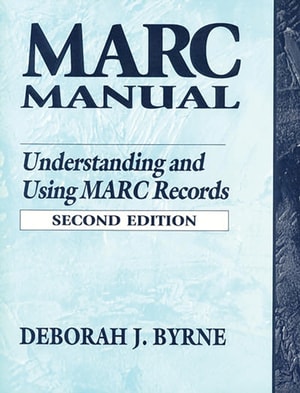
If you are in the process-beginning, middle, or end-of automating your catalog, you will welcome the wealth of information in this concise, easy-to-use handbook.
The world wide web is arguably the most important, and certainly the largest and most ubiquitous, cultural and commercial information resource in existence.
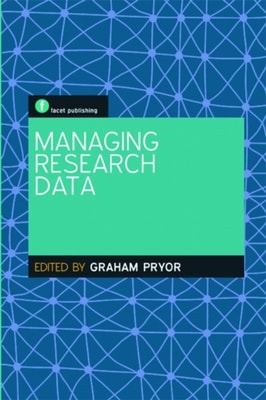
This title defines what is required to achieve a culture of effective data management offering advice on the skills required, legal and contractual obligations, strategies and management plans and the data management infrastructure of specialists and services.
Interest in m-library services has grown exponentially in the last five years, as libraries are recognizing the potential of ubiquitous and increasingly sophisticated mobile devices.
Despite the fact that eBooks have been in existence for decades in various guises and added to library collections for several years now, there has been a noticeable lack of published manuals on the subject.
Education and training have been transformed in the 21st century as a result of changing patterns of work and culture, and learners increasingly expect technology-rich and flexible learning opportunities.
This fully revised and updated edition of the bestselling Chief Data Officer's Playbook offers new insights into the role of the CDO and the data environment.
This fully revised and updated edition of the bestselling Chief Data Officer's Playbook offers new insights into the role of the CDO and the data environment.
Published in association with the Society of American Archivists Trusting Records in the Cloud presents key findings of InterPARES Trust, an international research project that has investigated issues of trust in, and trustworthiness of records and data online, with respect to privacy, accessibility, portability, metadata and ownership.
In resource poor, cost saving times, this book provides practical advice on new methods and technologies involved in systematic searching and explores the role of information professionals in delivering these changesThe editors bring together expert international practitioners and researchers to highlight the latest thinking on systematic searching.
Social tagging (including hashtags) is used over platforms such as Twitter, Facebook, Instagram, Pinterest, WordPress, Tumblr and YouTube across countries and cultures meaning that one single hashtag can link information from a variety of resources.
This practical and explanatory guide for library and cultural heritage professionals introduces and explains the use of open licences for content, data and metadata in libraries and other cultural heritage organisations.
In an environment where increasing amounts of information (and fake news) flood the internet on websites and social media, the information professional's job is getting harder.
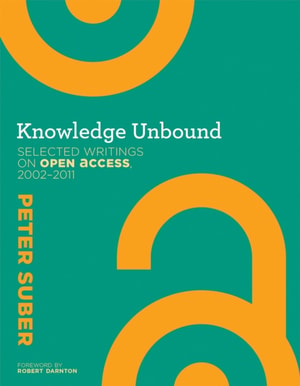
Influential writings make the case for open access to research, explore its implications, and document the early struggles and successes of the open access movement.
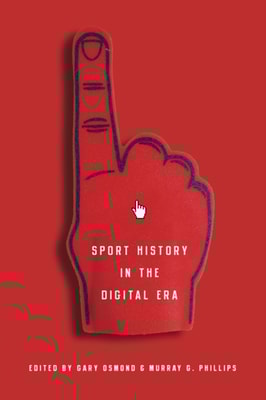
From statistical databases to story archives, from fan sites to the real-time reactions of Twitter-empowered athletes, the digital communication revolution has changed the way sports fans relate to their favorite teams.
In 14 original essays, The Oxford Illustrated History of the Book reveals the history of books in all their various forms, from the ancient world to the digital present.
In 14 original essays, The Oxford Illustrated History of the Book reveals the history of books in all their various forms, from the ancient world to the digital present.
Managing ebook Metadata in Academic Libraries: Taming the Tiger tackles the topic of ebooks in academic libraries, a trend that has been welcomed by students, faculty, researchers, and library staff.
In the last decade library collections have rapidly evolved from a predominance of print books and journals to an ever growing mix of digital and print resources.
The Art of Teaching Online: How to Start and How to Succeed as an Online Instructor focuses on professionals who are not teachers, but who wish to enter the online education field as instructors in their disciplines.
An Emergent Theory of Digital Library Metadata is a reaction to the current digital library landscape that is being challenged with growing online collections and changing user expectations.
Digital Information Strategies: From Applications and Content to Libraries and People provides a summary and summation of key themes, advances, and trends in all aspects of digital information at the present time.
Managing ebook Metadata in Academic Libraries: Taming the Tiger tackles the topic of ebooks in academic libraries, a trend that has been welcomed by students, faculty, researchers, and library staff.
Digital Detectives: Solving Information Dilemmas in an Online World helps students become independent and confident digital detectives, giving them the tools and tactics they need to critically scrutinize web-based digital information to ascertain its authenticity, veracity, and authority, and to use the information in a discerning way to successfully complete academic tasks.
This book gives a theoretical base and a perspective for the analysis, design, and operation of information systems, particularly their information storage and retrieval (ISAR) component, whether mechanized or manual.
This fully revised and updated second edition of Understanding Digital Libraries focuses on the challenges faced by both librarians and computer scientists in a field that has been dramatically altered by the growth of the Web.
There are many data communications titles covering design, installation, etc, but almost none that specifically focus on industrial networks, which are an essential part of the day-to-day work of industrial control systems engineers, and the main focus of an increasingly large group of network specialists.