Aimed at academic library practitioners, this book describes how e-reserve services can evolve and adapt to the changing virtual learning environment of higher education.
In this information age it is widely recognised that, in order to maintain relevance and to gain a competitive edge, libraries and other organisations in the business of information must continuously assess their roles, collections, services and perhaps most importantly, their business practices.
Award-winning information theorists and practitioners Pearlstein andMatarazzo have assembled a group of top international authors with experiencein public, academic, government, and special library settings, includingexperienced independent information professionals, to address the criticalissues facing Information Management (IM) today.
Award-winning information theorists and practitioners Pearlstein andMatarazzo have assembled a group of top international authors with experiencein public, academic, government, and special library settings, includingexperienced independent information professionals, to address the criticalissues facing Information Management (IM) today.
Put Google Classroom to work while teaching your students and make your life easierAbout This BookThis is the first book to guide educators step by step through teaching with Google ClassroomIt's focused on you, your students, and providing great learning experiences easilyIt's easy to follow, with everything you need to get started and keep going even if you're not a technology fanWho This Book Is ForThis is a book for educators who want to use Google Classroom to teach better.
Volume 33 of Advances in Library Administration and Organization will look at different challenges library administrators encounter, review emerging trends and bring critical analysis to this area.
This volume is unusual in that the theme is quite broad in scope yet focused on a specific topic; innovations and boundary-pushing studies in areas not usually found in library literature.
A comprehensive guide to everything scientists need to know about data management, this book is essential for researchers who need to learn how to organize, document and take care of their own data.
A comprehensive guide to everything scientists need to know about data management, this book is essential for researchers who need to learn how to organize, document and take care of their own data.
Volume 37 of Advances in Librarianship presents detailed examples of local and regional mergers and collaborations and serves as a companion to Volume 36 which presented a comprehensive broad review of the factors that lead to mergers and other alliances, and the methods used to ensure effective and successful collaborations.
This book provides a complete introduction to the rapidly expanding field of Knowledge organization (KO), presenting historical precedents and theoretical foundations in a discursive, intelligible form, covering the philosophical, linguistic and technical aspects.
The Academic Teaching Librarian's Handbook is a comprehensive resource for academic library professionals and LIS students looking to pursue a teaching role in their work and to develop this aspect of their professional lives in a holistic way throughout their careers.
Cornish's Copyright is the standard work in its field and is indispensable for all librarians and information professionals who are looking for solutions to their copyright problems.
A-Z Common Reference Questions for Academic Librarians is a survival guide for frontline library staff to help them find appropriate information quickly, whether they are answering questions at a physical help desk or remotely by telephone, email or instant messaging service.
Research Data Management (RDM) has become a professional topic of great importance internationally following changes in scholarship and government policies about the sharing of research data.
Foreword by Professor Annemaree Lloyd, Swedish School of Library and Information Science, University of BorasToday's society is characterized by quick technological developments and constant changes to our information environments.
This book offers a comprehensive, entry-level guide for librarians and archivists who have found themselves managing or are planning to manage born-digital content.
Records Managers have tended to find themselves given the responsibility for managing requests under the Freedom of Information (FOI) and Data Protection Acts (DPA), without necessarily having training and/or an academic background in legal studies.
This book adopts a holistic interpretation of information architecture, to offer libraries and information professionals a variety of methods, tools, and techniques that may be used when designing websites and information systems that support workflows and what people require when "e;managing information"e;.
This landmark edited collection offers a wide-ranging overview of how rapid technological changes and the push for providing wide access to digitized cultural heritage holdings are changing the landscape of archives.
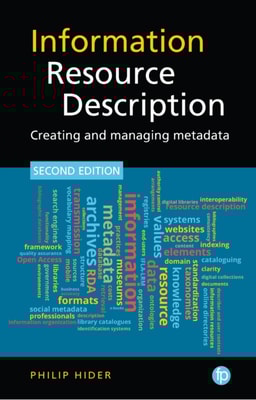
This new edition offers a fully updated and expanded overview of the field of information organization, examining the description of information resources as both a product and process of the contemporary digital environment.
This new and updated second edition of a classic text provides a thought provoking introduction to metadata for all library and information students and professionals.
Successful Enquiry Answering Every Time is designed to guide information professionals through all the stages of research, from finding out what the enquirer really wants, to providing a polished, value-added answer.
This book addresses the issue of valuing objects in cultural collections, ranging from high-value to low or no-value and featuring a range of collections including fine art, archives, science and photography.
This book provides a 'no-nonsense' guide to project management which will enable library and information professionals to lead or take part in a wide range of projects from large-scale multi-organisation complex projects through to relatively simple local ones.
The Handbook of Art and Design Librarianship integrates theory and practice to offer guidelines for information professionals working in art and design environments who need to support and anticipate the information needs of artists, designers, architects and the historians who study those disciplines.
This landmark textbook is an essential primer for students and practitioners interested in information seeking, needs and behaviour, user studies and information literacy.
An insider's guide to data librarianship packed full of practical examples and advice for any library and information professional learning to deal with data.
This book offers innovative tips and tried-and-tested best practice to enable library and knowledge workers to take control of professional development regardless of the budget and time available to them.
This book traces the trajectory of the community archives movement, expanding the definition of community archives to include sites such as historical societies, social movement organisations and community centres.