Qualitative Inquiry in Transition-Pasts, Presents, & Futures: A Critical Reader gathers more than 30 internationally renowned scholars in qualitative inquiry to present provocative interventions into the politics of research, philosophy of inquiry, justice matters, and writing practices.
This edited volume offers a global overview of the immediate impacts the COVID pandemic had on local and national film, television, streaming, and social media industriesa "e;examining in compelling detail how these industries managed the crisis.
This edited volume offers a global overview of the immediate impacts the COVID pandemic had on local and national film, television, streaming, and social media industriesa "e;examining in compelling detail how these industries managed the crisis.
First published in 1932, Studies in Sociology consists of essays that fall into three groups, the first concerned with the scope and method of sociology and its relation to history and social philosophy; the second devoted to an analysis of the theory of evolution as applied to society, and to a number of problems in social psychology, such as the nature of social purpose, the place of instinct in social science, the relation between instinct and emotion, and the inheritance of mental characters; while the third group deals with the claims of Eugenics, and social classes and social mobility.
Qualitative Inquiry in Transition-Pasts, Presents, & Futures: A Critical Reader gathers more than 30 internationally renowned scholars in qualitative inquiry to present provocative interventions into the politics of research, philosophy of inquiry, justice matters, and writing practices.
Narrative Inquiry in Language Teaching and Learning Research is the only entry-level introduction to research methods using stories, either as data or as a means of presenting findings, and a practical guide for those interested in carrying out narrative studies.
This book provides a variety of answers in its description and discussion of new, sometimes radical approaches to `usability evaluation', now an increasingly common business tool.
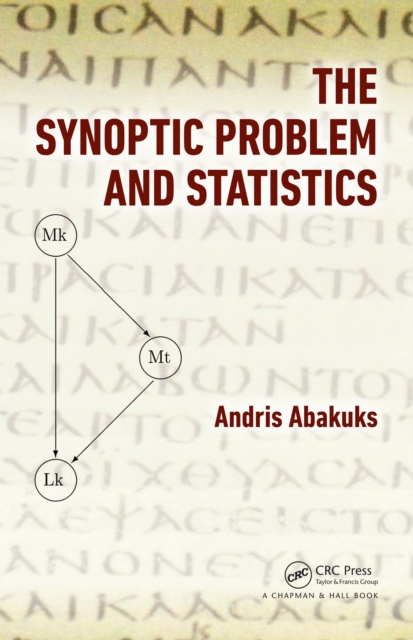
See How to Use Statistics for New Testament InterpretationThe Synoptic Problem and Statistics lays the foundations for a new area of interdisciplinary research that uses statistical techniques to investigate the synoptic problem in New Testament studies, which concerns the relationships between the Gospels of Matthew, Mark, and Luke.
This book explores a value-based research methodology, Living Educational Theory Research (LETR), which aligns a values-based approach with key tenets of professional development to inform and inspire future educators' practice.
This book explores a value-based research methodology, Living Educational Theory Research (LETR), which aligns a values-based approach with key tenets of professional development to inform and inspire future educators' practice.
This textbook explores recent research on the topics of gender inequalities, intergenerational support, and family in select East Asian societies, including China, Hong Kong, Taiwan, and Japan.
This textbook explores recent research on the topics of gender inequalities, intergenerational support, and family in select East Asian societies, including China, Hong Kong, Taiwan, and Japan.
Originally published in 1978, Subjective Meaning and Culture presents a framework and a method for the comparative study of the perceptions, attitudes, and cultural frames of reference shared by groups of people.
Originally published in 1978, Subjective Meaning and Culture presents a framework and a method for the comparative study of the perceptions, attitudes, and cultural frames of reference shared by groups of people.
Carefully structured to make it accessible and easy to follow, this thought-provoking book encourages the reader to facilitate a dialogue across disciplines so that mature and unconventional students are acknowledged and can discover a successful path towards admission and PhD completion.
Carefully structured to make it accessible and easy to follow, this thought-provoking book encourages the reader to facilitate a dialogue across disciplines so that mature and unconventional students are acknowledged and can discover a successful path towards admission and PhD completion.
Meaningful Journeys is an edited collection of autoethnographies underpinned by the conceptual, philosophical, and etymological origins of 'journeying,' 'questing,' and traditional and modern understandings of 'pilgrimage.
Meaningful Journeys is an edited collection of autoethnographies underpinned by the conceptual, philosophical, and etymological origins of 'journeying,' 'questing,' and traditional and modern understandings of 'pilgrimage.
This concise volume, using examples of psychotherapy talk, showcases the potential applications of data analytics for advancing discourse research and other related disciplines.
This concise volume, using examples of psychotherapy talk, showcases the potential applications of data analytics for advancing discourse research and other related disciplines.
Studying Christian Spirituality proposes a framework to discover how spirituality can be understood beyond the conventional boundaries that religions have established.
Studying Christian Spirituality proposes a framework to discover how spirituality can be understood beyond the conventional boundaries that religions have established.
Research Methodology: From Philosophy of Science to Research Design distinguishes itself from many other works devoted to research methodology and the philosophy of science in its integrated approach towards scientific research, which is regarded as the scientific project on all levels from philosophy of science to research design.
Autoethnography Pedagogy and Practice supports and generates new insights into how autoethnography can be taught, supervised and practised by sharing the experiences and reflections of researchers from a wide range of fields and disciplines.
This book firmly positions lived experience-led expertise as a unique and compelling form of knowledge in decolonising and disrupting research, teaching and advocacy.
This book firmly positions lived experience-led expertise as a unique and compelling form of knowledge in decolonising and disrupting research, teaching and advocacy.
This edited volume illustrates the idea of a successful research capacity model, critically addressing preconceived notions of early career research projects' impact and drawing together insights and implications around the encouragement of newer researchers to conduct useful, robust studies with real-world effect.