Wall Street Journal BestsellerTwo veteran executive coaches help today's leaders learn how to retain and inspire their teams through the one thing their research has found works: Leading with Heart.
Inclusive Education at the Crossroads explores the short and long-term effectiveness of government plans to reform policy for special needs education, confronting difficult questions on policies about inclusion and suggesting alternative ways forward for achieving more effective education of children with special educational needs and disabilities (SEND).
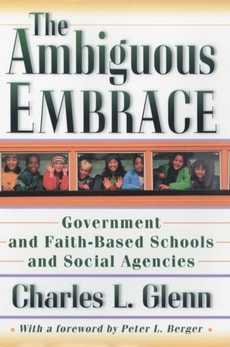
This is a time of far-reaching change and debate in American education and social policy, spurred in part by a rediscovery that civil-society institutions are often better than government at meeting human needs.
Fuzzy Sets and Systems: Theory and Applications provides a comprehensive research monography that cover all of the important developments in the theory of fuzzy sets and their applications that have taken place during the past several years.
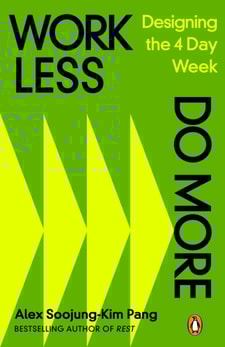
'A must read for anyone interested in the 4-day week' - Heejung Chung, professor at the University of Kent and author of The Flexibility Paradox'This invaluable book offers a clear way forward: we don't need to burn ourselves out, we can work less and get more done' - Rebecca Seal, author of SOLO: How To Work Alone (And Not Lose Your Mind)The 4-day week is no longer just an idea.
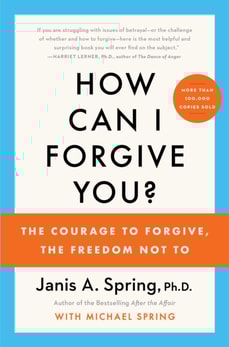
If you are struggling with issues of betrayalor the challenge of whether and how to forgivehere is the most helpful and surprising book you will ever find on the subject.
For the first time ever, five-time number-one RE/MAX agent worldwide, Jordan Cohen, reveals his secret sales strategies that will elevate your real estate sales career to the highest levels.
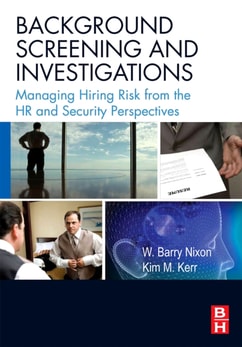
Hiring highly qualified people is crucial to every company, and Background Screening and Investigations is an essential guide to succeeding in a turbulent business environment.
While security is generally perceived to be a complicated and expensive process, Zen and the Art of Information Security makes security understandable to the average person in a completely non-technical, concise, and entertaining format.
Drawing on a lifetime's experience and research in education, Frank Coffield brings together some of his previously published papers to assess the impact of a wide range of national educational policies and to examine the role of the state in public education.
Wahrheit, Lüge & Vernunft - Über die Macht der ManipulationWir alle sind Fakten und Emotionen ausgesetzt und nicht immer sind die Grenze zwischen Wahrheit und Täuschung klartrennbar.
La Universidad se encuentra en pleno progreso desde su tiempo cero; de hecho, halla su carta de naturaleza en la necesidad de mejorar el medio que la nutre y por y para el que existe: la sociedad.
La Universidad se encuentra en pleno progreso desde su tiempo cero; de hecho, halla su carta de naturaleza en la necesidad de mejorar el medio que la nutre y por y para el que existe: la sociedad.
Dieses Fachbuch bietet einen umfassenden Einblick in die Welt der körperorientierten Heilmethoden und deren Integration in therapeutische Behandlungskonzepte.
Die spürbaren Konsequenzen der Veränderungsdynamik in der Arbeitswelt (Digitalisierung, Globalisierung, demografischer Wandel) erfordern Konzepte und Methoden, die eine den Menschen gleichermaßen fördernde wie gesund erhaltende Arbeitsgestaltung und Kompetenzentwicklung umfassen.
Psychologists receive several years of specialized study on the brain, behavior, and mental health, but despite the fact that over half ultimately end up in administrative or managerial roles, they receive no formalized training in the skills necessary to be successful in these roles.
How campus communities of every kind can transform themselves from good to greatBecoming Great Universities highlights ten core challenges that all colleges and universities face and offers practical steps that everyone on campus-from presidents to first-year undergraduates-can take to enhance student life and learning.
La educación es un "fenómeno social total" y su conocimiento requiere el análisis concreto de sus dimensiones históricas, legislativas, económicas, sociales, pedagógicas y políticas.
This revised edition retains the exceptional organization and coverage of the previous editions and is designed for the training and certification needs of first-line security officers and supervisors throughout the private and public security industry.
'Relationship and Resource Management in Operations' explains in practical terms the importance of the business relationships with internal and external counterparts while demonstrating how things can go wrong and what causes the situation.
Dieser praktische Leitfaden bietet Menschen mit Borderline-Persönlichkeitsstörung wirksame Strategien zur Verbesserung ihrer Emotionsregulation und Beziehungsgestaltung.
Merging the benefits of two well-known methodolgies, Lean Thinking and Total Productive Maintenance, Lean TPM shows how to secure increased manufacturing efficiency.
Terrorism and Homeland Security: An Introduction with Applications provides a comprehensive introduction to the problem of terrorism and to its solution, Homeland Security.
Winning strategies from the three-time European Championship winner and the only football coach ever to reach the final of five international tournaments.
Managing people just got easierThe book gives you a sound understanding of the concept of people management; the role of people managers; people motivational theories; the various people management styles and their appropriateness; the tools available to people managers to help them do their jobs effectively; techniques for managing performance; and an insight into how people managers candevelop their teams.
Este libro podría titularse también la magia de la mediación, porque quien lo lea, y lleve a la práctica sus enseñanzas, se convertirá en una persona capaz de hacer magia.
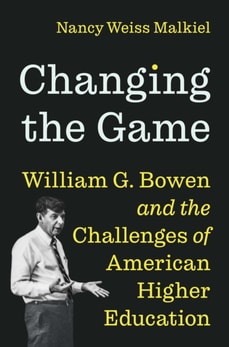
How a visionary university and foundation president tackled some of the thorniest problems facing higher educationAs provost and then president of Princeton University, William G.
Planning with Young People presents educators, urban planners, and designers with an alternative vision of how to build cities for young people, challenging readers to imagine cities that truly serve their youngest inhabitants.
States of Mind critiques the traditional paradigms that shape our mental health and school systems, from diagnostic labels to high-stakes assessment, unravelling what they are, how they came into being, and why they need to evolve to better serve young people.
This book addresses a critical gap in our education system: ensuring that youth in the juvenile legal system receive the special education and related services they need.
The Handbook of Critical Special Education proposes a transformative framework that reimagines special education as dialogic, relational, decolonial, and justice oriented.