In refreshing challenge to the common presumption that knowing involves amassing information, this book offers an eight-step approach that begins with love and pledge and ends with communion and shalom.
The Spirit of Adoption explores many of the complexities inherent in adoption and its relationship to spirituality, challenging us to move beyond the common mythologies about adoption to consider the more difficult questions adoption raises about the nature of God, family, culture, loss, and joy.
In A Pacifist Way of Knowing: John Howard Yoder's Nonviolent Epistemology, editors Christian Early and Ted Grimsrud gather the scattered writings of Yoder on the theme of the relationship between gospel, peace, and human ways of knowing.
Weaving together insights from social psychology, theology, and experiences of interfaith religious leaders, Dagmar Grefe develops practical strategies that support interreligious contact at a grassroots level.
Evangelicals often give little thought to the morality of contraception, but when they do, serious studies of the subject are scarce if not non-existent.
This book records a set of dialogues between scientists, theologians, and philosophers on what can be done to prevent a global slide into ecological collapse.
Supported by the International Association of Addictions and Offender Counselors (IAAOC), this annual review addresses innovation, evaluation, and program development efforts in addictions and offender counseling.
A recent Gallup Study estimated that 7 in 10 American workers are "e;actively disengaged"e; or "e;not engaged"e; while at work, costing the economy between $450 and $550 billion per year.
In Black, Brown + Latinx Design Educators, Kelly Walters collects twelve deeply personal interviews with graphic design educators of color who teach at colleges and universities across the United States and Canada.
On September 22, 2022, the National Academy of Sciences held a symposium entitled Endless Frontier 2022: Research and Higher Education Institutions for the Next 75 Years.
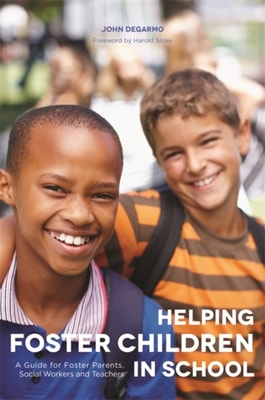
Helping Foster Children In School explores the challenges that foster children face in schools and offers positive and practical guidance tailored to help the parents, teachers and social workers supporting them.
In today's world, with its preoccupation with impact assessments and results-based management, program evaluation is all too often framed as an affirmation of an official narrative rather than as a source of alternatives.
In Imperfect Leadership: A book for leaders who know they don't know it all, Steve Munby eloquently reflects upon and describes a leadership approach that is strong on self-awareness and positive about the importance of asking for help.
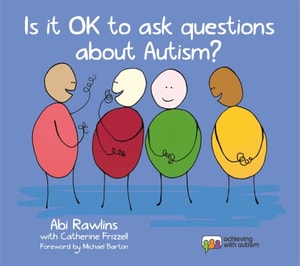
Raising awareness and understanding of autism has school-wide benefits, such as helping to improve the attitudes of pupils and staff and allowing children with autism to thrive socially, emotionally and educationally alongside their peers.
Discussions with school children aged 5-11 reveal that there is still a degree of uncertainty amongst students about whether it is ok to ask questions about autism.
This fun and engaging activity book helps to teach teens to manage emotions and develop relationships by tracking their progress using Dialectical Behaviour Therapy (DBT) techniques.
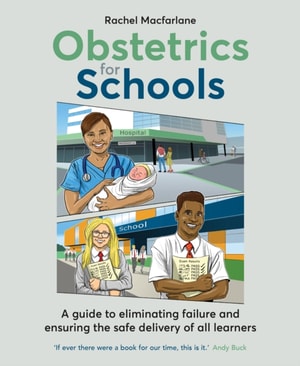
In Obstetrics for Schools: A guide to eliminating failure and ensuring the safe delivery of all learners, Rachel Macfarlane presents a powerful manifesto for school leaders and teachers on how they can bridge the advantage gap and deliver positive outcomes for all pupils.
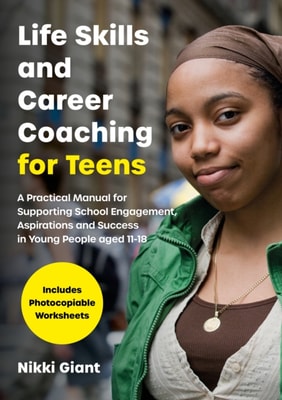
Setting out a year-long curriculum based programme for education and youth professionals, this book provides a challenging and engaging workshop-based approach to developing school engagement and ambitions in young people aged 11-18.
Stephen Lane's Beyond Wiping Noses: Building an informed approach to pastoral leadership in schools sets out the crucial role of pastoral care as part of the function and purpose of schooling - and shares practical insights on how schools can get it right.
This series publishes monograph length conceptual papers designed to promote theory and research on important substantive and methodological topics in the field of human resources management.
In the first section, broad issues associated with assessment for, of, and in learning in inclusive classrooms; measuring the implementation of inclusive policy; identifying and removing barriers to inclusion; resourcing and financing; and, evaluating effective teacher preparation for inclusion provide the structure for discussion.