Embodied Learning in the Schools explores the relevance of embodied perspectives to instructional designers and education scholars seeking to improve the design, development, and analysis of technology-enhanced learning environments in K-12 settings.
Evaluative Practice in Learning, Design, and Technology provides learning, design, and technology stakeholders with comprehensive resources intended to support their engagement in evaluative activities.
Examining how research-informed design knowledge is created, represented, and used in educational research and innovation projects, this book offers theoretical, methodological, and practical guidance on how to (and how not to) create, represent, and (re)use research-informed design principles.
This monograph argues that implementing devised theatre as a learning praxis has a unique potential to cultivate student agency in the twenty-first century classroom.
E-Education Applications: Human Factors and Innovative Approaches enforces the need to take multi-disciplinary and/or inter-disciplinary approaches, when solutions for e-education (or online-, e-learning) are introduced.
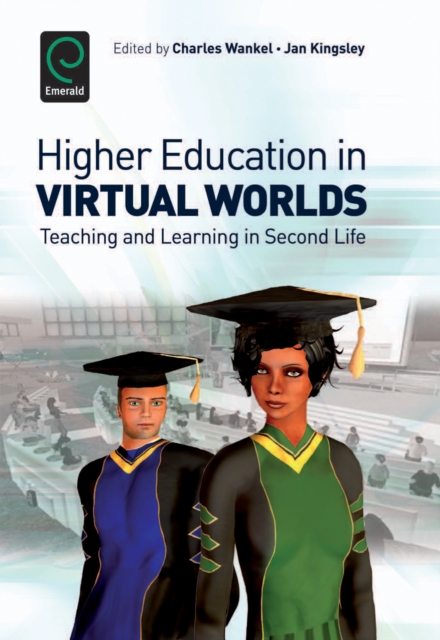
The use of virtual world platforms is still in its infancy and many educators are wondering how best to use such platforms as a complement to their teaching and facilitation strategies.
This volume explores the potentials and perspectives upon educational diplomacy,promoting a better mutual understanding on the European and the Chinesetraditions and their visions for the future.
Adult education in Australia is a significant part of the post-secondary education sector, and its importance is coming to be more widely recognized as skills and knowledge need to be updated in a period of rapid social and technological change.
This collection reveals a recurring theme in the author's work over almost three decades: that the preoccupation in policy, commentary, research and practice with who gets into higher education has led to a corresponding failure to cast a critical eye over what, where and when they get the higher education offer.
This collection reveals a recurring theme in the author's work over almost three decades: that the preoccupation in policy, commentary, research and practice with who gets into higher education has led to a corresponding failure to cast a critical eye over what, where and when they get the higher education offer.
Institutions of higher learning are providing access to free and low-cost open resources to support students with prior college-level learning during every step of their educational journey.
Online learning has increasingly been viewed as a possible way to remove barriers associated with traditional face-to-face teaching, such as overcrowded classrooms and shortage of certified teachers.
This book explores personal, family and theoretical constructions of inclusion and offers evidence-based strategies and resources to foster parent-professional, home-school collaborative partnerships.