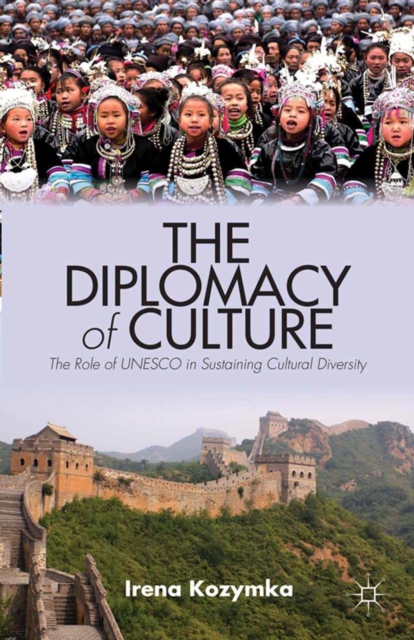
Cultural diversity, because it is perceived to have significant security, developmental, and social implications, is fast becoming one of the major political issues of the day.
The third edition of this comprehensive and innovative textbook provides an invaluable narrative and insight into the ever-changing landscape of British politics.
Recently in the Dominican Republic, a pro-municipal social alliance pressed for decentralization and politicians yielded, seeking power in three-party competition.
This study examines conflicts arising from the dual processes of Europeanization and post-socialist transformations, from gaining independence in 1991 to facing the current economic crisis.
Faced with falling social cohesion governments have sought to revitalise society by trying to reconstruct local communities, civil society and citizenship.
South Korea has emerged as a new middle power playing a significant role in a wide range of important global issue areas and supporting liberal international order with its leadership diplomacy.
This book uniquely combines global opinion theory with the English school of international relations to explain the effects of world opinion on the Northern Ireland peace process.
This book offers a rigorous comparative historical analysis of Kenya, Tanzania, Bolivia, Peru, and the United States to demonstrate how colonial administrative rule, access to resources, nation building and language policies, as well as political entrepreneurs contribute to the politicization of ethnicity.
Through contemporary case studies of strategic management at work in the US and Europe, this collection shows that it can no longer be seen as a discipline for long term decisions but has become a central feature of the public sector.
Niranjan Ramakrishnan examines the surprising extent to which Gandhi's writings still provide insight into current global tensions and the assumptions that drive them.
Exploring the interlinkages of political parties, religiosity, and women's leadership and nominations to public office, this book argues that as party religiosity increases, women's chances of assuming leadership positions fall.
Through critical analysis of key concepts and measures of the rule of law, this book shows that the choice of definitions and measures affects descriptive and explanatory findings about nomocracy.
Through the use of a historical-institutional perspective and with particular reference to the Czech Republic, Hungary, Poland and Slovakia; this study explores the state of family policies in Post-Communist Europe.
Examining the complexities and tensions in relations between party members and parliamentarians through an in-depth analysis of the processes that shape the development of party policy in the UK, Australia and New Zealand, this book Presents new evidence on the challenges facing parties in encouraging citizen participation in policy development.
The continued prominence of Islam in the struggle for democracy in the Muslim world has confounded Western democracy theorists who largely consider secularism a prerequisite for democratic transitions.
This book combines the two most important typologies of capitalist diversity; Esping-Andersen's welfare regime typology and Hall and Soskice's 'Varieties of Capitalism' typology, into a unified typology of capitalist diversity.
Tannam focuses on the role of bureaucracies when dealing with conflict in two international organisations, the European Union (EU) and the United Nations (UN), providing a unique comparative account of their policy-making procedures.
Political parties are essential for the functioning of parliamentary democracy but how have parties adapted to the challenges created by the growth of a new layer of political decision-making at the supranational level, i.
This book analyses security cooperation in the domain of inter-regionalism, addressing the emergence of the African Union as a regional actor and its impact on EU-Africa relations.
Tracing both economic and political developments through the prism of history as well as more recent developments, this book casts new light on the role of communist history in setting the different regional successes in post-communist transition.
This book presents an in-depth analysis of social policy reactions to international economic shocks in four different welfare states, over a 40-year period.
This wide-ranging study of three European cities shows how hybrid forms of governance emerge from the tensions between new ideas and past legacies, and existing institutional arrangements and powerful decision makers.
Surveying all referendums around the world since 1793, Dr Qvortrup and contributors provide a thorough account of why and when citizens have been asked to vote on policy issues.
In the first volume of its kind, a collection of top policy scholars combine empirical and methodological analysis in the field of comparative policy studies to provide compelling insights into the formulation, implementation and evaluation of policies across regional and national boundaries.
Examining twenty-first century relations between the US and China, Shepperd investigates three well publicised crises between these states, highlighting how social interests relating to identity and emotional needs were key dynamics driving these interactions and their transformation.
This book explores the extent to which a transformation of public employment regimes has taken place in four Western countries, and the factors influencing the pathways of reform.
A cross-country comparison of recent Labour Party governments in New Zealand, Britain, and Australia, and an exploration of how those countries' labour movements responded to their parties' neoliberal policies in power.
This provides authoritative coverage as well as wide-ranging and integrated analysis of politics and policy in Germany today and of its role in Europe and the wider world.
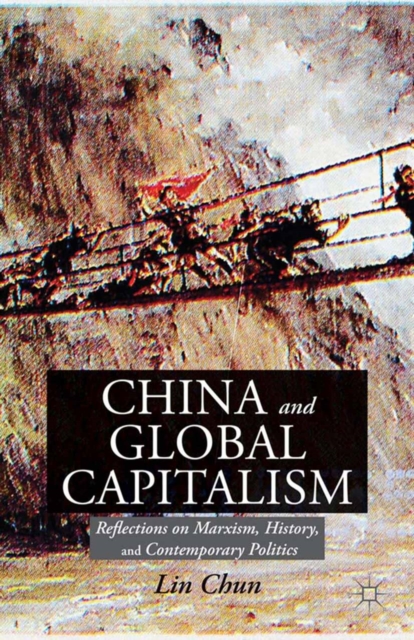
In this concise historical and conceptual analysis of China's evolving position in a world defined predominantly by global capitalist development, Lin offers a critical review of relevant debates and discusses the imperative and feasibility of a socialist Chinese model, reconstructed, as an alternative to standardized modernity at an impasse.
The first comparative study to examine the role of religion in the formation of Greek and Turkish nationalisms, this book argues that the shift to an increasingly religious paradigm in both countries can be explained in terms of the exigencies of consolidation and the need to appeal to grassroots elements and account for diversity.
This book provides comprehensive coverage of the models of contemporary democracy; its social, cultural, economic and political prerequisites; its empirically existing varieties and its two major challenges - globalization and mediatization.
Beginning with the premise that democracies are often deeply implicated in their own downfall, The Theory of Democide challenges the conventional view of how and why democracies collapse by demonstrating that democratic collapse is often a direct result of the inherent logic of democracy itself.
Covering the period from Ted Heath's assumption of the leadership of the Conservative Party through to the early years of the Coalition, this volume provides a detailed analysis of the Tory Party's Macroeconomic and Microeconomic Policy-Making over the past 50 years providing an historical context for the political and economic events of today.
In a subtle but powerful reading of the shifting relationships between development, hegemony, and social transformation in post-independence Latin America, Ronaldo Munck argues that Latin American subaltern knowledge makes a genuine contribution to the current search for a social order which is sustainable and equitable.