China's explosive transformation from a planned economy to a more market-oriented one over the past three decades owes much to the charismatic reformer Zhu Rongji.
China's explosive transformation from a planned economy to a more market-oriented one over the past three decades owes much to the charismatic reformer Zhu Rongji.
In the great tradition of moral argument about the nature of the economic market, Rebecca Blank and William McGurn join to debate the fundamental questionsequality and efficiency, productivity and social justice, individual achievement and personal rights in the workplace, and the costs and benefits of corporate and entrepreneurial capitalism.
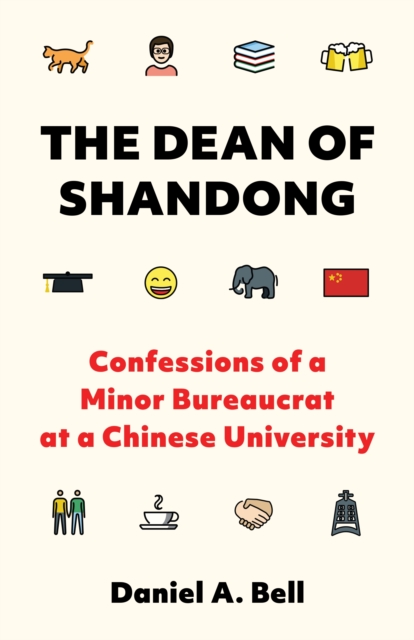
A Financial Times Best Book of the YearAn inside view of Chinese academia and what it reveals about China's political systemOn January 1, 2017, Daniel Bell was appointed dean of the School of Political Science and Public Administration at Shandong Universitythe first foreign dean of a political science faculty in mainland China's history.
Using the developments in key multinational states, including the United Kingdom, Spain, Belgium, and the United States, this book explores both the impact of the pandemic on nationalism and the broader multinational state as well as the significance of multinationalism for the response to the pandemic.
Using the developments in key multinational states, including the United Kingdom, Spain, Belgium, and the United States, this book explores both the impact of the pandemic on nationalism and the broader multinational state as well as the significance of multinationalism for the response to the pandemic.
This collection argues that although constitutionalism has traditionally been the primary mechanism for facilitating the mutual accommodation of sub-state and state national societies in plurinational states.
With contributions from experts on democracy promotion, this volume examines civil society development and external civil society promotion in post-socialist Europe.
This handbook showcases the rich varieties of legislatures that exist in Asia and explains how political power is constituted in 17 jurisdictions in East, Southeast and South Asia.
This handbook showcases the rich varieties of legislatures that exist in Asia and explains how political power is constituted in 17 jurisdictions in East, Southeast and South Asia.
Decolonizing Time: Work, Leisure, and Freedom demonstrates the importance of time as a central category for political theory, providing not only a history of the fight for time through political, feminist, and critical theory, but also assessing this tradition in the context of the United States.
Decentralization is referred to as a process of sharing of powers by the Central ruling groups with other groups, each having authority within a specific area or the State.
Decentralization is referred to as a process of sharing of powers by the Central ruling groups with other groups, each having authority within a specific area or the State.
The book shares the results of project research granted by the Castilla-La Mancha government, which has been composed by philosophers of law and criminal law researchers, whose main conclusions are represented by the manifestations and trends of the current crisis of the constitutional State.
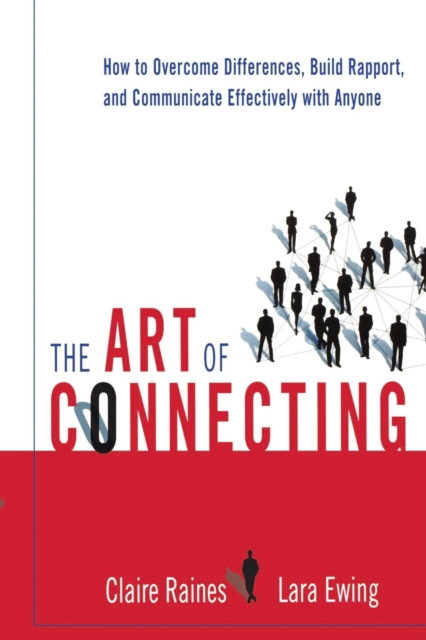
This useful resource reveals five core principles and presents corresponding, specific strategies for overcoming communications barriers and connecting effectively with anyone, regardless of professional, generational, ethnic, cultural, or other differences.
This groundbreaking work examines the complex dynamics of Russia's relations with the Caucasus, revealing the profound effects that Caucasian forces have had upon Russia's development.
The Secular Contract seeks to defend the European Enlightenment's secularization of political philosophy by promoting an understanding of Enlightenment secular liberalism and extending it to contemporary issues.
This work, written by an expert in the politics of Mainland China and Taiwan, looks at the role the Constitution of the Republic of China has played in the development of Taiwan since 1949 and its potential influence on the People's Republic of China.
This volume brings together 11 experts from a range of religious backgrounds, to consider how each tradition has interpreted matters of violence and peace in relation to its sacred text.
Las distintas observaciones y apreciaciones surgieron de aciertos, errores, replanteos, intercambio con colegas y cambios de opinión que he tenido respecto a la política antes, durante y después de haber estado en gestión.
This book explores the life and spirituality of John Cennick (1718-1755) and argues for a new appreciation of the contradictions and complexities in early evangelicalism.
This book explores the life and spirituality of John Cennick (1718-1755) and argues for a new appreciation of the contradictions and complexities in early evangelicalism.
The book is devoted to the subject of Venezuela's politics and the different dimensions of its longstanding crisis, with various researchers exchanging ideas on the current problems affecting the country.
Der Band versammelt mobilitäts- und politikwissenschaftliche Beiträge zu verkehrspolitischen Entscheidungen und Richtungswechseln auf verschiedenen Ebenen (Bund, Land, Kommune) und zu verschiedenen Verkehrsträgern bzw.
This collection examines the continuities and changes that have set the Dominican political system apart from its Latin American counterparts over the last couple of decades.
By comparing the importance of representative democracy to the EU as enshrined in the Lisbon Treaty with the political systems in the EU's newest member states, this study explores whether representative democracy can really exist in an enlarged EU and explores the constraints and opportunities for political parties operating the in the EU.
This book focuses on local state-society relations, understood as institutionalised relations between local municipalities across Europe and individual, collective or corporate societal actors.
In diesem Sammelband werden aktuelle Ansätze und Entwicklungen zu grundlegenden Konzepten der Vergleichenden Politikwissenschaft diskutiert, insbesondere zu den Themengebieten Staat und Staatlichkeit, Demokratie sowie Rechtsstaatlichkeit und Governance.