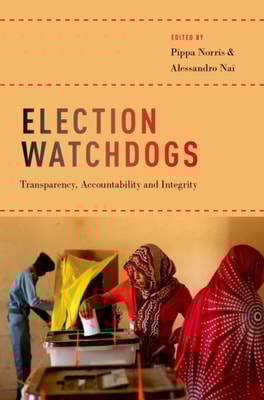
Elections are the means by which democratic nations determine their leaders, and communication in the context of elections has the potential to shape people's beliefs, attitudes, and actions.
Elections are the means by which democratic nations determine their leaders, and communication in the context of elections has the potential to shape people's beliefs, attitudes, and actions.
The Oxford Handbook of Religion and Race in American History brings together a number of established scholars, as well as younger scholars on the rise, to provide a scholarly overview for those interested in the role of religion and race in American history.
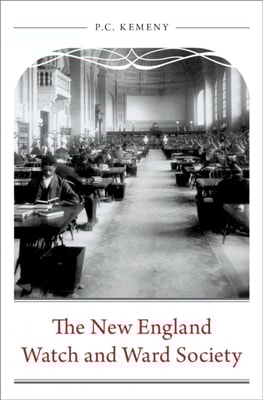
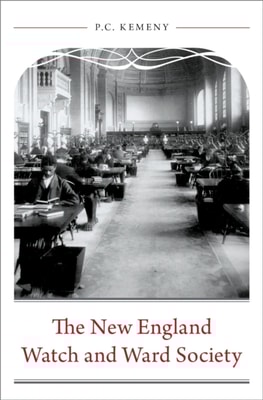
The New England Watch and Ward Society provides a new window into the history of the Protestant establishment's prominent role in late nineteenth-century public life and its confrontation with modernity, commercial culture, and cultural pluralism in early twentieth-century America.
The New England Watch and Ward Society provides a new window into the history of the Protestant establishment's prominent role in late nineteenth-century public life and its confrontation with modernity, commercial culture, and cultural pluralism in early twentieth-century America.
Samuel Helfont draws on extensive research with Ba'thist archives to investigate the roots of the religious insurgencies that erupted in Iraq following the American-led invasion in 2003.
Samuel Helfont draws on extensive research with Ba'thist archives to investigate the roots of the religious insurgencies that erupted in Iraq following the American-led invasion in 2003.
Today, the majority of sovereign states can be described as "e;democracies"e; because they possess elected political leadership and some measure of commitment to the protection and promotion of individual rights and equality under law.
Today, the majority of sovereign states can be described as "e;democracies"e; because they possess elected political leadership and some measure of commitment to the protection and promotion of individual rights and equality under law.
In October of 2014, 12-year-old Sasha Lutt read from a tiny Torah scroll as a part of her bat mitzvah in the Women's section of the plaza at the Western Wall, Judaism's holiest prayer site.
Although seldom studied by biblical scholars as a discrete phenomenon, ritual violence is mentioned frequently in biblical texts, and includes ritual actions such as disfigurement of corpses, destruction or scattering of bones removed from a tomb, stoning and other forms of public execution, cursing, forced depilation, the legally-sanctioned imposition of physical defects on living persons, coerced potion-drinking, sacrificial burning of animals and humans, forced stripping and exposure of the genitalia, and mass eradication of populations.
Although seldom studied by biblical scholars as a discrete phenomenon, ritual violence is mentioned frequently in biblical texts, and includes ritual actions such as disfigurement of corpses, destruction or scattering of bones removed from a tomb, stoning and other forms of public execution, cursing, forced depilation, the legally-sanctioned imposition of physical defects on living persons, coerced potion-drinking, sacrificial burning of animals and humans, forced stripping and exposure of the genitalia, and mass eradication of populations.
The long-standing debate about whether the State of Israel can be both Jewish and democratic raises important questions about the rights of Palestinian Arabs.
The long-standing debate about whether the State of Israel can be both Jewish and democratic raises important questions about the rights of Palestinian Arabs.
Human rights organizations have grown exponentially across the globe, particularly in the global South, and the term human rights is now common parlance among politicians and civil society activists.
In the decade since the financial crisis of 2008, governments around the world have struggled to develop strategies to stabilize precarious markets, encourage growth, and combat mounting wealth inequality.
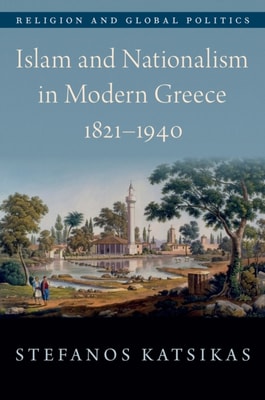
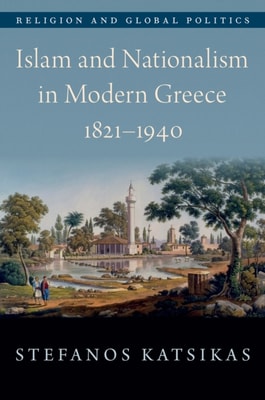
Drawing from a wide range of archival and secondary Greek, Bulgarian, Ottoman, and Turkish sources, Islam and Nationalism in Modern Greece, 1821-1940 explores the way in which the Muslim populations of Greece were ruled by state authorities from the time of Greece's political emancipation from the Ottoman Empire in the 1820s until the country's entrance into the Second World War, in October 1940.
Drawing from a wide range of archival and secondary Greek, Bulgarian, Ottoman, and Turkish sources, Islam and Nationalism in Modern Greece, 1821-1940 explores the way in which the Muslim populations of Greece were ruled by state authorities from the time of Greece's political emancipation from the Ottoman Empire in the 1820s until the country's entrance into the Second World War, in October 1940.