Over time the presidential election of 1964 has come to be seen as a generational shift, a defining moment in which Americans deliberated between two distinctly different visions for the future.
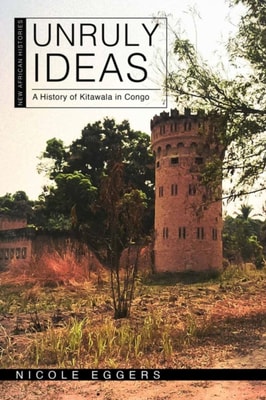
Original oral and ethnographic sources inform this conceptual history of power in central Africa, imagined through the lens of Kitawala religious practices.
Original oral and ethnographic sources inform this conceptual history of power in central Africa, imagined through the lens of Kitawala religious practices.
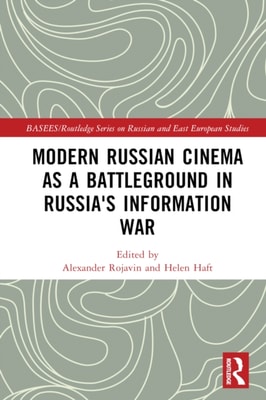
This book explores how modern Russian cinema is part of the international information war that has unfolded across a variety of battlefields, including social media, online news, and television.
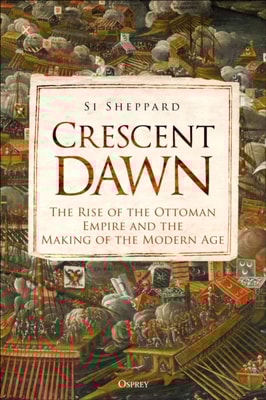
A groundbreaking history of the wars of the Ottoman Expansion, a truly global conflagration that crisscrossed three continents and ultimately defined the borders and future of modern Europe.
In 'The Pictures of Slavery in Church and State (Complete Edition)' by John Dixon Long, readers are taken on a thought-provoking journey delving into the complex relationship between slavery, religion, and government.
This book investigates how schools deal with racism and extremism, focusing on everyday life, students, and the surrounding community and geographical area.
In diesem Ratgeber macht Rainer Sachse Ihnen – auf Basis der klärungsorientierten Psychotherapie – Mut, bei Konflikt und Streit privat wie beruflich zu gegenseitigem Verstehen und tragfähigen Kompromissen beizutragen.
This edited collection aims to analytically reconceptualise the Syrian crisis by examining how and why the country has moved from a stable to a war-torn society.
This book explains the aspirations and concerns of Islamist actors in the aftermath of the Arab Uprisings by looking at two sets of relationships between Turkey's ruling AKP and the Egyptian Muslim Brotherhood, and the AKP and Tunisia's Ennahda.
This book explains the aspirations and concerns of Islamist actors in the aftermath of the Arab Uprisings by looking at two sets of relationships between Turkey's ruling AKP and the Egyptian Muslim Brotherhood, and the AKP and Tunisia's Ennahda.
Versammlungen waren im frühmittelalterlichen Lateineuropa wichtige Institutionen: Hier handelten die Entscheidungsträger ihre Hierarchie aus, hier machten sie Politik, hier tauschten sie Informationen aus.
Towards A New Christian Political Realism presents a new theoretical approach to understanding the role of religion in international relations, considering the strengths of Christian realism, classical realism, and neorealism, as well as the literature about the relevance of religion for IR.
This book addresses the challenge of providing for the free exercise of religion without allowing religious exercise by some individuals and groups to impinge upon the conscientious convictions of others.
Disinformation Debunked: Building Resilience through Media and Information Literacy examines the way media and information literacy (MIL) can address disinformation in conjunction with fact-checkers and developers, to benefit from the expertise of these fields in fighting disinformation.
Max Weber hat um 1900 das Verhältnis von Religion und Wirtschaft auf eine klassische Weise zur Sprache gebracht und religiöse Wurzeln des modernen Kapitalismus identifiziert.
Communication in Legal Advocacy integrates work in legal theory, communication theory, social science research, and strategic planning to provide a comprehensive anaysis of the communication processes in trials.
Mass Protests in Iran: From Resistance to Overthrow explores the various waves of protests in Iran over the past 44 years, surveying their causes, consequences, and outcomes.
The compelling true story of Nelly Benatar-a hero of the anti-Fascist North African resistance and humanitarian who changed the course of history for the "e;last million"e; escaping the Second World War.
The 10th edition of this classic text introduces students to political parties and their critical role in representative democracy at the local, state, and national levels.
So far religion has been seen as cause for dramatic developments in the history of cities, it has contributed to the monumentalisation of centres and or has given importance to ex-centric places.
When we take a look back at the way Western states have fought terrorist organizations in the last 20 years, it is difficult not to think that these alternatives to war might have been more ethical than the decisions to invade Afghanistan and Iraq in 2001 and in 2003.