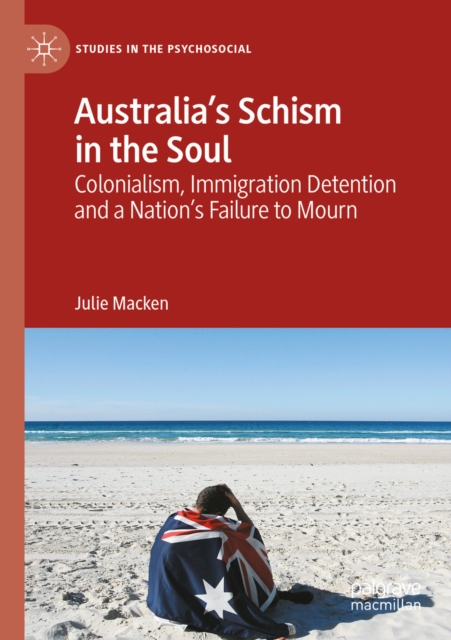
How has it become possible for the Australian state to gain public acquiescence to develop one of world’s most punitive systems of processing asylum-seekers; one that not only contravenes Australia’s international humanitarian commitments, but that, in the words of activists, medical professionals, and the detainees themselves amounts to torture?
How has it become possible for the Australian state to gain public acquiescence to develop one of world’s most punitive systems of processing asylum-seekers; one that not only contravenes Australia’s international humanitarian commitments, but that, in the words of activists, medical professionals, and the detainees themselves amounts to torture?
This book re-examines and contextualises political developments that have seen African countries make progress in achieving democratic governance over the last two decades alongside their struggle to institutionalise it amidst socioeconomic and political complexities.
This book offers a critical assessment of international humanitarian law by employing mainly the Third World Approaches to International Law (TWAIL), which encompass the critical, Marxist, gender, critical race and post-colonial theories.
Femicide in Latin America: A Growing Threat to Women's Security explores the persistent and rising rates of femicide across sixteen Central and South American countries as a critical issue of national stability and regional security.
Femicide in Latin America: A Growing Threat to Women's Security explores the persistent and rising rates of femicide across sixteen Central and South American countries as a critical issue of national stability and regional security.
This research contributes to scholarship on Lesbian, Gay, Bisexual, Transgender, Queer/ Questioning, Intersex and Asexual (LGBTQIA+) rights at the international level and how LGBTQIA+ non-governmental organisations (NGOs) use international channels to advance the cause domestically, with a focus on countries that have a strong presence and influence of the Catholic Church.
This contributed volume explains the concept of solidarity and illustrates how perspectives informed by a solidarity approach can be utilized in geographic research.
This book offers a groundbreaking exploration of the Intergovernmental Authority on Development (IGAD)’s role in peace-making in the Horn of Africa (HoA), focusing on its efforts in the South Sudan conflict.
As South Africa has entered the third decade after the end of apartheid, this book aims at taking stock of the post-apartheid dynamics in the, so far, often less-comprehensively analysed, but crucial fields of APRM-relevant politics, social development, land and regional relations.