A century after the publication of Evgeny Pashukanis' pivotal book General Theory of Law and Marxism, this collection presents a comprehensive account and analysis of his key concept of legal form.
Following his expulsion from the Soviet Union in 1929, Leon Trotsky promoted the birth of an International Anti-Stalinist Communist movement which considered itself in opposition to the Communist International (Comintern).
Following the 100th anniversary of Pashukanis' General Theory of Law and Marxism (1924), this volume aims to breathe new life into the main category of Pashukanian legacy, the concept of legal form.
"e;Wokism and Hypermorality: Notes on the New Virtue Vigilantism"e;In the current political debate, moral convictions are increasingly determining the public debate.
This book offers a geneaological understanding of the condition of our time by reconstructing the complex story of the transition from the "e;cyclical time"e; of the classic era to the "e;linear and infuturant time"e; of the modern world.
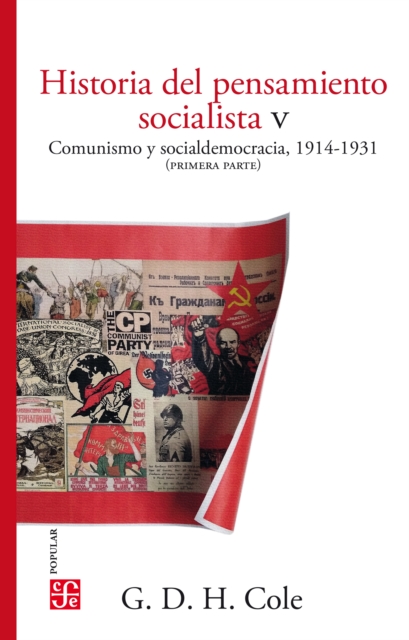
El autor aborda en este estudio la historia de los partidos y grupos socialistas durante la primera Guerra Mundial, la Revolucion rusa de 1917, las revoluciones alemana, hungara y de otros paises en 1918-1919, el triunfo del fascismo en Italia y la lucha entre las concepciones rivales del internacionalismo socialista.
A historical document reintroducing Dallas as an early French socialist utopia, pieced from journal entries, letters, and sketches of French scholar Victor Considerant.
"e;Council democracy"e; is a particular form of democratic socialism that strives towards democratic self-governance on the basis of active, free, and associated individuals working cooperatively within a federated council system.
This book explores how the critical discursive breakthrough of social movements in Serbia, Bosnia and Herzegovina, and Croatia disrupted the post-socialist transitional status quo.
This book offers a geneaological understanding of the condition of our time by reconstructing the complex story of the transition from the "e;cyclical time"e; of the classic era to the "e;linear and infuturant time"e; of the modern world.
Following the 100th anniversary of Pashukanis' General Theory of Law and Marxism (1924), this volume aims to breathe new life into the main category of Pashukanian legacy, the concept of legal form.
Since the late 1960s, individuals rebelling against societal norms have embraced intentional communities as a means to challenge capitalism and manifest their ideals.
Since the late 1960s, individuals rebelling against societal norms have embraced intentional communities as a means to challenge capitalism and manifest their ideals.
A century after the publication of Evgeny Pashukanis' pivotal book General Theory of Law and Marxism, this collection presents a comprehensive account and analysis of his key concept of legal form.
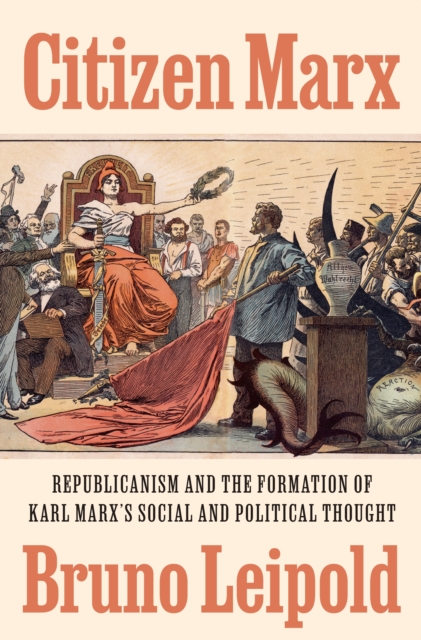
The first book to offer a comprehensive exploration of Marx's relationship to republicanism, arguing that it is essential to understanding his thoughtIn Citizen Marx, Bruno Leipold argues that, contrary to certain interpretive commonplaces, Karl Marx's thinking was deeply informed by republicanism.
Bringing together John Reed's revolutionary reportage with Karl Marx's foundational political theory, The Communist Revolution & The Communist Manifesto traces communism as both lived upheaval and intellectual program.
This book marks a missed encounter between two of the most influential Marxist thinkers of our age, Walter Benjamin and Antonio Gramsci, studied here for the first time side by side.