In the Netherlands, a small group of biracial citizens has entered its eighth decade of lives that have been often puzzling and difficult, but which offer a unique insight into the history of race relations in America.
In the many historical accounts of D-Day, the Navy, Coast Guard and merchant marine, who transported troops to the invasion beaches and supported the attack, are often given scant attention.
Profiling World War II veterans who became famous Hollywood personalities, this book presents biographical chapters on celebrities like Audie Murphy, "e;America's number one soldier"e;; Clark Gable, the "e;King of Hollywood"e;; Jimmy Stewart, combat pilot; Gene Autry, the "e;singing cowboy,"e; who flew the infamous Hump; the amorous Mickey Rooney; Jackie Coogan, "e;the Kid"e; who crashed gliders in the jungle; James Arness, who acquired his Gunsmoke limp in the mountains of Italy; Tony Bennett, who discovered his voice during the Battle of the Bulge; and Lee Marvin, a Marine NCO who invaded 29 islands.
Among the more than 260 American submarines that patrolled the Pacific during World War II, the USS Swordfish in 1941 was the first to sink a Japanese armed merchant ship, marking the beginning of the submarine's colorful history.
Contrary to the common notion that news regarding the unfolding Holocaust was unavailable or unreliable, news from Europe was often communicated to North American Poles through the Polish-language press.
A former Harvard professor of decision science and game theory draws on those disciplines in this review of controversial strategic and tactical decisions of World War II.
When the Americans invaded the Japanese-controlled islands of Saipan and Tinian in 1944, civilians and combatants committed mass suicide to avoid being captured.
After Operation Valkyrie--the failed July 20, 1944, plot to assassinate Adolf Hitler and seize control of the German government--both the Third Reich and Hitler came to a violent end.
It was not Robert Oppenheimer who built the bomb--it was engineers, chemists and young physicists in their twenties, many not yet having earned a degree.
Born into one of 19th century Europe's more powerful families, Archduchess Marie Valerie was the favorite daughter of Austria's Emperor Franz Joseph and Empress Elisabeth.
In the five months after Pearl Harbor, the Imperial Japanese Navy won a string of victories in a campaign to consolidate control of Southeast Asia and the South Pacific.
Originally designed as a cargo and paratroop transport during World War II, the Fairchild C-82 Packet is today mainly remembered for its starring role in the Hollywood film The Flight of the Phoenix (1965).
In late January 1944 a force of New Zealand soldiers and Allied specialists undertook a daring behind the lines reconnaissance of the Japanese-held Green Islands of Papua New Guinea.
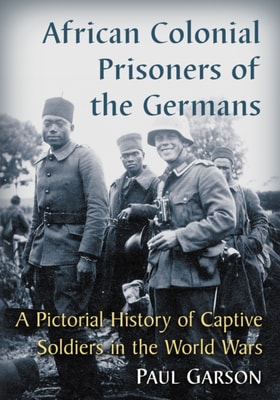
Through both World Wars, young African conscripts from Senegal, Algeria, Morocco, the Congo and elsewhere found themselves fighting for their colonial rulers, facing unknown enemies in unknown lands.
After Pearl Harbor, German, Italian and Japanese diplomats, along with their staffs and families, were relocated to two lavish but isolated resorts in Appalachia, where the State Department insisted they be treated as distinguished guests.
Trained as a photo reconnaissance unit, Marine Observation Squadron 251 ended up serving as a fighter squadron for the duration of World War II, shooting down 32 Japanese aircraft.