Reinhold Niebuhr remains at the center of a national conversation about Americas role in the world, and commentators with divergent political and religious positions look to his 1952 work, The Irony of American History, in support of their views.
Military Culture and Popular Patriotism in Late Imperial Austria examines the interplay between popular patriotism and military culture in late imperial Austria.
How to accommodate diverse religious practices and laws within a secular framework is one of the most pressing and controversial problems facing contemporary European public order.
How to accommodate diverse religious practices and laws within a secular framework is one of the most pressing and controversial problems facing contemporary European public order.
The Oxford Handbook of the History of Nationalism comprises thirty six essays by an international team of leading scholars, providing a global coverage of the history of nationalism in its different aspects - ideas, sentiments, and politics.
The Oxford Handbook of the History of Nationalism comprises thirty six essays by an international team of leading scholars, providing a global coverage of the history of nationalism in its different aspects - ideas, sentiments, and politics.
East Wind offers the first complete, archive-based account of the relationship between China and the British Left, from the rise of modern Chinese nationalism to the death of Mao Tse tung.
East Wind offers the first complete, archive-based account of the relationship between China and the British Left, from the rise of modern Chinese nationalism to the death of Mao Tse tung.
'What can you say to a man who tells you he prefers obeying God rather than men, and that as a result he's certain he'll go to heaven if he cuts your throat?
'Christian nationalism' refers to the set of ideas in which belief in the development and superiority of one's national group is combined with, or underwritten by, Christian theology and practice.
Religion, Modernity, and Politics in Hegel analyzes Hegel's philosophy of religion and develops its significance for ongoing debates about the relation between religion and politics as well as the history of the conceptualization of religion.
'What can you say to a man who tells you he prefers obeying God rather than men, and that as a result he's certain he'll go to heaven if he cuts your throat?
When Barack Obama praised the writings of philosopher theologian Reinhold Niebuhr in the run up to the 2008 US Presidential Elections, he joined a long line of top politicians who closely engaged with Niebuhr's ideas, including Tony Benn, Jimmy Carter, Martin Luther King Jr.
Despite the recent proliferation of literature on nationalism and on social policy, relatively little has been written to analyse the possible interaction between the two.
On the margins of the biblical canon and on the boundaries of what are traditionally called 'mainstream' Christian communities there have been throughout history writings and movements which have been at odds with the received wisdom and the consensus of establishment opinion.
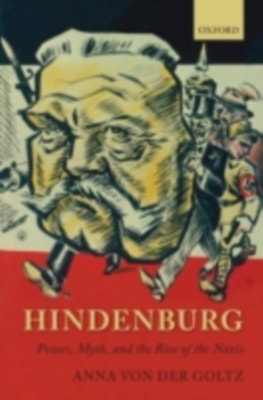
Hindenburg reveals how a previously little-known general, whose career to normal retirement age had provided no real foretaste of his heroic status, became a national icon and living myth in Germany after the First World War, capturing the imagination of millions.
This book examines the political and moral challenges that face the vast majority of human beings who consider themselves to be members of various nations.
When Barack Obama praised the writings of philosopher theologian Reinhold Niebuhr in the run up to the 2008 US Presidential Elections, he joined a long line of top politicians who closely engaged with Niebuhr's ideas, including Tony Benn, Jimmy Carter, Martin Luther King Jr.
Hindenburg reveals how a previously little-known general, whose career to normal retirement age had provided no real foretaste of his heroic status, became a national icon and living myth in Germany after the First World War, capturing the imagination of millions.
Despite the recent proliferation of literature on nationalism and on social policy, relatively little has been written to analyse the possible interaction between the two.
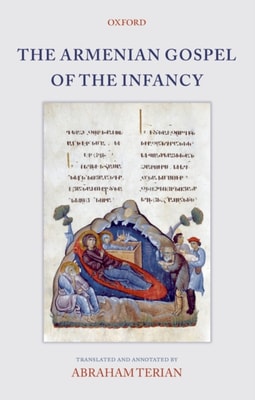
The various versions of the Infancy Gospels illustrate how stories about the Virgin and Child lend themselves to be told and retold - much like the stories in the canonical Gospels.
The Council of Chalcedon in 451 divided eastern Christianity, with those who were later called Syrian Orthodox among the Christians in the near eastern provinces who refused to accept the decisions of the council.
This volume, the first in a major new series which will provide authoritative texts of key non-canonical gospel writings, comprises a critical edition, with full translations, of all the extant manuscripts of the Gospel of Mary.
Why is it that Catholics and Protestants in Northern Ireland have been in perpetual conflict for thirty years when they can live and prosper together elsewhere?
In seventeenth-century Europe the Copts, or the Egyptian members of the Church of Alexandria, were widely believed to hold the key to an ancient wisdom and an ancient theology.
What were the historical and cultural processes by which Cyril of Alexandria was elevated to canonical status while his opponent, Nestorius, bishop of Constantinople, was made into a heretic?
Deification in the Greek patristic tradition was the fulfilment of the destiny for which humanity was created - not merely salvation from sin but entry into the fullness of the divine life of the Trinity.