'We shall live at last as free men on our own soil, and die peacefully in our own homes'Theodor Herzl's passionate advocacy of the founding of a Jewish state grew out of his conviction that Jews would never be assimilated into the populations in which they lived.
Prisoners of Hope focuses on ecclesiological and practical theological responses to migration, asylum-seeking, and refugee integration and assimilation.
Since its first publication thirty years ago, Timothy Ware s book has become established throughout the English-speaking world as the standard introduction to the Orthodox Church.
More than two hundred years after his birth, and 150 years after the publication of his most famous essay On Liberty, John Stuart Mill remains one of the towering intellectual figures of the Western tradition.
An in-depth look at why non-Jewish Poles are trying to bring Jewish culture back to life in Poland todaySince the early 2000s, Poland has experienced a remarkable Jewish revival, largely driven by non-Jewish Poles with a passionate new interest in all things Jewish.
What drives anti-immigrant biasand how it can be mitigatedIn the aftermath of the refugee crisis caused by conflicts in the Middle East and an increase in migration to Europe, European nations have witnessed a surge in discrimination targeted at immigrant minorities.
It's been two decades since the fall of apartheid, a quarter century since the liberation of Eastern European states, five decades since the death of American ';Jim Crow,' and seventy-plus years since the beginning of the emancipation of the African states.
The topic of immigration is at the center of contemporary politics and, from a scholarly perspective, existing studies have documented that attitudes towards immigration have brought about changes in both partisanship and voting behavior.
The book represents original research in a field of study rarely pursued while analysing the intellectual dimensions of disputes over ethically sensitive issues that occur in European Union politics.
This book explains the original meaning of the two religion clauses of the First Amendment: "e;Congress shall make no law [1] respecting an establishment of religion or [2] prohibiting the free exercise thereof.
A new and comprehensive look at the reasons behind successful or failed nation buildingNation Building presents bold new answers to an age-old question.
The first English-language biography of the de facto ruler of the late Ottoman Empire and architect of the Armenian GenocideTalaat Pasha (1874-1921) led the triumvirate that ruled the late Ottoman Empire during World War I and is arguably the father of modern Turkey.
A compelling account of how a group of Hasidic Jews established its own local government on American soilSettled in the mid-1970s by a small contingent of Hasidic families, Kiryas Joel is an American town with few parallels in Jewish historybut many precedents among religious communities in the United States.
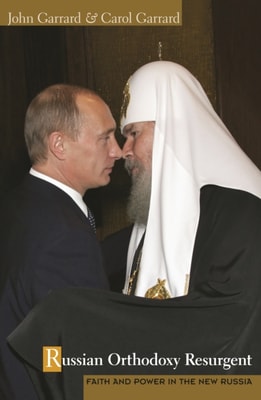
Russian Orthodoxy Resurgent is the first book to fully explore the expansive and ill-understood role that Russia's ancient Christian faith has played in the fall of Soviet Communism and in the rise of Russian nationalism today.
How American westward expansion was governmentally engineered to promote the formation of a white settler nationWestward expansion of the United States is most conventionally remembered for rugged individualism, geographic isolationism, and a fair amount of luck.
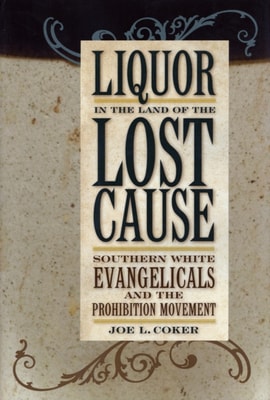
In the late 1800s, Southern evangelicals believed contemporary troubles-everything from poverty to political corruption to violence between African Americans and whites-sprang from the bottles of "e;demon rum"e; regularly consumed in the South.
How the support of patriotic sentiments in Ottoman Egypt led to an emerging Arab nationalismArab Patriotism presents the essential backstory to the formation of the modern nation-state and mass nationalism in the Middle East.
In recent years, North American and European nations have sought to legally remake religion in other countries through an unprecedented array of international initiatives.
How our dominant Christian worldview shapes everything from personal behavior to public policy (and what to do about it)Over the centuries, Christianity has accomplished much which is deserving of praise.
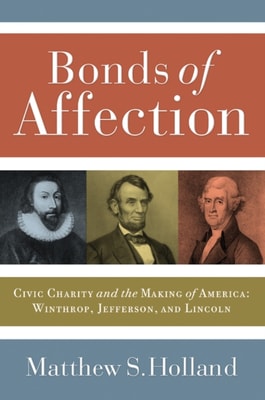
Notions of Christian love, or charity, strongly shaped the political thought of John Winthrop, Thomas Jefferson, and Abraham Lincoln as each presided over a foundational moment in the development of American democracy.
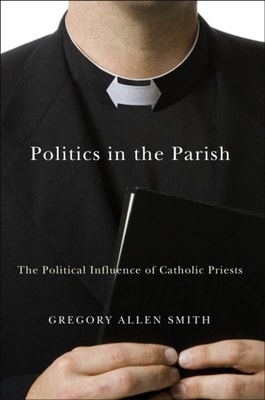
For well over a century the Catholic Church has articulated clear positions on many issues of public concern, particularly economics, capital punishment, foreign affairs, sexual morality, and abortion.
This book discusses a broadly understood phenomenon of protest from several perspectives, including historical, cultural, social, political, environmental and semiotic.
Colonial and Post-Colonial Identity Politics in South Asia analyses the colonial and post-colonial documentation and caste classification among Muslims in India, demonstrating that religion negotiated with regional social customs and local social practices while at the same time fostering a shared religious belief.
Colonial and Post-Colonial Identity Politics in South Asia analyses the colonial and post-colonial documentation and caste classification among Muslims in India, demonstrating that religion negotiated with regional social customs and local social practices while at the same time fostering a shared religious belief.
In the wake of the devastating First World War, leaders of the victorious powers reconfigured the European continent, resulting in new understandings of nation, state, and citizenship.
In the wake of the devastating First World War, leaders of the victorious powers reconfigured the European continent, resulting in new understandings of nation, state, and citizenship.
In twentieth-century Canada, mainline Protestants, fundamentalists, liberal nationalists, monarchists, conservative Anglophiles, and left-wing intellectuals had one thing in common: they all subscribed to a centuries-old world view that Catholicism was an authoritarian, regressive, untrustworthy, and foreign force that did not fit into a democratic, British nation like Canada.
In twentieth-century Canada, mainline Protestants, fundamentalists, liberal nationalists, monarchists, conservative Anglophiles, and left-wing intellectuals had one thing in common: they all subscribed to a centuries-old world view that Catholicism was an authoritarian, regressive, untrustworthy, and foreign force that did not fit into a democratic, British nation like Canada.
This book is a theoretical inquiry on the relation of the body politic with the religious movements in the time between the Constitutional Revolution and the Islamic Revolution in Iran; it illustrates speculative and historical analyses on the relationship of state, religion, and socio-political status in the late Qajar dynasty (1905-1925) and the whole Pahlavi monarchy.