A front-burner issue on the public policy agenda today is the increased use of partnerships between government and nongovernmental entities, including faith-based social service organizations.
How has it been possible for Irish political leaders to actively promote two of the largest challenges to Irish nation-statehood: the concession of sovereignty to the European Union and the retraction of the constitutional claim over Northern Ireland?
The Declaration on the Elimination of All Forms of Intolerance and of Discrimination Based on Religion or Belief, as proclaimed by the United Nations General Assembly in 1981, is the only universal human rights instrument specifically focusing on religious intolerance and discrimination.
This interdisciplinary anthology offers both theoretical reflections and empirical data on past, present and possible future war and crisis situations.
This interdisciplinary anthology offers both theoretical reflections and empirical data on past, present and possible future war and crisis situations.
This book explores the transformative role of social media in fostering reconciliation in the former Yugoslavia, a region still grappling with unresolved conflicts and ethnic divides.
Secular Religions: The Key Concepts provides a concise guide to those ideologies, worldviews, and social, political, economic, and cultural phenomena that are most often described as the modern counterparts of traditional religions.
This book examines social change in Hungary, commencing with the period of late-stage socialism, the country's immediate post-communist transition, its subsequent consolidation, and the emergence of authoritarian leadership since 2010.
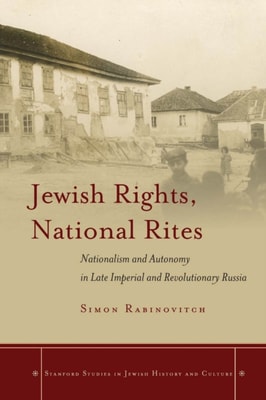
In its full-color poster for elections to the All-Russian Jewish Congress in 1917, the Jewish People's Party depicted a variety of Jews in seeking to enlist the support of the broadest possible segment of Russia's Jewish population.
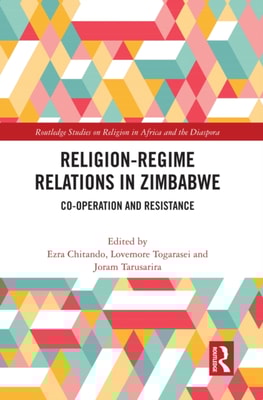
This book explores religion-regime relations in contemporary Zimbabwe to identify patterns of co-operation and resistance across diverse religious institutions.
This book discusses the ways civil society initiatives open communities to newcomers and why, how, and under what circumstances some are more welcoming than others, exploring the importance of transgressive cosmopolitanism as a basis for creating more inclusive and pluralistic societies.
A celebrated Israeli author explores the roots of the divide between religion and secularism in Israel today, and offers a path to bridging the divide Zionism began as a movement full of contradictions, between a pull to the past and a desire to forge a new future.
The Declaration on the Elimination of All Forms of Intolerance and of Discrimination Based on Religion or Belief, as proclaimed by the United Nations General Assembly in 1981, is the only universal human rights instrument specifically focusing on religious intolerance and discrimination.
Shaping Nations and Markets employs a mixed methods approach to contend that economic ideas, organization of domestic interests and their economic power, asymmetries of information, and political institutions do not sufficiently explain the formation of national interests in processes of trade liberalization.
Shaping Nations and Markets employs a mixed methods approach to contend that economic ideas, organization of domestic interests and their economic power, asymmetries of information, and political institutions do not sufficiently explain the formation of national interests in processes of trade liberalization.
A vivid portrait of a Scottish religious leader and the South Carolina colony he helped shapeWhen Alexander Garden, a Scottish minister of the Church of England, arrived in South Carolina in 1720, he found a colony smoldering from the devastation of the Yamasee War and still suffering from economic upheaval, political factionalism, and rampant disease.
Das Verhältnis zwischen den Religionsgemeinschaften als soziale Konkretisierungsformen des Abstractums "Religion" und den Menschenrechten muss gerade in unseren Tagen aus einer sozialethischen Perspektive neu und präzise bestimmt werden.
"Renaissance, Niedergang, Transformation, Deinstitutionalisierung, Entprivatisierung, Bricolage - die Erwartungen an das Schicksal der Religion in der modernen Zivilisation sind vielfältig.
This book dives into the histories of nation-state-building and curriculum formation to explore the ways that they intertwine, form and inform each other.
Secular Religions: The Key Concepts provides a concise guide to those ideologies, worldviews, and social, political, economic, and cultural phenomena that are most often described as the modern counterparts of traditional religions.
Gender, Genocide, Gaza and the Book of Esther bridges the gap between gendered and geopolitical analyses by interrogating both the sexual and ethnic violence embedded in the Book of Esther.
The communities, congregations, and faith-based coalitions that have been working for racial justice over the past fifty yearsHave progressive religious organizations been missing in action in recent struggles for racial justice?
This book investigates the impact of Christian nationalism on democracy in Ghana, arguing that proponents of a specific Christian worldview seek to remake the country according to their values and beliefs.
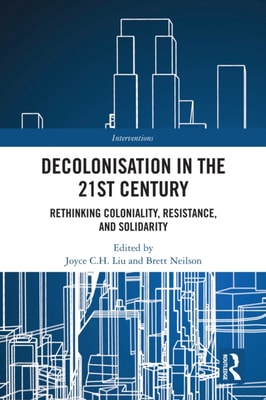
Amidst rising global inequality, intensifying geopolitical frictions, and the renewed force of colonial logics, this volume offers a critical interrogation of coloniality, decolonial practices, global capitalism, and the technologies of governance that entrench social and environmental injustice.
Amidst rising global inequality, intensifying geopolitical frictions, and the renewed force of colonial logics, this volume offers a critical interrogation of coloniality, decolonial practices, global capitalism, and the technologies of governance that entrench social and environmental injustice.
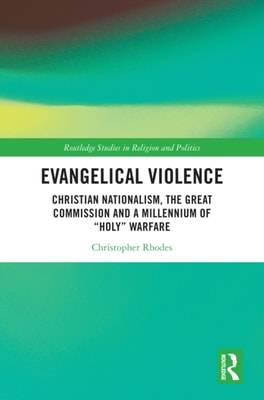
Evangelical Violence examines the long history of western states and actors attempting to export and impose Christianity on non-western peoples and the use of state-administered violence to achieve these "e;Evangelical"e; goals.
Evangelical Violence examines the long history of western states and actors attempting to export and impose Christianity on non-western peoples and the use of state-administered violence to achieve these "e;Evangelical"e; goals.
For many observers, the predation of Boko Haram, unsparing and venal in its manifestation, is shocking, and it seems to lack a local historical frame of reference that would help make it understandable.