Humanity lives inside 4 unyielding constraints, the speed of light, conservation of mass-energy, inefficiency in conversion of heat to work, and the law of demand.
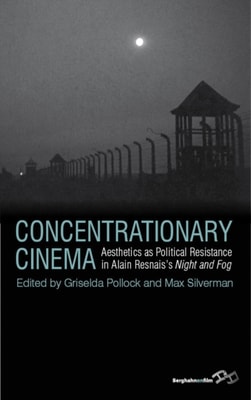
Since its completion in 1955, Alain Resnais s Night and Fog (Nuit et Brouillard) has been considered one of the most important films to confront the catastrophe and atrocities of the Nazi era.
An indispensable resource for those interested in the scourge of mass murder and genocide in the 20th and 21st centuries, this book analyzes modern and contemporary controversies and issues to help readers to understand genocide in all its complexity.
Daily Life in Nazi-Occupied Europe provides readers with information about political and military affairs, economic life, religious life, intellectual life, and other aspects of daily life in those countries occupied by Nazi Germany during World War II.
Written for general readers and professionals alike, this succinct but comprehensive work examines the hybrid nature of the two violent extremist movements threatening the United States: Islamist extremism and white nationalism.
Through sections containing overview essays and reference entries related to particular religions, this resource explores the rise of religious violence, hate crime, and persecution around the world.
Nikki Haley has been an emerging force in American politics, her star power burnished over a decade that has seen her move from the national spotlight to the global stage.
Of the countless stories of resistance, ingenuity, and personal risk to emerge in the years following the Holocaust, among the most remarkable, yet largely overlooked, are those of the hundreds of Jewish deportees who escaped from moving trains bound for the extermination camps.
Bringing together leading scholars from a range of nations, Rethinking Antifascism provides a fascinating exploration of one of the most vibrant sub-disciplines within recent historiography.
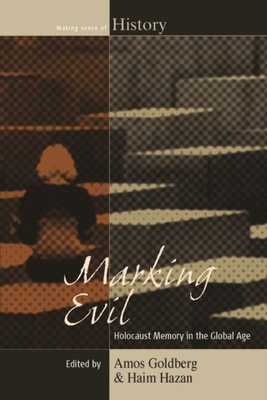
Talking about the Holocaust has provided an international language for ethics, victimization, political claims, and constructions of collective identity.
The history of twentieth-century Spanish nationalism is a complex one, placing a set of famously distinctive regional identities against a backdrop of religious conflict, separatist tensions, and the autocratic rule of Francisco Franco.
Work played a central role in Nazi ideology and propaganda, and even today there remain some who still emphasize the supposedly positive aspects of the regime s labor policies, ignoring the horrific and inhumane conditions they produced.
In 1944, members of the Sonderkommando the special squads, composed almost exclusively of Jewish prisoners, who ensured the smooth operation of the gas chambers and had firsthand knowledge of the extermination process buried on the grounds of Auschwitz-Birkenau a series of remarkable eyewitness accounts of Nazi genocide.
As global economic and population growth continues to skyrocket, increasingly strained resources have made one thing clear: the desperate need for an alternative to capitalism.
It is one of the great ironies of the history of fascism that, despite their fascination with ultra-nationalism, its adherents understood themselves as members of a transnational political movement.
Countless studies have assessed the dramatic reforms of Mikhail Gorbachev, but their analysis of the impact on European communism has focused overwhelmingly on the Soviet Union and Eastern bloc nations.
More than any other sport, professional football contributed fighting men to the battles of World War II, and the 22 or so players or former players that lost their lives are among the riveting stories told in this tribute to football's war heroes that spans many decades and military conflicts.
From the 1860s onward, Habsburg Hungary attempted a massive project of cultural assimilation to impose a unified national identity on its diverse populations.
The exodus of refugees from Nazi Germany in the 1930s has received far more attention from historians, social scientists, and demographers than many other migrations and persecutions in Europe.
In this first interdisciplinary study of this contentious subject, leading experts in politics, history, and philosophy examine the complex aspects of the terror bombing of German cities during World War II.
Political instability is nearly always accompanied by fuller prisons, and this was particularly true during the long Second World War, when military mobilization, social disorder, wrenching political changes, and shifting national boundaries swelled the ranks of the imprisoned and broadened the carceral reach of the state.
Against the historical backdrop of successive socialist and post-socialist claims to have completely remade society, the contributors to this volume explore the complex and often paradoxical continuities between diverse post-socialist presents and their corresponding socialist and pre-socialist pasts.
The testimonies of individuals who survived the Holocaust as children pose distinct emotional and intellectual challenges for researchers: as now-adult interviewees recall profound childhood experiences of suffering and persecution, they also invoke their own historical awareness and memories of their postwar lives, requiring readers to follow simultaneous, disparate narratives.
Since the Enlightenment, liberalism as a concept has been foundational for European identity and politics, even as it has been increasingly interrogated and contested.
Far from the image of an apolitical, clean Wehrmacht that persists in popular memory, German soldiers regularly cooperated with organizations like the SS in the abuse and murder of countless individuals during the Second World War.
The bulwark or antemurale myth whereby a region is imagined as a defensive barrier against a dangerous Other has been a persistent strand in the development of Eastern European nationalisms.
Basing his extensive research into hitherto unexploited archival documentation on both sides of the Rhine, Allan Mitchell has uncovered the inner workings of the German military regime from the Wehrmacht s triumphal entry into Paris in June 1940 to its ignominious withdrawal in August 1944.
Between 1939 and 1945, some 80,000 Finnish children were sent to Sweden, Denmark, and elsewhere, ostensibly to protect them from danger while their nation s soldiers fought superior Soviet and German forces.
Largely forgotten over the years, the seminal work of French poet, novelist and camp survivor Jean Cayrol has experienced a revival in the French-speaking world since his death in 2005.
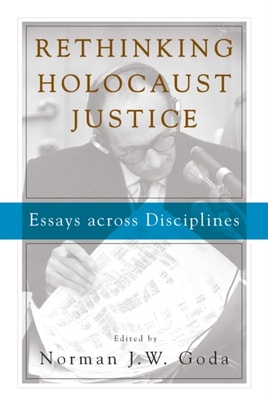
Since the end of World War II, the ongoing efforts aimed at criminal prosecution, restitution, and other forms of justice in the wake of the Holocaust have constituted one of the most significant episodes in the history of human rights and international law.
There are few individuals in modern Spanish history that have been as thoroughly mythologized as Jose Antonio Primo de Rivera, a leading figure in the Spanish Civil War who was executed by the Republicans in 1936 and celebrated as a martyr following the victory of the Falangists.
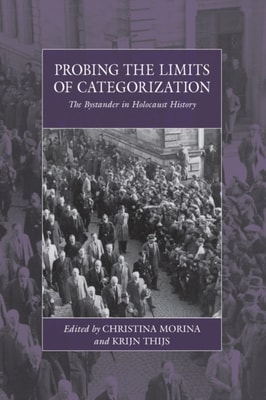
Of the three categories that Raul Hilberg developed in his analysis of the Holocaust perpetrators, victims, and bystanders it is the last that is the broadest and most difficult to pinpoint.