Rooted in the latest theoretical debates about nationalism and ethnicity, yet written in an accessible and engaging style, Islam and Nation presents a fascinating study of the genesis, growth and decline of a nationalist movement.
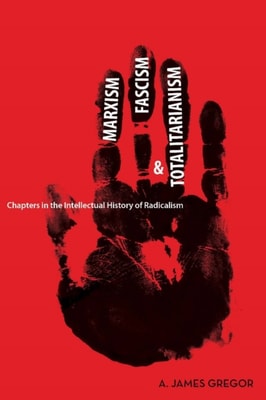
If you are curious and open to the life around you, if you are troubled as to why, how and by whom political power is held and used, if you sense there must be good intellectual reasons for your unease, if your curiosity and openness drive you toward wishing to act with others, to do something, you already have much in common with the writers of the three essays in this book.
History comes alive in these pages as Peter Stephaich traces his origins from 1608 when King Rudolph II of Hungary conferred noble status on his family.
*; A pivotal year of World War II through German eyes *; The campaigns of the German army, air force, and navy described by a master storyteller *; Covers the aftermath of Stalingrad, Kursk, Tunisia, Sicily, Italy, the U-boat war, and air battles After a crushing loss at Stalingrad, the German war machine regrouped in early 1943 to stave off total defeat, but it could not stem the rising Allied tide.
In this provocative book, Peter Gries directly challenges the widely held view that partisan elites on Capitol Hill are out of touch with a moderate American public.
Understanding the various meanings given to human and citizenship rights in Argentina is an important task, particularly so given the nation's prominence in global discussions.
In this follow-up to The Kingdom and the Glory and The Highest Poverty, Agamben investigates the roots of our moral concept of duty in the theory and practice of Christian liturgy.
Weaving together information from official sources and personal interviews, Barbara Tomblin gives the first full-length account of the US Army Nurse Corps in the Second World War.
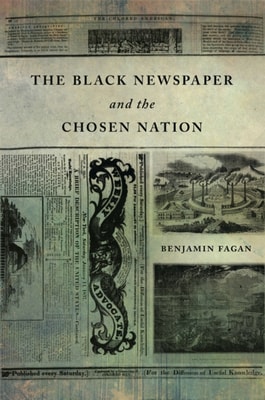
The Black Newspaper and the Chosen Nation shows how antebellum African Americans used the newspaper as a means for translating their belief in black "e;chosenness"e; into plans and programs for black liberation.
The Dodgeris the story of John Bigelow "e;Johnny"e; Dodge, a wartime hero and a pivotal figure in the escapade immortalised in the legendary Hollywood filmThe Great Escape.
Negotiating China's Destiny explains how China developed from a country that hardly mattered internationally into the important world power it is today.
Combining theology, politics and historical analysis, "e;theorizes what might be at stake-ethically-for America's current political life"e; (Andrew Taylor, Journal of American History).
The Boy Who Lost His Birthday is the uplifting story of one mans journey from boyhood in rural Hungary to triumph over oppression during the Holocaust and finally to a role as a spiritual leader in America.
Ante Pavelic was the leader of the fascist party of Croatia (the Usta e), who, on Adolf Hitler's instruction, became the leader of Croatia after the Nazi invasion of 1941.
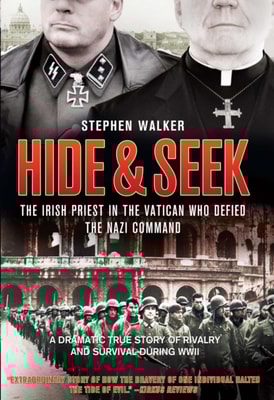
Hide& Seek chronicles the intensely personal war between wartime Rome's Nazi SS Chief Herbert Kapplerand the Vatican's Monsignor Hugh O'Flaherty, a fiercely fought rivalry that culminated in Kappler attempting to kidnap and murder his Irish opponent, who was determined to fight Rome's Nazi rulers.
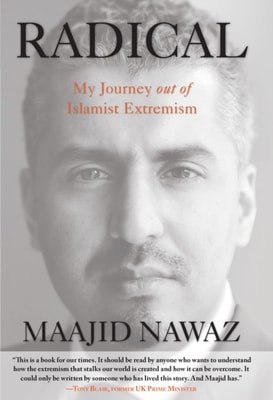
Maajid Nawaz spent his teenage years listening to American hip-hop and learning about the radical Islamist movement spreading throughout Europe and Asia in the 1980s and 90s.
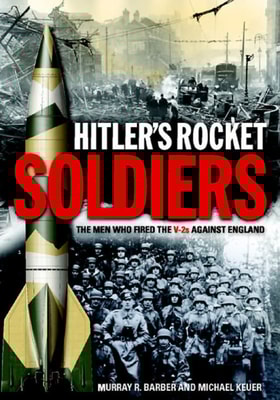
In the final, desperate months of World War Two, at a time when the German war machine was considered by the Allies to be an almost spent force, Adolf Hitler unleashed a new weapon against England and western Europe that fell from the silence of the Earth’s upper atmosphere and the edge of space.
On November 11, 1940, 21 slow, canvas-covered British warplanes, launched from the carrier Illustrious, attacked the harbor at the Italian port of Taranto and put most of the Italian navy out of commission.
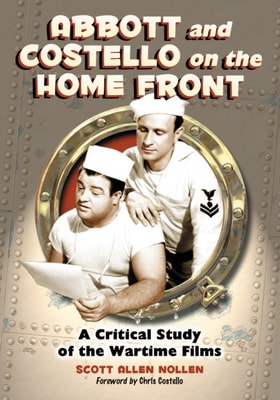
As two of the most popular entertainers of the mid-century film industry, comic greats Bud Abbott and Lou Costello offered an essential balm to the American public following the sorrows of the Great Depression and during the trauma of World War II.
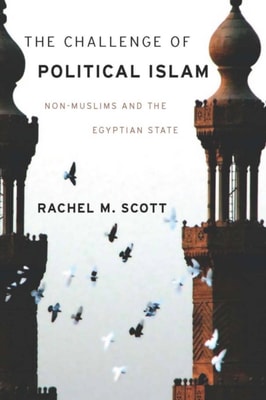
The rise of political Islam has provoked considerable debate about the compatibility of democracy, tolerance, and pluralism with the Islamist position.