A sweeping history of American Catholicism from the arrival of the first Spanish missionaries to the presentThis comprehensive survey of Catholic history in what became the United States spans nearly five hundred years, from the arrival of the first Spanish missionaries to the present.
A new perspective on the calamitous fall of France in 1940 and why blame has been misplaced ever since In this revisionist account of France’s crushing defeat in 1940, a world authority on French history argues that the nation’s downfall has long been misunderstood.
A poignant collection of letters written by the Latvian poet, novelist, and newspaper editor Arsenii Formakov while interned in Soviet labor camps Emily Johnson has translated and edited a fascinating collection of letters written by Arsenii Formakov, a Latvian Russian poet, novelist, and journalist, during two terms in Soviet labor camps, 1940 to 1947 in Kraslag and 1949 to 1955 in Kamyshlag and Ozerlag.
The first full history of the Nazi Stormtroopers whose muscle brought Hitler to power, with revelations concerning their longevity and their contributions to the Holocaust Germany’s Stormtroopers engaged in a vicious siege of violence that propelled the National Socialists to power in the 1930s.
A penetrating account of the dynamics of World War II’s Grand Alliance through the messages exchanged by the "Big Three" Stalin exchanged more than six hundred messages with Allied leaders Churchill and Roosevelt during the Second World War.
An expansive and ambitious intellectual history of democratic socialism from one of the world’s leading intellectual historians and social ethicists The fallout from twenty years of neoliberal economic globalism has sparked a surge of interest in the old idea of democratic socialism—a democracy in which the people control the economy and government, no group dominates any other, and every citizen is free, equal, and included.
An award-winning scholar's sweeping history of American secularism, from Jefferson to Trump"e;An essential book for understanding today's culture wars.
Drawing on recently declassified material from Stalin’s personal archive in Moscow, this is the first attempt by scholars to systematically analyze the way Stalin interpreted and envisioned his world—both the Soviet system he was trying to build and its wider international context.
This mirror for princes sheds light on the relationship between spiritual and political authority in early modern Egypt This guide to political behavior and expediency offers advice to Sufi shaykhs, or spiritual guides, on how to interact and negotiate with powerful secular officials, judges, and treasurers, or emirs.
A preeminent scholar explores the evolution of the Christian worldview and argues that it no longer offers a satisfactory vision for our democratic, multicultural society This book is the culmination of a lifelong scholarly inquiry into Christian history, religion as a social institution, and the role of myth in the history of religions.
An innovative reassessment of Holocaust testimony, revealing the dramatic ways in which the languages and places of postwar life inform survivor memory This groundbreaking work rethinks conventional wisdom about Holocaust testimony, focusing on the power of language and place to shape personal narrative.
Drawing on secret and therefore candid coded telegraphs exchanged between Communist Party leaders around the world and their overseers at the Communist International (Comintern) headquarters in Moscow, this book uncovers key aspects of the history of the Comintern and its significant role in the Stalinist ruling system during the years 1933 to 1943.
An award-winning historian presents an emotional history of Jewish refugees biding their time in Portugal as they attempt to escape Nazi Europe This riveting book describes the dramatic experiences of Jewish refugees as they fled Hitler’s regime and then lived in limbo in Portugal until they could reach safer havens abroad.
The Secret World of American Communism (1995), filled with revelations about Communist party covert operations in the United States, created an international sensation.
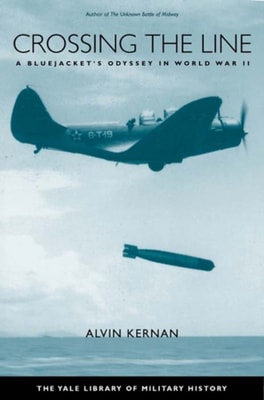
In this memoir of life aboard aircraft carriers during World War II, Alvin Kernan combines vivid recollections of his experience as a young enlisted sailor with a rich historical account of the Pacific war.
The story behind the 1940s Commission on Freedom of the Press-groundbreaking then, timelier than ever now"e;A well-constructed, timely study, clearly relevant to current debates.
The first archive-based study of official corruption under Stalin and a compelling new look at the textures of everyday Soviet life after World War II In the Soviet Union, bribery was a skill with its own practices and culture.
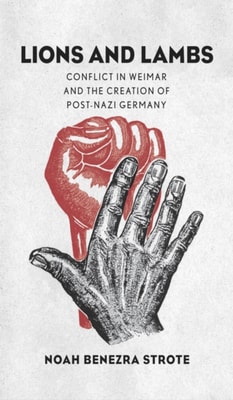
A bold new interpretation of Germany’s democratic transformation in the twentieth century, focusing on the generation that shaped the post-Nazi reconstruction Not long after the horrors of World War II and the Holocaust, Germans rebuilt their shattered country and emerged as one of the leading nations of the Western liberal world.
New observations on the persistence of God in modern times and why “authentic” atheism is so very hard to come by How to live in a supposedly faithless world threatened by religious fundamentalism?
This book is the first English-language edition of a collection of writings by one of Italy’s most important radical liberals, Piero Gobetti (1901–1926).
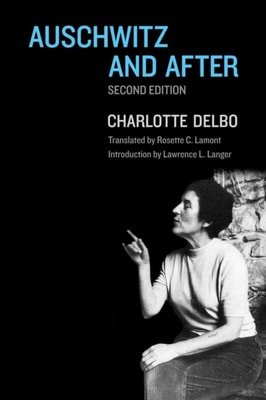
Written by a member of the French resistance who became an important literary figure in postwar France, this moving memoir of life and death in Auschwitz and the postwar experiences of women survivors has become a key text for Holocaust studies classes.
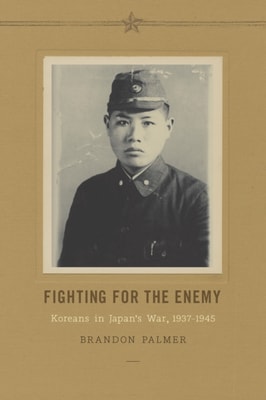
Fighting for the Enemy explores the participation of Koreans in the Japanese military and supporting industries before and during World War II, first through voluntary enlistment and eventually through conscription.
The first major study to draw upon unknown or neglected sources, as well as original interviews with figures like Billy Graham, Awakening the Evangelical Mind uniquely tells the engaging story of how evangelicalism developed as an intellectual movement in the middle of the 20th century.
A new and chilling study of lethal human exploitation in the Soviet forced labor camps, one of the pillars of Stalinist terror In a shocking new study of life and death in Stalin’s Gulag, historian Golfo Alexopoulos suggests that Soviet forced labor camps were driven by brutal exploitation and often administered as death camps.
Rich in detail and broad in scope, this majestic book is the first to reveal the interaction of politics and religion in France during the crucial years of the long seventeenth century.
The flow of money to national, regional, and local Soviet communist party organizations, the manner in which money was collected, and how their financial discipline was enforced all yield deep insights into the party’s role in the Soviet institutional design.
Essential primary sources reveal the central tensions between American politics and religion throughout the nation’s history Despite the centrality of separation of church and state in American government, religion has played an important role in the nation’s politics from colonial times through the present day.
More than three-and-a-half million men served in the British Army during the Second World War, the vast majority of them civilians who had never expected to become soldiers and had little idea what military life, with all its strange rituals, discomforts, and dangers, was going to be like.
How the Supreme Court's move to the right has distorted both logic and the ConstitutionWhat Supreme Court justices do is far more than just "e;calling balls and strikes.
Drawing on newly available materials from the Soviet archives, Polly Jones offers an innovative, comprehensive account of de-Stalinization in the Soviet Union during the Khrushchev and early Brezhnev eras.
Historian John Buckley offers a radical reappraisal of Great Britain’s fighting forces during World War Two, challenging the common belief that the British Army was no match for the forces of Hitler’s Germany.
A harrowing account of the profoundly consequential decisions American universities made about refugee scholars from Nazi-dominated Europe--a finalist for a 2020 National Jewish Book AwardThe United States' role in saving Europe's intellectual elite from the Nazis is often told as a tale of triumph, which in many ways it was.
This "e;impeccable, myth-busting study"e; of WWII maritime operations sheds new light on the conflict with sharp analysis and an international perspective (The Sunday Times, UK).
A GRIPPING SURVIVOR STORY OF ONE FAMILY'S FLIGHT FROM BURMA DURING THE JAPANESE INVASION"e;As uplifting a testimonial to human courage as any to emerge from World War II.