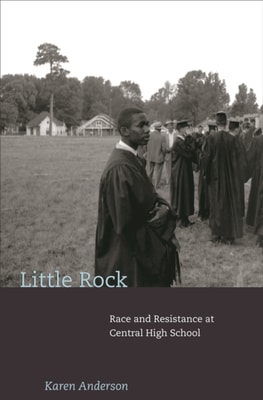
A political history of the most famous desegregation crisis in AmericaThe desegregation crisis in Little Rock is a landmark of American history: on September 4, 1957, after the Supreme Court struck down racial segregation in public schools, Arkansas Governor Orval Faubus called up the National Guard to surround Little Rock Central High School, preventing black students from going in.
Examining the social and political upheavals that characterized the collapse of public judgment in early modern Europe, Liberating Judgment offers a unique account of the achievement of liberal democracy and self-government.
The contemporary American political landscape has been marked by two paradoxical transformations: the emergence after 1960 of an increasingly activist state, and the rise of an assertive and politically powerful conservatism that strongly opposes activist government.
Political moderation is the touchstone of democracy, which could not function without compromise and bargaining, yet it is one of the most understudied concepts in political theory.
This comprehensive and in-depth look at southern politics in the United States challenges conventional notions about the rise of the Republican Party in the South.
The Promise of American Life is part of the bedrock of American liberalism, a classic that had a spectacular impact on national politics when it was first published in 1909 and that has been recognized ever since as a defining text of liberal reform.
Focusing on the new theories of human motivation that emerged during the transition from feudalism to the modern period, this is the first book of new essays on the relationship between politics and the passions from Machiavelli to Bentham.
How the executive branch-not the president alone-formulates executive orders, and how this process constrains the chief executive's ability to act unilaterallyThe president of the United States is commonly thought to wield extraordinary personal power through the issuance of executive orders.
This introduction to the politics of poststructuralism focuses on two interrelated themes: the culture of Western Marxism and contemporary neoliberal capitalism.
New perspectives on the role of collective responsibility in modern politicsStates are commonly blamed for wars, called on to apologize, held liable for debts and reparations, bound by treaties, and punished with sanctions.
A new theoretical framework for understanding how social, economic, and political conflicts influence international institutions and their place in the global order Today's liberal international institutional order is being challenged by the rising power of illiberal states and by domestic political changes inside liberal states.
A look at the duty of nations to protect human rights beyond borders, why it has failed in practice, and what can be done about itThe idea that states share a responsibility to shield people everywhere from atrocities is presently under threat.
How the works of Jane Austen show that game theory is present in all human behaviorGame theory-the study of how people make choices while interacting with others-is one of the most popular technical approaches in social science today.
Approaches to Political Thought raises three important questions concerning traditional political thought: (1) Why study the political writings and ideas of Plato, Machiavelli, and other long-dead writers?
A compelling history of liberalism from the nineteenth century to todayDespite playing a decisive role in shaping the past two hundred years of American and European politics, liberalism is no longer the dominant force it once was.
Since its original publication in 1976, Perception and Misperception in International Politics has become a landmark book in its field, hailed by the New York Times as "e;the seminal statement of principles underlying political psychology.
Ideally suited to upper-undergraduate and graduate students, Analyzing the Global Political Economy critically assesses the convergence between IPE, comparative political economy, and economics.
How Red Scare politics undermined the reform potential of the New DealIn the name of protecting Americans from Soviet espionage, the post-1945 Red Scare curtailed the reform agenda of the New Deal.
This book reinterprets the Leveller authorships of John Lilburne, Richard Overton and William Walwyn, and foregrounds the role of ordinary people in petitioning and protest during an era of civil war and revolution.
This is the first book to cover the British people's late twentieth century engagement with water in all its domestic, national and international forms, and from bathing and household chores to controversies about maritime pollution.
Why our belief in government by the people is unrealistic-and what we can do about itDemocracy for Realists assails the romantic folk-theory at the heart of contemporary thinking about democratic politics and government, and offers a provocative alternative view grounded in the actual human nature of democratic citizens.
Paul Ricoeur, with Rawls, Walzer, and Habermas as some of his main interlocutors, has developed a substantial and distinctive body of political thought.
Based on hitherto unused sources in English and Spanish in British and American archives, in this book naval historian Barry Gough and legal authority Charles Borras investigate a secret Anglo-American coercive war against Spain, 1815-1835.
This book explores and reconstructs how the principal parliamentary parties in Britain confronted and responded to events that unfolded during the Falklands War in the spring of 1982.
This volume offers perspectives from the general public in post-Soviet Central Asia and reconsiders the meaning and the legacy of Soviet administration in Kazakhstan, Kyrgyzstan and Uzbekistan.
In this book, the authors explore the apparent decline in youth civic engagement through research studies conducted in seven societies/nations with varied experiences with democracy.
Analysing the convergence of law and regulation with rapidly evolving communications technologies, this interdisciplinary work navigates the intricate balancing act between human rights protection and technological innovation in a digital age, and illuminates the comprehensive potential of human rights to frame our intelligent use of technology.
This book offers an innovative examination of the utopian impulse through performance as a proposition of practical engagement in the contemporary Americas.
This up-to-date and lively text focuses on a wide range of issues, such as politics as theater, the economic forces shaping contemporary political media, the rhetoric of the 'War on Terrorism,' and the growth of new media.
Spurred by recent governmental transitions from dictatorships to democratic institutions, this highly original work argues that negotiated civil society-oriented transitions have an affinity for a distinctive method of constitution making_one that accomplishes the radical change of institutions through legal continuity.