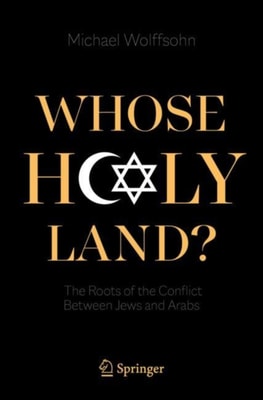
This book explains the historical roots of the conflict between Jews and Arabs, which has lost none of its explosiveness to the present day, in a comprehensive and easy-to-understand manner.
This book explores the substance and strategies of democracy promotion conducted by the Visegrad Group states (V4) - the Czech Republic, Hungary, Poland, and Slovakia.
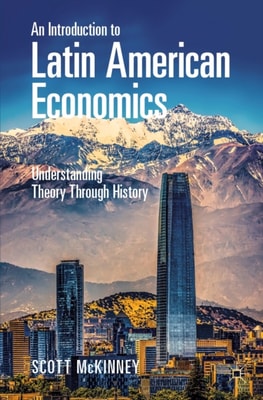
This textbook serves as an introduction to the major economic topics and events in Latin America's history, from the settling of the region by indigenous Americans and then Europeans, Africans and Asians, to the economic consequences of COVID-19.
This book is the second volume in a trilogy that traces the development of the academic subject of International Relations, or what was often referred to in the interwar years as International Studies.
This book discusses the historical transformation of the destiny of Chinese peasants under the contemporary political economic conditions, and tries to explore the institutional mechanism behind the formation and maintenance of these conditions.
Presenting a framework that incorporates macro-level forces into micro-level strategic calculations, this book explains key political choices by leaders and challengers in Pakistan through the political survival mechanism.
This collection emphasizes a cross-disciplinary approach to the problem of scale, with essays ranging in subject matter from literature to film, architecture, the plastic arts, philosophy, and scientific and political writing.
This book provides systematic, integrated analyses of emergent social and cultural dynamics in the wake of the so-called Arab Spring, and looks closely at the narratives and experiences of a people as they confront crisis during a critical moment of transition.
On Tyranny is Leo Strauss's classic reading of Xenophon's dialogue Hiero, or Tyrannicus, in which the tyrant Hiero and the poet Simonides discuss the advantages and disadvantages of exercising tyranny.
This volume brings together leading gender and politics scholars to assess how women's political empowerment can best be conceptualized and measured on a global scale.
Europeans and Americans tend to hold the opinion that democracy is a uniquely Western inheritance, but in The Common Cause, Leela Gandhi recovers stories of an alternate version, describing a transnational history of democracy in the first half of the twentieth century through the lens of ethics in the broad sense of disciplined self-fashioning.
Building on the strengths of the previous edition, this well-established textbook gives students a broad and inclusive overview of the important issues and events of our rapidly changing world.
Shakespearean Genealogies of Power proposes a new view on Shakespeare's involvement with the legal sphere: as a visible space between the spheres of politics and law and well able to negotiate legal and political, even constitutional concerns, Shakespeare's theatre opened up a new perspective on normativity.
This book explores in detail new protest organisation and mobilisation strategies of young activists in the digital age with the aim to identify the tactics that worked well against those creating high risks in the context of digitally supported protests.
This text provides a comprehensive re-examination of post-World War II Sino-Japanese relations, focusing notably on Chinese premier Zhou Enlai's foreign policy toward Japan.
In this ambitious book, philosopher Otfried Hoffe provides a sophisticated account of the principle of freedom and its role in the project of modernity.
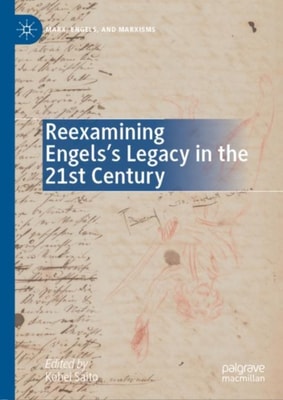
While the deepening structural crisis of capitalism in the 21st century has led to a revival of interest in Marx all over the world, Marx's life-long comrade Frederick Engels has largely remained marginalized.
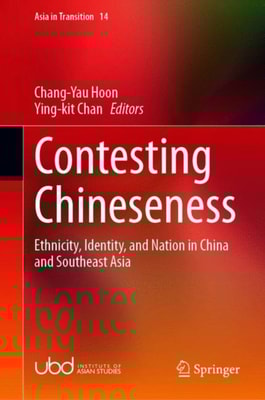
Combining a historical approach of Chineseness and a contemporary perspective on the social construction of Chineseness, this book provides comparative insights to understand the contingent complexities of ethnic and social formations in both China and among the Chinese diaspora in Southeast Asia.
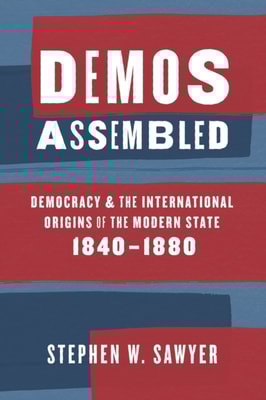
An intelligent, engaging, and in-depth reading of the nature of the state and the establishment of the modern political order in the mid-nineteenth century.
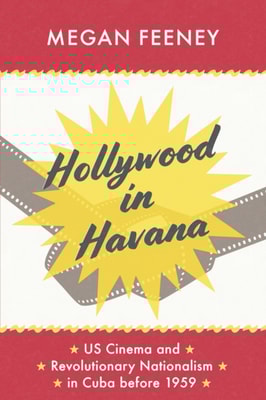
From the turn of the twentieth century through the late 1950s, Havana was a locus for American movie stars, with glamorous visitors including Errol Flynn, John Wayne, and Marlon Brando.
This book places the topic of the state and society in the context of modern development in China over the past century, investigating the dynamic relation and internal tension between the state's power enhancement and society's vitality activation instead of simply regarding the country and society as two separate entities.
This book weaves a social, economic and cultural history of Australia with rare first-hand accounts of the lived experience of change related to farming and agriculture.
This is the first thorough and systematic interrogation of Republican Party oratory and rhetoric that examines a series of leading figures in American conservative politics.
Considered one of Russia’s greatest philosophers, Vladimir Soloviev (1853–1900) was also a theologian, historian, poet, and social and political critic.
This provocative book brings together twenty-plus contributors from the fields of law, economics, and international relations to look at whether the U.
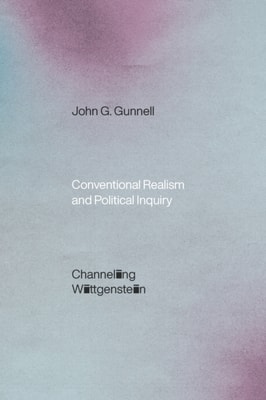
When social scientists and social theorists turn to the work of philosophers for intellectual and practical authority, they typically assume that truth, reality, and meaning are to be found outside rather than within our conventional discursive practices.