This book provides the first book-length study of the political and economic ideas of the British left's Alternative Economic Strategy in the 1970s and early 1980s.
This book gives a historical and contemporary overview of the redistricting process, using North Carolina for the different political, electoral, and legal issues and debates over the practice of drawing legislative district boundaries.
This book offers an analytical account of the consensus and contestations of the politics of Chinese media at both institutional and discursive levels.
This book will be the first to deeply analyze the Swedish court and monarchy through a longue duree perspective to show the crucial role of the court in maintaining a relationship between the monarchy and nobility throughout the eighteenth and nineteenth centuries.
The Dictionary of Labour Biography has an outstanding reputation as a reference work for the study of nineteenth and twentieth century British history.
This book examines the role that science and culture held as instruments of nationalization policies during the first phase of the Franco regime in Spain.
This book provides a comprehensive account of the phenomenon of identity in politics, featuring for the first time the question of individual emancipation.
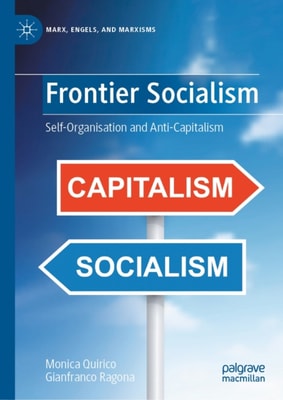
Considering the history of workers' and socialist movements in Europe, Frontier Socialism focuses on unconventional forms of anti-capitalist thought, particularly by examining several militant-intellectuals whose legacy is of particular interest for those aiming for a radical critique of capitalism.
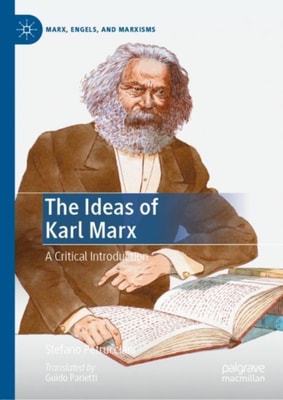
This book offers a complete presentation of the most important themes of Marx's thought, following the development of Marx's theory from the beginning to his death and offering a reconstruction and analysis that covers the whole of Marx's life and works.
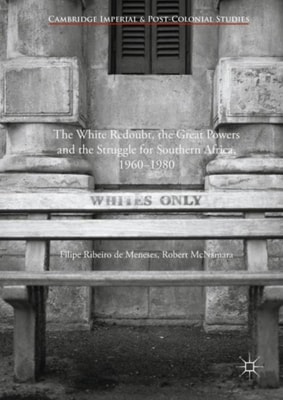
This work examines the attempt by the governments of Portugal, Rhodesia and South Africa to defy the drive for African independence in the 1960s and 70s, and the international community's response.
This is a study of the Federazione Universitaria Cattolica Italiana (FUCI) between 1925 and 1943, the organisation of Catholic Action for the university sector.
This book contributes an analysis of UK-based non-governmental organisations engaged in transnational lesbian, gay, bisexual, and trans (LGBT) activism, within a broader recognition of the complexities that British colonial legacies perpetuate in contemporary international relations.
This book is a comprehensive analysis of the domestic and foreign politics of Iran, focusing on its complex nature from political, social and cultural perspectives.
This book addresses the British-Danish diplomatic debate on privateering and neutral ports in the period 1793-1807, when Denmark-Norway remained neutral in the war between Britain and France.
This book explores the interconnections between world politics and non-human nature to overcome the anthropocentric boundaries that characterize the field of international relations.
Building from the level of individual interaction, this book intends to shed light on what the author terms "e;infrasocial power"e; and the relation between this individual-actor oriented level and public power.
The Politics of Mobile Citizenship in Europe explores contemporary models of national and European Union (EU) citizenship in the context of intra-EU mobility.
This book deals with the social, cultural and especially political significance of media by shifting from the usual focus on the public sphere and publics and paying attention to populations.
This book illustrates the cyclical pattern in the kinds of dilemmas that confront political leaders and, in particular, disjunctive political leaders affiliated with vulnerable political regimes.
This book is the product of three years of empirical research, four years in politics, and a lifetime in a country experiencing three different regimes.
This edited collection is a global history of workers' organisations since 1919, the year when the International Labour Organisation (ILO), the Comintern and the International Federation of Trade Unions were formed.
There are two ways people coordinate their actions: through cooperation, exercised by economic power, and through control, exercised by political power.
This book provides a comparative and historical analysis of totalitarianism and considers why Spain became totalitarian during its inquisition but not France; and why Germany became totalitarian during the previous century, but not Sweden.