How Woodrow Wilson's vision of making the world safe for democracy has been betrayed-and how America can fulfill it againThe liberal internationalist tradition is credited with America's greatest triumphs as a world power-and also its biggest failures.
Aristotle was the first philosopher in the Western tradition to address politics systematically and empirically, and he remains a central figure in political theory.
A leading scholar of British political thought explores the relationship between liberalism and empireReordering the World is a penetrating account of the complexity and contradictions found in liberal visions of empire.
In the history of political thought, the emergence of the modern state in early modern England has usually been treated as the development of an increasingly centralizing and expansive national sovereignty.
The first in-depth look at Stael's political life and writingsGermaine de Stael (1766-1817) is perhaps best known today as a novelist, literary critic, and outspoken and independent thinker.
This is the first complete, one-volume English translation of the ancient Chinese text Xunzi, one of the most extensive, sophisticated, and elegant works in the tradition of Confucian thought.
In recent years, Roman political thought has attracted increased attention as intellectual historians and political theorists have explored the influence of the Roman republic on major thinkers from the Renaissance to the Enlightenment.
Don't Blame Us traces the reorientation of modern liberalism and the Democratic Party away from their roots in labor union halls of northern cities to white-collar professionals in postindustrial high-tech suburbs, and casts new light on the importance of suburban liberalism in modern American political culture.
How the conflicts of Western history shed light on current upheavals in the Middle EastPolitical Islam has often been compared to ideological movements of the past such as fascism or Christian theocracy.
How radical free-market ideas achieved mainstream dominance in postwar America and BritainBased on archival research and interviews with leading participants in the movement, Masters of the Universe traces the ascendancy of neoliberalism from the academy of interwar Europe to supremacy under Reagan and Thatcher and in the decades since.
For the Western world, the period from 1760 to 1800 was the great revolutionary era in which the outlines of the modern democratic state came into being.
This book provides a solution to the ecological inference problem, which has plagued users of statistical methods for over seventy-five years: How can researchers reliably infer individual-level behavior from aggregate (ecological) data?
From China's most influential foreign policy thinker, a vision for a "e;Beijing Consensus"e; for international relationsThe rise of China could be the most important political development of the twenty-first century.
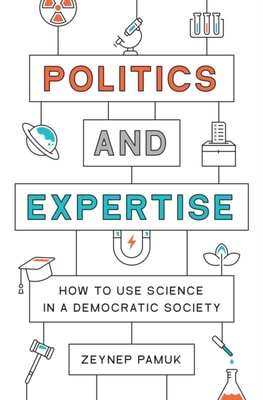
A new model for the relationship between science and democracy that spans policymaking, the funding and conduct of research, and our approach to new technologiesOur ability to act on some of the most pressing issues of our time, from pandemics and climate change to artificial intelligence and nuclear weapons, depends on knowledge provided by scientists and other experts.
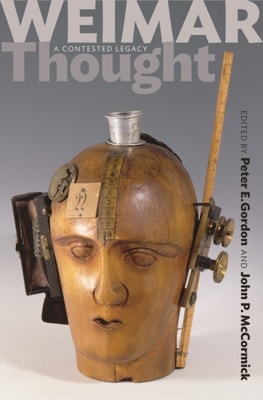
A comprehensive look at the intellectual and cultural innovations of the Weimar periodDuring its short lifespan, the Weimar Republic (1918-33) witnessed an unprecedented flowering of achievements in many areas, including psychology, political theory, physics, philosophy, literary and cultural criticism, and the arts.
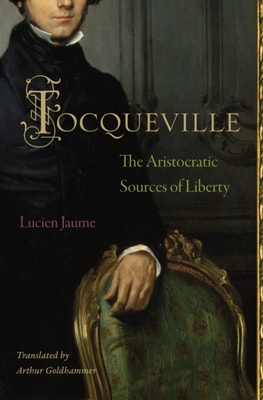
A major intellectual biography of Toqueville that restores democracy in America to its essential contextMany American readers like to regard Alexis de Tocqueville as an honorary American and democrat-as the young French aristocrat who came to early America and, enthralled by what he saw, proceeded to write an American book explaining democratic America to itself.
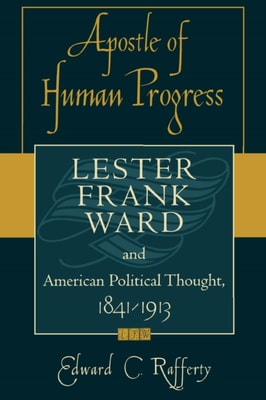
Although Lester Frank Wards accomplishments are not as well known today, he is considered the father of American Sociology and his work profoundly influenced such important thinkers as Thorstein Veblen, John Dewey, Edward Ross, and Charlotte Perkins Gilman.
How presidents forged the American centuryThis book examines the foreign policy decisions of the presidents who presided over the most critical phases of America's rise to world primacy in the twentieth century, and assesses the effectiveness and ethics of their choices.
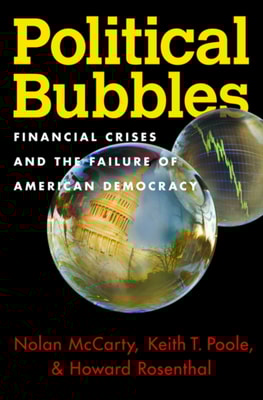
How governmental failure led to the 2008 financial crisis-and what needs to be done to avoid another similar event Behind every financial crisis lurks a "e;political bubble"e;-policy biases that foster market behaviors leading to financial instability.
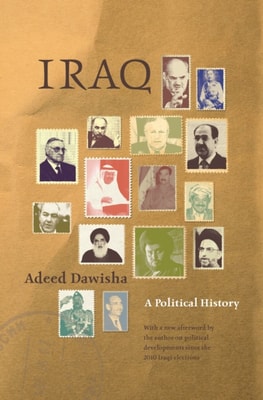
With each day that passed after the 2003 invasion, the United States seemed to sink deeper in the treacherous quicksand of Iraq's social discord, floundering in the face of deep ethno-sectarian divisions that have impeded the creation of a viable state and the molding of a unified Iraqi identity.
Whether intellectuals are counter-cultural escapists corrupting the young or secular prophets leading us to prosperity, they are a fixture of modern political life.
This book addresses the challenges to achieve food security, which can arguably be one of the axis of any transformational solution to the structural production and reproduction of hunger, malnutrition, and poverty.
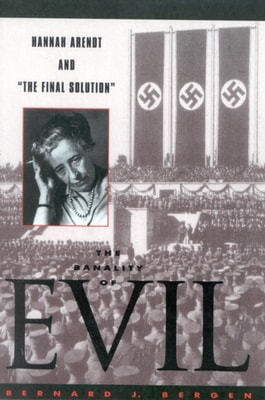
This highly original book is the first to explore the political and philosophical consequences of Hannah Arendt's concept of 'the banality of evil,' a term she used to describe Adolph Eichmann, architect of the Nazi 'final solution.
This reader introduces students of philosophy and politics to the contemporary critical literature on the classical social contract theorists: Thomas Hobbes (1599-1697), John Locke (1632-1704), and Jean-Jacques Rousseau (1712-1778).
A leading intellectual historian traces the origins of Barack Obama's ideasDerided by the Right as dangerous and by the Left as spineless, Barack Obama puzzles observers.