Ante una sociedad aún reacia a creer y entender el peligro sin precedentes que significa el avasallamiento de las instituciones democráticas por parte de una "logia" que gobierna utilizando todos los recursos maquiavélicos tendientes a destruir el sistema representativo republicano para instaurar un totalitarismo socialista, esta obra se constituye en un intento desesperado por concientizar, comprometer e involucrar a esa sociedad en un sistema específico, y todavía posible, de prevalecer sobre nuestros verdugos.
Los famosos textos de dos ideólogos catastróficos el Libro Rojo de Mao Tse-Tung y el Libro Verde de Muamar el-Gadafi son escrutados sin piedad en este libro singular.
Este libro es un esfuerzo por explicar las decisiones de doce años de gobiernos kirchneristas sin prejuicios ni sesgos ideológicos, tratando de entender la racionalidad de las decisiones, aun cuando fueran contraintuitivas o lisa y llanamente malas desde un punto de vista económico.
'La perturbación como motor de la historia' plantea que hechos disruptivos de gran repercusión pública fueron eventos que, al tiempo que pusieron en evidencia el agotamiento del sistema ferroviario metropolitano, promovieron intervenciones tendientes a su transformación.
Este libro explora, tanto desde diversos enfoques teóricos como desde el análisis histórico y político concreto, los mecanismos que han permitido que la perversión populista opere desde dentro de regímenes que, en muchos casos, pudieron haberse consolidado en democracias en el sentido cabal de la palabra.
Hay una falsificación de la historia -construida desde los centros hegemónicos del poder mundial- que oculta el camino real que recorrieron las naciones hoy desarrolladas para construir su poder nacional y alcanzar su actual estado de bienestar y progreso.
Este libro propone una revisión y una interpretación de lo ocurrido desde la disolución de la Unión de las Repúblicas Socialistas Soviéticas a fines de 1991, lo que marcó a su vez la emergencia de la Federación Rusa como Estado independiente.
¿Por qué la fuerza política que sacó al país de su peor crisis y encabezó durante doce años las transformaciones más profundas de la Argentina contemporánea perdió las elecciones en diciembre de 2015?
El balance del ciclo kirchnerista está atravesado por una notoria polarización que va de la reivindicación a la impugnación en bloque de las políticas del período.
Reflections: The Legacy of Lee Kuan Yew is a collection of essays reflecting on Singapore's first Prime Minister, Lee Kuan Yew's immense contribution to nation-building and the idea of development.
Perspectives on the Security of Singapore: The First 50 Years explores the security of Singapore in the last 50 years and its possible trajectories into the future.
The world seems divided to either applaud or fear the rise of China, but this book probes deeper by investigating three aspects of the phenomenon in detail: 1) the institutional dilemmas of the prosperity as it integrates Asian authoritarianism with globalizing capitalism to create economic accomplishments; 2) the political struggles alongside the prosperity as Chinese citizens begin to demand equality, rights, and justice that might be viewed to disturb the continuity of stability and development; and 3) the global implications entailed by the prosperity - not only in power politics, war and peace, or competitions among nations, but especially on global public goods termed "e;human security"e;.
Within thirty years of its humble beginnings, Taiwan was listed by the Organization for Economic Cooperation and Development (OECD) as one of ten newly industrialized countries (NICs).
This book documents the bases for a new view of legitimacy in general and in various parts of Asia, including China, Malaysia, South Korea, Taiwan and Japan.
The concept of a secular state is important in many parts of Asia and how this is resolved has important implications for the social, economic and political development of various Asian countries.
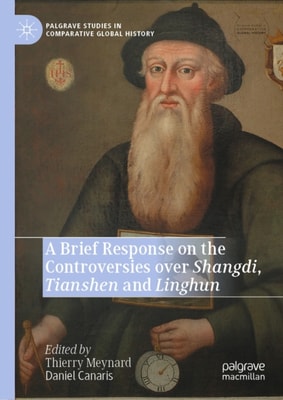
This book represents the first critical edition and scholarly annotated translation of a pioneering report on the predicament of cross-cultural understanding at the dawn of globalization, titled "e;A Brief Response on the Controversies over Shangdi, Tianshen and Linghun"e; ("e;Resposta breve sobre as Controversias do Xamty, Tien Xin, Lim hoen"e;), which was written in China by the Sicilian Jesuit missionary Niccolo Longobardo (1565-1654) in the 1620s and profoundly influenced Enlightenment understandings of Asian philosophy.
This book charts the growth of the Indonesian nationalistic musical genre of lagu seriosa in relation to the archipelago's history in the 1950s and 1960s, examining how folk songs were implemented as a valuable tool for promoting government propaganda.
This book is an ethnographic study of migrants, refugees and 'temporary' people in Malaysia, incorporating narratives, personal stories, and observations of everyday life in Kuala Lumpur and Georgetown, Penang.
This book weaves a social, economic and cultural history of Australia with rare first-hand accounts of the lived experience of change related to farming and agriculture.
This book follows the citizenship-based approach and interrogates the policies on urban village redevelopment from a perspective of social exclusion and inclusion.
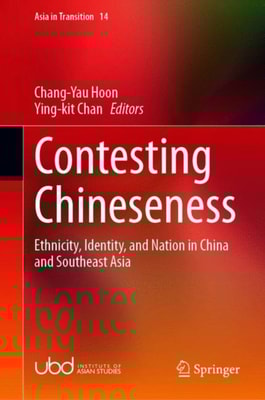
Combining a historical approach of Chineseness and a contemporary perspective on the social construction of Chineseness, this book provides comparative insights to understand the contingent complexities of ethnic and social formations in both China and among the Chinese diaspora in Southeast Asia.
This book provides empirical evidence to show how democratic experiments are harnessed to achieve control and support authoritarianism, through the lens of participatory pricing, which is one of the most important forms of deliberative democracy in China.
Why politics and international relations "e;seem"e; to be driven by power/strategies in some conditions but "e;seem"e; to be attached to values/beliefs in other situations?
The book reflects upon the Russian Revolution of 1917 and the ensuing developments in Russia, the rest of the former Soviet Union, Central and Eastern Europe and elsewhere in the world.
This book is a rarity in that it opens a genuinely creative new vista for understanding global politics as distinguished from international politics, enhancing the vision for understanding global subjects such as multilateral treaties and the Covid-19 virus.
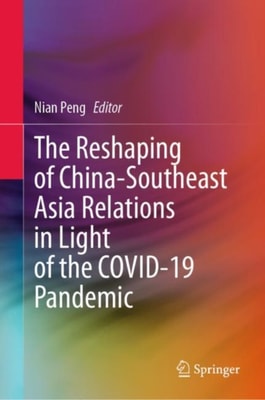
This book aims to examine the multiple effects of the COVID-19 pandemic on China-Southeast Asia relations from both Chinese and Southeast Asian perspectives.