Political scientist Samuel DeCanio examines how political elites used high levels of voter ignorance to create a new type of regulatory state with lasting implications for American politics.
A bold new interpretation of Germany’s democratic transformation in the twentieth century, focusing on the generation that shaped the post-Nazi reconstruction Not long after the horrors of World War II and the Holocaust, Germans rebuilt their shattered country and emerged as one of the leading nations of the Western liberal world.
Norton Garfinkle paints a disquieting picture of America today: a nation increasingly divided between economic winners and losers, a nation in which the middle-class American Dream seems more and more elusive.
From a distinguished historian, a detailed and compelling examination of how the early Republic struggled with the idea that “all men are created equal” How did Americans in the generations following the Declaration of Independence translate its lofty ideals into practice?
Oxford University political theorist Stein Ringen offers a thought-provoking meditation on the art of democratic rule: how does a government persuade the people to accept its authority?
In this updated and expanded edition of his classic text, Arend Lijphart offers a broader and deeper analysis of worldwide democratic institutions than ever before.
An incisive, comparative study of the development of Post–World War II progressive politics in Britain, France, and the United States Toward the end of World War II, the three democracies faced a common choice: return to the civic order of prewar normalcy or embark instead on a path of progressive transformation.
Thoroughly revised and updated, with an extensive analysis of the 2008 election, this book remains the best analysis of the Electoral College for both students and general readers.
A Noble Fight examines the metaphors and meanings behind the African American appropriation of the culture, ritual, and institution of freemasonry in navigating the contested terrain of American democracy.
A gripping in-depth look at the presidential election that stunned the worldDonald Trump's election victory resulted in one of the most unexpected presidencies in history.
Why some of Asia's authoritarian regimes have democratized as they have grown richer-and why others haven'tOver the past century, Asia has been transformed by rapid economic growth, industrialization, and urbanization-a spectacular record of development that has turned one of the world's poorest regions into one of its richest.
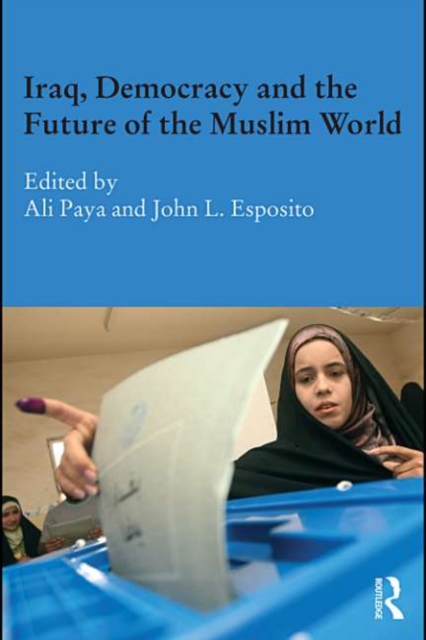
Iraq, democracy and Islam are powerful global forces which shape not only many aspects of the lives of Muslims, but the lives of other citizens of the world as well.
This book sheds light on the complicated, multi-faceted relationship between nationalism and democracy by examining how nationalism in various periods and contexts shapes, or is shaped by, democratic practices or the lack thereof.
This book examines dominant parties in both established democracies and new democracies and explores the relationship between dominant parties and the democratic process.
Providing practical and theoretical resources on media law and ethics for the United Kingdom and United States of America and referencing other legal jurisdictions such as France, Japan, India, China and Saudi Arabia, Comparative Media Law and Ethics is suitable for upper undergraduate and postgraduate study and for professionals in the media who need to work internationally.
In this provocative book, Stein Ringen argues that the world's democracies are failing to live up to their ideals--the United States and Great Britain most especially.
Davide Panagia's Impressions of Hume: Cinematic Thinking and the Politics of Discontinuity is volume fifteen of Modernity and Political Thought, the Rowman & Littlefield series in contemporary political theory.
This fascinating e-book continues the story taking the reader from the time of full blow killings on the battlefield toward the peace truce operations currently being negotiated in the Middle East today.
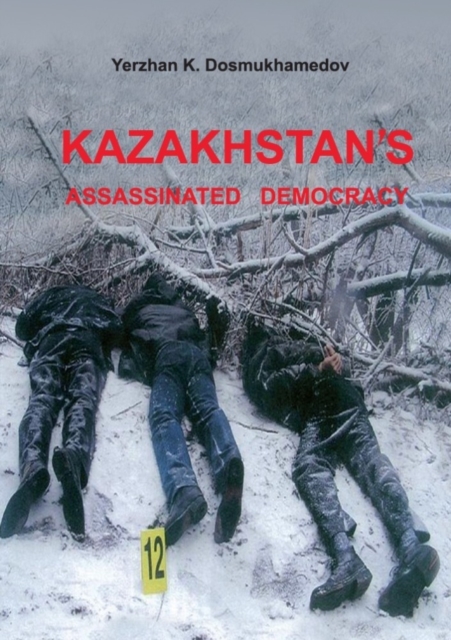
Kazakhstans Assassinated Democracy describes how the highest levels ofgovernment in Kazakhstan are attempting to suppress the countrys genuinedemocratization, particularly through the case of a political party, Atameken.
In this accessible and sophisticated exploration of the nature and workings of social and political power, Mark Haugaard examines the interrelation between domination and empowerment.
We, in the West in general, and the United States in particular, have witnessed over the last twenty years a slow erosion of our civilizational self-confidence.
Politics and Religion: The Basics provides a concise introduction to the complex interactions between politics and religion in both domestic and international contexts.