The first book to explore the modern history of Islam in South AsiaThe first modern state to be founded in the name of Islam, Pakistan was the largest Muslim country in the world at the time of its establishment in 1947.
A compelling history of atheism in American public lifeA much-maligned minority throughout American history, atheists have been cast as a threat to the nation's moral fabric, barred from holding public office, and branded as irreligious misfits in a nation chosen by God.
Will to Live tells how Brazil, against all odds, became the first developing country to universalize access to life-saving AIDS therapies--a breakthrough made possible by an unexpected alliance of activists, government reformers, development agencies, and the pharmaceutical industry.
A leading historian reveals the radical origins of humanity's most cherished secular valuesDemocracy, free thought and expression, religious tolerance, individual liberty, political self-determination of peoples, sexual and racial equality-these values have firmly entered the mainstream in the decades since they were enshrined in the 1948 U.
Since emerging in the late nineteenth century, political science has undergone a radical shift--from constructing grand narratives of national political development to producing empirical studies of individual political phenomena.
Rarely in the short history of liberal-democratic government has a primer on basic liberal-democratic values and institutions been more needed than now.
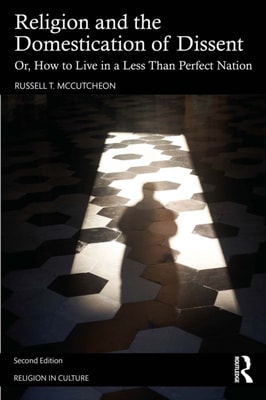
In its first edition, Religion and the Domestication of Dissent focused on the representations of Islam that circulated in the wake of the 9/11 attacks-representations that scholars, pundits, and politicians alike used either to essentialize and demonize it or, instead, to isolate specific aspects as apolitical and thus tolerable faith.
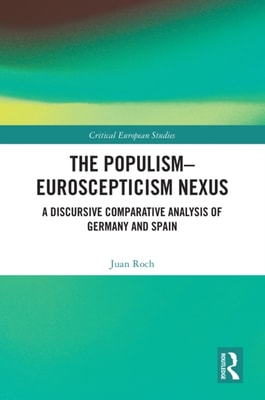
This book explores the modes of European Union (EU) contestation which are mobilized by radical parties and seeks to unearth the relationship of such contestation with populist discourses.
Revolutionary Hope in a Time of Crisis takes up the question of how to theorize and revive revolutionary hope in the present era of political disillusion.
The Catholic Church still takes an ambivalent stance toward homosexuality, declaring that homosexuals should be respected and not discriminated against while morally condemning their intimate relationships.
The project Nordic Ways is a book of short insightful essays written by distinguished authors from all five countries representing a broad spectrum of Nordic life.
A narrative chronicle of Israeli democracy that defines historic phases and follows thematic challenges to democracy, including: competition between religion and the rule of law; the statist society and chaotic minoritocracy; modern illiberal populism and the Israeli-Palestinian conflict.
Since the coup of 2013 ended Egypt's brief democratic experiment and retired army chief, Abdel Fattah El-Sisi, became president of Egypt, his regime has unleashed mass repression and severe restrictions on an unprecedented scale.
When the Ottoman Empire fell apart, colonial powers drew straight lines on the map to create a new region the Middle East made up of new countries filled with multiple religious sects and ethnicities.
In diesen 1997–2012 gehaltenen Vorträgen spannt der Autor einen weiten Bogen über sein zentrales Thema: die Begegnung mit dem Ätherischen bereits wirksam erscheinenden Christus.
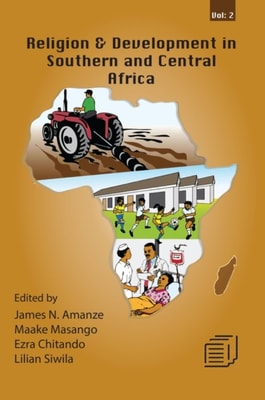
This book is a result of a joint conference, which was held from 18th-22nd July 2017 under the theme Religion, Citizenship and Development , Southern African Perspectives.
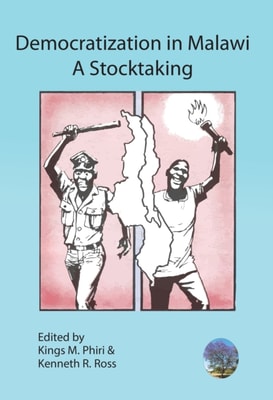
The vote in favour of multi-party politics at the National Referendum of 1993, and the subsequent General Election of 1994, heralded the advent of a democratic system of government in Malawi.
This book is a result of a joint conference, which was held from 18th-22nd July 2017 under the theme Religion, Citizenship and Development , Southern African Perspectives.
Lack of transparency and accountability in the planning practice allow for misuse and abuse of the planning system to serve the interests of the more powerful and influential groups, including those entrusted with the powers of planning.
In Democratic Engineering in Rwanda and Burundi the author argues that a democratic model which is suitable for single-cultural societies may not be applicable in multicultural societies; he illustrates that the liberal and socialist theories have not addressed the issue of national minorities which threatens peace and stability in most African countries.
The dawn of the twenty-first century heralded an apparent change of fortunes for most sub-Saharan African economies, with annual growth averaging over 5% for fifteen years.