Over the last 50 years family justice systems in the United States and elsewhere have evolved from a predominant adversarial approach focused on litigation to the significant integration of more collaborative, settlement-oriented approaches, especially mediation.
Over the last 50 years family justice systems in the United States and elsewhere have evolved from a predominant adversarial approach focused on litigation to the significant integration of more collaborative, settlement-oriented approaches, especially mediation.
Problem-solving courts are special courts that do not simply punish offenders, but use other justice principles-like therapeutic jurisprudence and restorative justice-and psychology principles-like anticipated emotion, operant conditioning, and social support-to address underlying social issues that contributed to the crime.
Neuropsychology of Malingering and Non Credible Presentations: Perspectives on Validity Assessment is a comprehensive guide to understanding and addressing concerns about the accuracy of cognitive performances and symptom reports during neuropsychological evaluations.
Neuropsychology of Malingering and Non Credible Presentations: Perspectives on Validity Assessment is a comprehensive guide to understanding and addressing concerns about the accuracy of cognitive performances and symptom reports during neuropsychological evaluations.
Crime and Behaviour: An Introduction to Criminal and Forensic Psychology is the first textbook to provide a detailed overview of criminal psychology in Singapore.
Crime and Behaviour: An Introduction to Criminal and Forensic Psychology is the first textbook to provide a detailed overview of criminal psychology in Singapore.
Dieser Sammelband präsentiert herausragende Abschlussarbeiten der Hochschule für Polizei in Baden-Württemberg zu Führungsthemen im Polizeikontext und gibt damit einen Überblick über neue, anwendungsnahe Forschung auf diesem Gebiet.
Dieser Sammelband präsentiert herausragende Abschlussarbeiten der Hochschule für Polizei in Baden-Württemberg zu Führungsthemen im Polizeikontext und gibt damit einen Überblick über neue, anwendungsnahe Forschung auf diesem Gebiet.
In this compilation of expert articles, internationally recognized homicide investigators, most of them pioneers in developing the science and the art of profiling, share their insights gained from years of experience tracking the perpetrators of some of the most notorious crimes.
In this compilation of expert articles, internationally recognized homicide investigators, most of them pioneers in developing the science and the art of profiling, share their insights gained from years of experience tracking the perpetrators of some of the most notorious crimes.
Essay aus dem Jahr 2020 im Fachbereich Psychologie - Forensische Psychologie und Strafvollzug, Note: 1, Universität Salzburg (Rechtswissenschaften), Sprache: Deutsch, Abstract: Diese Arbeit umfasst das Thema Verfahrenspsychologie mit den folgenden Inhalten: - Unschuldig im Gefängnis – Wie schrecklich muss dies für die Betroffenen sein?
Prozesse mit Opferbeteiligung sind häufig dadurch gekennzeichnet, dass sich die (bestreitende) Erklärung des Angeklagten und die belastende Aussage der Zeugen gegenüberstehen.
Studienarbeit aus dem Jahr 2020 im Fachbereich Psychologie - Forensische Psychologie und Strafvollzug, Note: 1,0, , Sprache: Deutsch, Abstract: Die vorliegende Hausarbeit widmet sich den Fragen: "Wie wirkt sich übermäßiger Alkoholkonsum auf die Wahrnehmung der Konsumenten aus?
Studienarbeit aus dem Jahr 2020 im Fachbereich Soziale Arbeit / Sozialarbeit, Note: 1,0, Fachhochschule Düsseldorf, Sprache: Deutsch, Abstract: In vielen Arbeitsfeldern der Sozialen Arbeit hat man mit dem Thema häuslicher Gewalt zu tun.
Bachelorarbeit aus dem Jahr 2021 im Fachbereich Psychologie - Forensische Psychologie und Strafvollzug, Note: 1,0, Fachhochschule für öffentliche Verwaltung Nordrhein-Westfalen; Bielefeld (StO Bielefeld - HSPV NRW), Sprache: Deutsch, Abstract: In der Arbeit soll die Aussageerhebung im Rahmen der Vernehmung sowie die spätere Aussagebegutachtung bei einem Zeugen mit einer psychotischen Störung näher betrachtet werden.
Bachelorarbeit aus dem Jahr 2023 im Fachbereich Psychologie - Forensische Psychologie und Strafvollzug, Note: 1,9, , Sprache: Deutsch, Abstract: Im Rahmen dieser Bachelorarbeit soll der Fokus auf taube Menschen in Justizvollzugsanstalten gelegt werden, um Handlungsansätze für die Begründung sozialer Handlungen zu erleichtern.
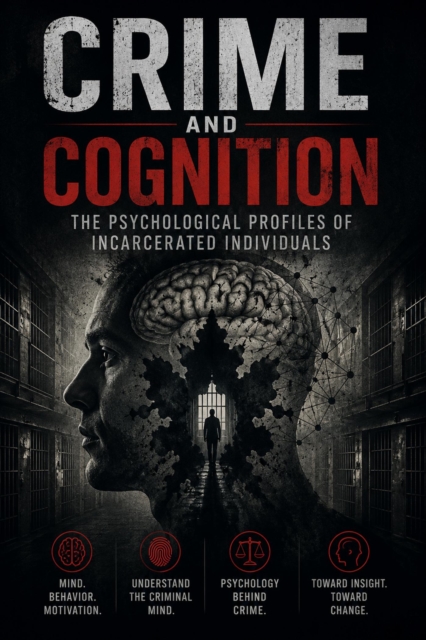
Crime and Cognition: The Psychological Profiles of Incarcerated Individuals explores the complex relationship between psychology and criminal behavior, examining the mental, emotional, and social factors that influence why people commit crimes.
Fachbuch aus dem Jahr 2024 im Fachbereich Psychologie - Forensische Psychologie und Strafvollzug, Note: 5 (=A), İstanbul Üniversitesi, Sprache: Deutsch, Abstract: Dieses Fachbuch untersucht die komplexe Beziehung zwischen narzisstischer Persönlichkeitsstörung (NPD) und kriminellem Verhalten.
Studienarbeit aus dem Jahr 2024 im Fachbereich Psychologie - Forensische Psychologie und Strafvollzug, Note: 1,7, Hamburger Fern-Hochschule, Sprache: Deutsch, Abstract: Diese Arbeit beschäftigt sich mit der Fragestellung, welche klinisch-psychologischen Behandlungstechniken im österreichischen Maßnahmenvollzug angewendet werden.
Studienarbeit aus dem Jahr 2020 im Fachbereich Soziologie - Beziehungen und Familie, Gottfried Wilhelm Leibniz Universität Hannover, Sprache: Deutsch, Abstract: Die Arbeit untersucht das Modell von Michael Bock zum Spannungsverhältnis zwischen Hell-und Dunkelfeld bezogen auf die Geschlechterprävalenz von häuslicher Gewalt.
Studienarbeit aus dem Jahr 2022 im Fachbereich Psychologie - Forensische Psychologie und Strafvollzug, Note: 14,0, Polizeiakademie Niedersachsen, Sprache: Deutsch, Abstract: Im Kern der Hausarbeit wird die Problematik betrachtet, was passiert, wenn Wahrnehmungs- und Erinnerungsfehler in der Vernehmung auftauchen und wie diese sich auf die polizeilichen Ermittlungen auswirken können.
Masterarbeit aus dem Jahr 2021 im Fachbereich Psychologie - Forensische Psychologie und Strafvollzug, Note: 2,3, Hochschule Fresenius Frankfurt, Sprache: Deutsch, Abstract: Die vorliegende Arbeit versucht, einen Überblick über den juristisch-psychiatrischen Diskurs der Schuldfähigkeitsbeurteilung vor Gericht zu bieten.
Studienarbeit aus dem Jahr 2020 im Fachbereich Soziologie - Recht und Kriminalität, Note: 1,3, Katholische Fachhochschule Mainz, Sprache: Deutsch, Abstract: Die folgende Hausarbeit befasst sich mit der Fragestellung, ob Opfer häuslicher Gewalt also die, die sie am eigenen Leib erfahren, aber auch die, die sie miterleben und beobachten, grundsätzlich auch zu Tätern werden.
Studienarbeit aus dem Jahr 2020 im Fachbereich Psychologie - Forensische Psychologie und Strafvollzug, Note: 1,2, Ruprecht-Karls-Universität Heidelberg, Sprache: Deutsch, Abstract: Im Strafprozess spielen psychologische Gutachten immer wieder eine wichtige Rolle.
Grounded in frontline experience and global research, this work unpacks the complexities of defining behavioural health, the challenge of crisis cycling, and the evolving roles of law enforcement and community partners.
Grounded in frontline experience and global research, this work unpacks the complexities of defining behavioural health, the challenge of crisis cycling, and the evolving roles of law enforcement and community partners.
Scientific Essay from the year 2023 in the subject Psychology - Forensic Psychology and Penal System, grade: A, University of Ibadan, course: Zoology, language: English, abstract: A review essay is written on the forensic toxicology of selected suicide agents commonly used in developing countries.
Domestic Violence and Abuse as a Shadow Pandemic investigates, analyses and presents statistics to assess the claim by UN WOMEN that domestic violence constituted a 'shadow' pandemic to the COVID-19 pandemic.